












 I’m grieving the loss of dictionaries, thick, massive volumes that I used to get lost in. I would open a page and find hundreds of words, all of them demanding my attention, each a miniature world to explore. But now I’ve become a victim of on-line lexicons because they are handier than putting aside my laptop computer and marching into the other room to unload the Oxford from a bookshelf where it resides. (more…)
 Foghorns blast through the 7 AM San Francisco overcast. The only woman in the place, I saunter into the longshoreman’s union hall, trying to appear as if I did this every day. A few cigarette-scarred wooden tables offer a place for the men to gather and talk while waiting to be called to work. Billowing clouds of cigarette smoke hang ominously over everyone.
  Like detectives, writers need to be constantly observant, picking up clues from what people are wearing, how they gesture, the words they speak, the way they interact with others. They study people’s facial expressions and what they might suggest about the person, storing away the data in their memory banks. Or they’ll take notes in a writer’s journal that they’ll refer to later.
  Memoir writing blurs the line between truth and imagination in this revealing conversation with Lily Iona MacKenzie. We explore how creative writing techniques shape both fiction narrative and personal stories, as Lily explains her unique approach: “you lie in service of the truth.”
 Yesterday, I had to kill time (terrible metaphor) while waiting to hear a friend of mine do a reading of his newly published memoir at a Corte Madera bookstore. So I hung out at Marin County’s Corte Madera Library.
  For years I felt guilty about breaking the heirloom toys my stepfather’s mother had preserved, relics of another era. I can still remember the excitement of lifting each object out of the boxes where they had been stored and bringing them to life again: tiny china dishes with hand-painted flowers; a miniature stagecoach carrying riders and pulled by horses; dolls with porcelain faces and hands, features frozen in smiles, dressed in stylish Victorian gowns; a doll house with elegant furniture and a family.


 Editing writing requires tremendous restraint. I was reminded of this recently when a poem I had submitted to an anthology was accepted providing I approved of the editor’s changes. I’m open to thoughtful revision suggestions—a text can always be improved—but I assume the recommendations will be just that, insightful observations that cause me to re-think my work. In that light, I can re-enter a poem or story and see if any of the ideas resonate enough for me to make changes. Yet since I’m the poem’s creator, I expect to revise it myself and have the last word on its content.
  I’ve been thinking about how loosely we use abstract words like love, happiness, and truth as if they had concrete, observable meaning. I tend to revolt from using love to close my email or other exchanges unless I really feel love for the person I’m corresponding with. It bothers me when people sign their correspondence “love” without considering whether or not the emotion really applies to the recipient. Maybe you feel loving towards someone on most days, but not every day. Isn’t it deceitful to say “love” if you aren’t feeling it at the moment? Wouldn’t such a response seem confusing? It leads the reader to believe that the writer actually has such strong feelings, that somehow we’re part of the writer’s inner circle. Often that isn’t true.
  Being a first-rate writer requires the same kind of training that an architect receives. A typical program includes courses in architectural history and theory, building design, construction methods, professional practice, math, physical sciences, and liberal arts. Writers may not need to study math or the physical sciences, but they do need to give themselves the best liberal arts education they can find, both formal and informal. And like architects, in order to be successful in their field, writers need not only vision and a rich imagination but also a strong foundation.
  Thank you, Zackary Vernon, for taking the time to share your professional writing journey with me and my readers.
  Being part of an on-line writing group for several years has provided many benefits. But with the positives come a few negatives.
 Until recently, if I had wanted a restful getaway, I would not have chosen San Francisco or any big city. Getting away meant heading out of town, usually for a coastal inn. I wanted the leisurely pace and ocean views of Mendocino, Pacific Grove, Carmel, or Big Sur.
  Onyx wind chimes shaped like birds hang outside my bedroom. Each time a breeze stirs them, their music reminds me of the first trip I took to Mexico. While there, I was hoping to discover a part of the country that photographs can’t capture—the spirit of the place. Lawrence Durrell claims that landscape communicates this aspect. He says, “All landscapes ask the same question in the same whisper, ‘I am watching you—are you watching yourself in me’?”
  I recently reread Henry James’ The Portrait of a Lady and have mixed feelings about the era and the characters. It’s difficult to read about Victorian morés from a 21st Century perspective. Not only do I need lenses that will give me a bi-cultural perspective, but I also feel squashed between a culture clash. Not long after I finished with Portrait, I read a review of A. M. Homes’ book May We Be Forgiven in The New York Review of Books. One of her main characters says,
  I’m remembering a fascinating article I read in the New York Review of Books some time ago about Joseph Cornell. In many ways, he feels like my spiritual father. I love his quirkiness, his living on the periphery, his unique vision. Reading about him makes me want to go out and haunt junk shops for interesting memorabilia to make things with, to start a collection that I can draw from. I had an image of turning an old radio into a kind of Cornell box.
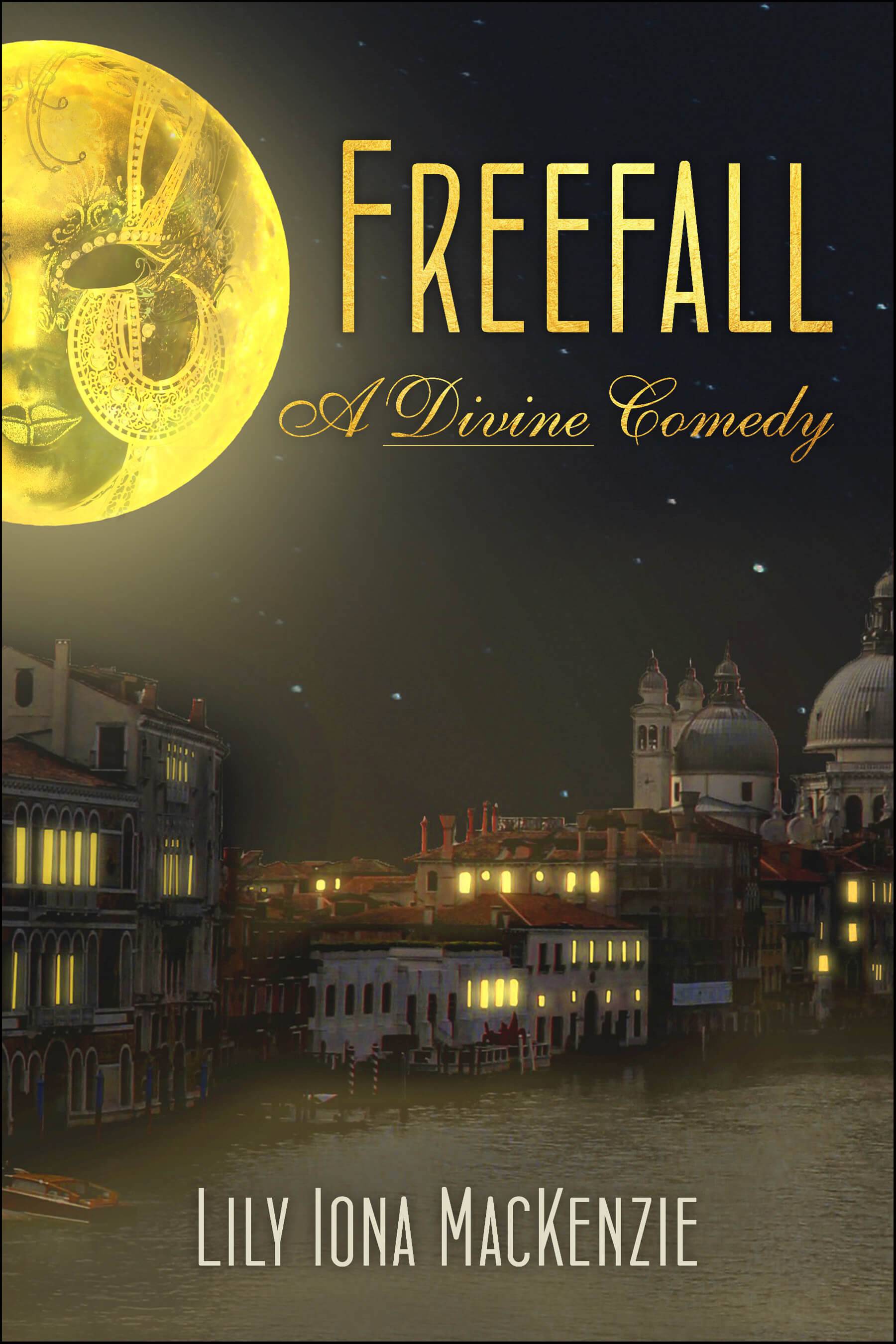
 FREEFALL: A Divine Comedy
Synopsis: Freefall: a Divine Comedy
It’s August 1999, and Tillie, a wacky installation artist, attends a four-day reunion with three former friends in Whistler, B.C., women she’d hung out with in the late ‘50s and early ‘60s. Hungry for life and new experiences, they’d moved from Calgary, then a cow town, to sophisticated Toronto, calling themselves the “Four Muskrateers,” breaking out of their provincial cocoon.
Each woman’s life has taken a different direction. Tillie and Daddy have both moved to the States, where Tillie has given herself over to art. Daddy—once a radical feminist/hippie—has turned into a successful real estate saleswoman. Moll, tres sportif, a housewife and mother of three, spends her free time exploring the Canadian outdoors. Sibyl—also married and a shrewd bookkeeper addicted to 4000-piece jigsaw puzzles, cigarettes, and wine—has a cabin in Whistler, a home in Vancouver, and a flat in Venice.
The women’s identities shift as we come to know them better, enlarging, becoming more complex. During their reunion, secrets surface, their stories binding them together again. While at Whistler, a near-death experience that involves them all also links the women at a deeper level.
The last two-thirds of the book take place in Italy. The Four Muskrateers decide to meet again in September at Sibyl’s Venice flat, planning to use those three weeks to celebrate their approaching sixtieth birthdays—all falling in the year 2000. However, Tillie has a hidden agenda: she intends to crash the Biennale, an art extravaganza scheduled in Venice every other year, hoping to find a larger audience for her art.
Soon after they arrive in Venice, they visit the church of the Santa Maria Della Salute where Tillie and a lascivious priest, Father Lazarus (a half-Ethiopian dwarf), fall for each other. Later, Tillie thinks Frank, her former photographer lover, who recently died, has returned as a pigeon, much like the one that made a dramatic appearance at his wake. It pursues her through the streets of Venice, complicating her developing relationship with the priest.
Tillie often gets lost in the maze of streets, but she resurfaces sooner or later, intrigued by the various reflective surfaces and how they participate in the city’s love affair with light. These reflections counter the pull of darker forces, causing the four women to reevaluate themselves and their lives. Tillie, in particular, experiences a new understanding of herself that propels her into a new age.
A humorous and serious meditation on the relationship between art and mortality, Freefall: a Divine Comedy taps into the rich underground springs that feed all of our lives, suggesting that death is more complex than we normally believe—darkness and death being the source of life and not just the end. It also celebrates the rich tapestry of the imagination.
Opening Chapters of FREEFALL
Tillie deconstructs her fears
Tillie woke to another overcast morning in San Francisco, rattled by the dream image of her old friend Daddy wasting away in a jail cell. Burrowing deeper under the covers, she tried to ignore a tiny flicker of panic in her stomach. She’s lived with this low-grade anxiety for years, a tiger prowling the edge of her consciousness, ready to pounce. Her cash wasn’t flowing (her latest artist grant hadn’t come through yet), and the rent was due in a few days. She needed to find a new roommate or else get a smaller place. Her golden years didn’t look promising.
No wonder she was thinking more about her youth, longing to reclaim it. At almost sixty, she’d sooner look backward than forward. Even her dreams offered up images of her late teens and twenties. The latest was an image of Daddy in trouble. She dreamed of her often. It was always a variation on the same theme: her old friend was in the clink and it was up to Tillie to get her out. She was savvy enough to realize that the imprisoned Daddy could be some facet of herself that was locked up and wasting away, but she hadn’t figured out why she was imprisoned or how to free her. The two women talked on the phone and exchanged letters now and then, but they hadn’t seen each other all that much over the years.
Throwing back the covers, she climbed out of bed, bending and stretching to loosen up her limbs. Pretending to draw a sword from its sheath on her hip, she parried with unseen foes on the way to the bathroom, refusing to let her fears get the best of her. She reminded herself she still had good health, she loved life, and she was resourceful. Something would turn up. It always did.
Bladder emptied, face washed, teeth brushed, and ready to meet the day, she turned on her favorite jazz station and danced her way into the kitchen, stopping to make coffee. She poured it into a mug, added milk, dropped in two teaspoons of sugar, stirred vigorously, and glided over to her favorite perch, a burgundy brushed velvet wingback she had picked up at the Salvation Army. Her command center, the phone sat on the table next to the chair, her sketchpad nearby so she could jot down ideas for her installations.
How this stage in life got labeled golden remained beyond her. Pewter made more sense. All that dull drabness. So far this phase had been anything but golden: She was never poorer. She didn’t have a permanent partner. She was still a nomad. And her work as an installation artist hadn’t given her the prominence she sought. She also seemed to be experiencing the identity crisis she didn’t have time for in her teens.
Yet she didn’t color her hair; there was no point in it. In spite of everything, she’d still be in her late fifties (she couldn’t say sixty: that fast-approaching milestone weighed her down), trying desperately to fool the world. What she wanted was a completely new body.
That was why she refused to try things some women did to fend off age—Botox, face-lifts, body tucks. There was always something the doctors missed; you couldn’t remove all of the evidence. She never heard of them giving new life to a sagging vagina, the first giveaway, unless you had sworn off men. Even now, they were the only game in town—that was, when she could find an available one who still could get it up.
A late bloomer in all ways, Tillie also might be late for her own death—if she were lucky. The phone shattered her reflections. Whenever it rang, she feared the worst: Her mother May had croaked. At 94, she was still feisty—her arms dripping with multi-colored bracelets, face powdered and rouged, lips painted bright orange, earlobes drooping under the weight of gold earrings, white hair tinted with blue streaks. So far, she could care for her one-bedroom triplex in Calgary on her own. She did the laundry, cleaned, and cooked her meals, as independent as she ever was. Most days she took the bus uptown and hung out at the Legion and other haunts that Tillie hadn’t quite sorted out.
She picked up the phone, “Mother?”
“I’m lonely. It’s no fun being on my own. I miss Fred. At least he was a warm body to sleep with. I don’t even have a cat anymore.”
“I know what you mean. I didn’t think I’d miss Frank….”
“That jerk! You’re lucky he’s taken a powder. Permanently, I hope.”
“Jeez, Mum. I thought you liked him.”
“He wasn’t my type. Too arty.”
“If you’re lonely, visit me. I’ll scrape up airfare.”
“You’re always busy with your art. Anyway, the things you make give me the creeps.”
“Thanks. I love your honesty.”
“Well, I won’t lie to you. That’s why I won’t visit.”
“Maybe it’s time to move to an assisted living place.”
“Maybe it isn’t.”
The phone went dead. Tillie stared at it. May always had a way with words.
Their relationship wasn’t flooded with love and good will. If it overflowed with anything, it was resentment and hostility, on both sides. The more guilt Tillie felt for having these responses to her mother, the more she resented her. She couldn’t get away from the voice that hammered at her daily: You should be spending more time with your mum. She’s 94. She could go any minute. There had been too many abandonments. Too many hurts. Too many unspoken words that were now irrecoverable and barred better communication.
The word “bar” reminded her of Daddy being in the clink. The dream image intruded on her thoughts, blotting out May. Maybe talking to her friend on the phone would shake loose some ideas of what the dream meant. She set down her coffee mug, looked up Daddy’s Miami phone number in the dog-eared address book, and punched in the numbers on her blue Princess receiver.
While she waited for the phone to ring, she thought of Sibyl and Moll. Back in the late ‘50s, they had all called themselves the four Muskrateers. They felt patriotic naming themselves after a close relative to Canada’s beaver.
Daddy answered the phone, and Tillie said, “What’s a muskrat have that a beaver doesn’t?”
“Tillie! I was just thinking of you,” Daddy shrieked.
“You didn’t answer—“
“Softer fur!”
“You’ve won the first round in double jeopardy.”
“It’s great to hear your voice—where are you?”
“Not sure. Getting older has me in a tizzy. You know, all of us Muskrateers will be sixty in 2000?”
“Should we go into mourning? Or celebrate lasting this long?” Daddy laughed. “There’s something to be said for endurance.”
“I don’t know. My mum’s endured. She’s 94, you know. But lonely.”
“May is Ninety-four. Wow!”
“Yeah, that’s what I say. I just wish I liked her better.”
“It ain’t easy having a mother.”
“No kidding. But we’ve survived. Do you think Sibyl and Moll have?”
“Got me, babe,” Daddy said. “Haven’t talked to Sibyl for ages—she isn’t dead because I get these weird Hallmark cards every Christmas—“
“You too? No message.”
“I know,” Daddy said. “Just a bloody stamp that says ‘Raleigh & Sibyl’. Fucking eerie.”
“I’ve called her a few times to catch up—”
“What about Moll? Haven’t seen or talked to her since Toronto. Can you believe it’s been 40 years?”
“Haven’t seen her either,” Tillie said. “We didn’t part on the best of terms. Remember? She thought I was a bad influence on you guys—”
“Moll? Who’s she to talk?”
“Sibyl’s kept in touch with her,” Tillie said. “She’s mentioned seeing her now and then. They both still live in B.C.”
“Wouldn’t a reunion be a gas?”
“A reunion?” Tillie stared at the overcast sky. The cloud cover seemed to shift, allowing a few shreds of sun to seep through. It might not be a bad day after all.
“Why not? We aren’t getting any younger—”
“Don’t remind me. I’m game,” Tillie said.
You should go visit your mother instead.
Get lost, Tillie said. I’ll see her after the reunion.
WHISTLER, B.C.
August 1999
Tillie confronts the past
Sibyl Pitt offered her funky cabin at Whistler for the Muskrateer’s reunion. Tillie had visited the ski resort in her early twenties—before it became yuppified; before it was a resort. A tiny village in the cradle of two mountains, it wasn’t even named Whistler yet, and the houses were funky. So she expected Sibyl’s place to be rustic and quaint—made of logs. They would use candles and kerosene lanterns, cook on a wood stove—rough it. She came prepared, her rolled up sleeping bag and stuffed backpack sitting on the seat beside her. She also brought dried food. A tarot deck. Even a candle or two.
A sign said “Whistler” and she slowed down, watching for Ridge Road. Her stomach gurgled, and it wasn’t hunger. Her old friend fear was never far away. She was afraid to see these women again. What would they think of Tillie? Her life had taken a 180 turn from theirs. She didn’t have a big house to show off. Or rings. Or a husband. What did she have to show for the last forty years? Most of her installations only existed in videos and photos. She was driving a 67 VW van, held together by faith and a mechanic who loved working on old vehicles. What would she have in common with the others except for their shared histories?
She almost made a U-turn in the middle of the road, but then she recalled the empty apartment in San Francisco. It was still too filled with unpleasant memories of Frank, her latest live-in, so she quickly shut that door. She needed a break so she could get her bearings again. Find a new direction.
On the radio, Peter, Paul, and Mary were singing “I’m just a poor wayfaring stranger.” Tillie joined in, her voice off-key: “I’m going there to me-et my maker, I’m going there no mo-re to-o roam….”
Folk songs were a welcome break from the hip-hop music that had taken over the airwaves, plaguing her since she left San Francisco. She tried listening to rap, wanting to be with it. But she felt beaten up by words and blunt, monotonous rhythms. Though she hated to admit it, she must be getting old when she couldn’t relate to this generation’s music.
When she pulled into Sibyl’s driveway, her jaw dropped: The cozy, rustic cabin Tillie had imagined, nestled among the pines, turned out to be a bloody mansion, three stories, clinging to the side of a mountain. Definitely not what she expected. Feeling out of place already in her old van, her home away from home, she parked it under some evergreens, between a new SUV and a Chrysler Jeep Liberty.
Glancing at herself in the rearview mirror, she wondered how she would appear to these women, sorry now she never invested in a face-lift. The image belonged to a stranger; it had little to do with how she felt inside. Her short spiked hair gave her a startled appearance, like an aging Orphan Annie. She had trouble reconciling how she appeared in the mirror—somewhat of a ruin—with how she felt, not much older than when the Muskrateers lived together in Toronto all those years ago.
Time and reality check: It wasn’t the ’50s; it was almost 4:00 PM on a Friday in August, near the end of the millennium.
Reluctantly, she left her van, approached the double front door, and rang the bell. Sibyl appeared, wearing tight-fitting jeans and a skimpy red top, holding a glass of white wine in one hand, a cigarette in the other. Tiny breasts and not much meat on her bones. More waif-like than how Tillie remembered her. Short brown hair a thatched hut perched on top of her head. Eyelids drooped, and the skin sagged under her eyes. Tillie noticed that one of them still wandered: she always appeared to be gazing at something just to the right of you.
It wasn’t a pretty sight.
Smoke poured from her lips and nostrils—one long stream of it—and into Tillie’s mouth, making her gag. When Sibyl saw the backpack and sleeping bag, she laughed, which started her hacking. She stood there partly bent over, coughing and laughing and choking, wine spilling all over her hand and onto the floor. She finally straightened up. “You look like a refugee. You bring a tent, too?”
Tillie smiled, gritting her teeth, rehearsing restraint. She had to get through the next few days with Sibyl—her hostess. Like her mother, Sibyl had been drawn to Tillie’s men. Feeling sisterhood was powerful, Tillie decided her relationship with the women was more important than the men. Still, it even puzzled Tillie at times that she hadn’t severed her bond with her mother or with Sibyl. Over the years, she certainly had reason to. But May was her mother. She couldn’t just dump her. It wasn’t Canadian. And she grudgingly admired Sibyl’s chutzpah: she always did what she damn well pleased, unconcerned about the consequences.
Tillie needed all the friends she could get, especially at her age, so she said, “No, dear, Pig refuses to sleep in a tent. Pink satin sheets: nothing else.”
Sibyl was smiling too, her lips pulled taut against her teeth, stretched to their limit, lipstick smeared. She always had a small mouth, and Tillie remembered that smile. Cocky. Daring. A little angry tilt to it. But Sibyl’s teeth seemed more widely spaced than Tillie remembered, and she hadn’t seen a dental hygienist for a while: nicotine took up permanent residence, giving them an antique look.
Sibyl didn’t seem to realize Tillie was joking and kept sneaking worried looks at her van, as if Tillie really did have a pig with her. She actually had considered getting one for a pet, ever since Frank moved out a couple of months earlier. She’d read pigs are smarter than humans. Better company too. But she hadn’t warmed to the idea of sleeping with one. She had some pride.
Dropping her backpack in the front hallway, she clomped inside, feeling like a klutz in her scruffy, ankle-high hiking boots and khaki shorts. She thought they’d all be hiking and exploring, hanging out, not fussing with clothes or make up. Just being their basic, back-to-the-earth selves.
She should have known better. Whenever two or more women are gathered, Venus—goddess of beauty and love—would be in their midst, causing them to compare, to pose, to compete with one another.
Tillie sank into the white plush carpet. It felt about three feet deep, reminding her of the patch of quicksand she ran into on the farm when she was a kid. She hadn’t known it was quicksand until she began to sink, but it was only about a foot deep. Still, since then, she never quite trusted the earth to be constant and stable.
Family pictures filled the hallway—Sibyl’s two sons at different ages, dressed in baseball uniforms and holding bats, snow skiing, water-skiing, wearing graduation hats and gowns. It all looked so middle-class. So normal. So bourgeois. Something else she had avoided. She feared she would die if she got stuck in a conventional 9-5 life. She tried it for a time and it almost killed her.
“Pete’s a wrestler, eh,” Sibyl said proudly, pointing at her son’s picture. “Or used to be. Could’ve gone to the Olympics if it weren’t for his dad.” She took a swig of wine and puffed on her cigarette, shaking her head. Staggering, she aimed herself determinedly for the living room.
Tillie could see why Pete would take up wrestling. He must have wrestled with a lot in that family.
Strains of Rompin’ Ronnie Hawkins and the Hawks singing “Hey, Bo Diddly” poured out of the living room. Daddy and Moll’s laughter climbed hysterically and then stopped. Daddy shouted out “Hey, Bo Diddly” in counterpoint to Ronnie’s voice, the way the Four Muskrateers did in Toronto when they were on the prowl, hanging out at the Le Coq D’or, the club where the Hawks performed.
Sibyl tottered on her pink high-heeled mules fringed with feathers, yakking between drags on her cigarette and sips of wine. “…Listen to the racket, eh! The girls are kicking up their heels already.” A cloud of smoke and Tillie following her. She had smoked herself when she was younger. Until she started wheezing all the time and had trouble breathing. Terror was a great teacher. She quit fast, and living in California had spoiled her. Non-smokers reigned.
Gagging, she walked hunched over, trying to duck under the smoke, hoping to find cleaner air near the floor. Then in a flash she saw the title of her next installation: DEATH IN MENACE. Now she needed to figure out what it meant. Death was menacing enough, though life seemed more frightening at times. You never knew what was coming next. Losing a breast. A womb. A lover. It must be the menace of post-menopause that made Tillie’s work so dark these days.
She visualized a walk-in meat locker, torsos of women hanging on hooks (of course, she wouldn’t use real women; that would be too raw), a row of women’s legs emerging from the opposite wall, all of them wearing garters and doing the cancan. She’d have to rig up a way to animate the legs. Make it seem like they were really kicking. Maybe she would have the torsos in motion too, turning slowly like meat on a skewer. Contrary motion. Maybe the legs should all be kicking in different directions, giving a pinwheel effect. Not like the traditional cancan where all of the legs point one way. It could add an interesting dimension to the piece.
She bumped into a pair of real legs.
“Hey, Tillie, bad back? Mine gives me trouble, too.”
Tillie straightened up. Daddy. Hair still bleached a straw color. Wearing green tights that showed off her shapely calves. One hip thrust out. The old Daddy. Always posing, watching herself. Lips outlined a darker red than the interior. Same smirk. And the eyes—green, too, highlighted with metallic green eye shadow. She recalled lynxes in the Calgary zoo staring at her as Daddy did, coolly appraising, withholding. Something untamed trying to break free. In high school, it had been jarring for her to glimpse something primitive rippling under the pleated skirt and the white blouse that Daddy wore to school.
They hugged, tentatively, Sibyl and Moll looking on. They could feel the other’s curves, Daddy’s body lacking muscle, soft and squishy. Like the Florida everglades, near where she lived.
“We did it, girl,” Tillie said to her. “Wow, I can’t believe we’re all together again!”
Her perfume clung to Tillie when they separated, the same old cat smell now mixed with Chanel No. 5. A mass of gold and silver bangles clattered each time she moved, dancing up and down Daddy’s arm, matching the big hoops in her ear lobes.
Moll screamed, “Tillie, you’re a sight for sore eyes.” The last time Tillie saw Moll, her large breasts and shapely buttocks attracted all the guys. She had the best build of the four of them—and she knew it.
She still had the breasts, but they were even bigger now, and her body had become matronly. Tillie felt trim in comparison; her shape hadn’t changed much over the years. Taller than the other women by several inches, Moll resembled an Amazon. Her dirty blonde hair—caught up in a ponytail—blended with gray strands. Très sportif, she shunned makeup.
Tillie held out her hand to shake Moll’s, wary, remembering the last time they saw each other at a party in Calgary, a couple of years after the Muskrateers had broken up in Toronto. Moll wouldn’t speak to Tillie, still blaming her for being lead astray. Bullshit was what Tillie thought then, and it popped into her mind now. Bullshit. You can’t be led astray unless you want to be. It wasn’t Tillie’s fault that musicians and football players and married businessmen laid her. Tillie hadn’t tied her to the bed and insisted that she have sex with them.
But apparently Moll had forgotten the way they parted—or she was willing to call a truce. She threw her arms around Tillie and almost smothered her in an embrace. She got a musky whiff from Moll’s underarms and from between her breasts; the sweaty black jersey she wore stuck to her skin.
Surprised by this welcome, Tillie peeled herself away.
Outwardly the women appeared different in certain ways; age carved up the flesh and added its own fickle dimension to the body. But 40 years fell away, as swiftly as snow melted on a sunny day, their lives woven together through shared histories, experiences, and intimacies—the woof of relationships, good or bad.
They all looked at one another shyly, eyes a little misty, feeling the shock that comes with seeing your own aging self reflected in the faces of friends. These women might not have seen each other much over the years, but they continued to hang out together, aware of it or not, their lives merged in some underground den, surfacing at times in dreams. The bonds of early friendships were difficult to sever.
The CD had changed, and now the Beatles were singing, “It’s been a hard day’s night….”
“Good stuff, Sibyl,” Tillie said. “So much better than rap–“
Daddy snapped her fingers and tapped one foot in time to an imagined beat: “You don’t like rap, girl? It’s the poetry of the people who don’t have a voice.”
Tillie shook her head. “Any wine for this poor wayfaring stranger?”
The Four Muskrateers revisit their youth
A wall of glass framed a ravine filled with pine trees. Slanted rays from the late afternoon sun filled the room, turning everything inside gold before it disappeared behind the nearby peaks. Water bubbled over rocks from a stream winding past the house. The women sat on black leather couches and chairs, staring out the window, catching glimpses of themselves reflected in its surface, each grasping a flute of champagne. They took frequent sips, avoiding each other’s eyes, not quite ready to dive into the waters of their youth.
Tillie feared they wouldn’t have much in common after so many years. Her previous conversations with Daddy and Sibyl suggested everyone except Tillie lived a pretty standard life—even Daddy. Strange for someone who was a radical feminist in her early twenties and never married. She’d been active in the extremist group “Students for a Democratic Society.” Gorilla theatre. The works. She was even to the left of Tillie, who’d been far enough out there at times. They had lots of catching up to do.
Of the four, only Moll devoted herself fully to being a housewife. Though Tillie and Sibyl also had kids, they both worked outside of the home and never were strictly housewives. Tillie could hardly boil water, which made it tough when she had to prepare her dried food. According to Sibyl, Raleigh did the cooking in their household. But maybe Moll wasn’t strictly a housewife either. Maybe there wasn’t any such thing if it meant you were married to a house, not to a man.
Or maybe you could be the wife of a house—and that was what so many women resisted. Houses didn’t talk. Nor did they make love. But they did require a lot of care.
As for houses, Sibyl had done all right for herself. Five bedrooms. Matching bathrooms. Skylights all over the place. Walk-in fireplace. Working in her dad’s two-bit corner store as a kid gave her a nose for business. He was malleable, and she could get her way with him, practically running the store herself before she was fourteen. She told him what products would sell, reorganizing window displays to attract customers, making bank deposits. Sometimes her ideas were right on. Other times they cost her dad money. But they were a team: She had the reins and knew when to use them. The store never made much money, but at least it wasn’t operating in the red as it had been. A few cents profit was better than none at all.
Sibyl and Raleigh were the same age, high school sweethearts. But he had her father’s pliant nature and his failings. He wasn’t a good businessman, and Sibyl ran his life. Sometimes she made good recommendations; often she didn’t.
Sibyl jumped up. “Almost forgot. Have a surprise for you. Remember Ben, one of my old boyfriends in Toronto? The amateur filmmaker, eh?”
“Ben? Yeah,” Daddy said. “He filmed us for a class he was taking.”
“I remember,” Tillie said. “He turned up when we least expected it. Like candid camera.”
Moll set her glass down on the coffee table. “Didn’t he call it ‘The Four Muskrateers’?”
“Voila!” Sibyl said, grabbing the cartridge from the coffee table and jamming it into the VCR. “That’s the surprise! He turned the film into a video for me.”
“You’re kidding,” the others screamed in unison.
“How’d you get it?” Tillie asked.
“Ran into him at a bar in Vancouver. He said the Four Muskrateers launched his documentary film career. Won an award for it at film school.”
“Far out,” Daddy said. “We’re stars.”
The sun had set. They sat in the dimly lit room, munching popcorn that Moll had popped, sipping wine, laughing raucously, staring at their younger selves on the screen.
What a surprise to see Sibyl wearing a bowler hat, puffing on a cigar, some man’s overcoat draped over her shoulders and dragging on the floor. Nothing underneath. It was her Marilyn Monroe calendar shot, except she didn’t have Monroe’s equipment. They all stared intently at the images. Daddy shrieked: “What a pair of knockers! That hat….”
“Jesus, look at you, Sibyl,” Tillie said. “I remember that hat. You wore it everywhere.”
And she did. It was quite a trick keeping it on during sex. She just had to make sure she was on top.
On the screen, Sibyl’s tiny breasts dissolve into car headlights that blink on and off. Tillie’s image materializes out of Sibyl’s headlights. “Hey, Tillie, when were you dressed like that?” Moll asked.
Tillie had trouble remembering and wondered if she had hit one of her black holes. Did she ever own that ’20s style dress, ballooning out in the back and tucked in at the buttocks? It looked like a parachute. She didn’t recall being so style conscious. Now she avoided anything that looked predictably stylish, throwing together her original outfits from thrift shops, the weirder the better.
Unaware of being filmed, she strolls over to a bench at a Toronto bus stop and sits down, yawning, her long hair pulled back into a chignon, face pale against the dark hue on her lips. Very chic. And ladylike. Until her head falls forward and her lower jaw drops, head jerking up now and then, eyes fluttering open for a moment, knees spreading wide. The camera zooms in on the spot between her legs, probing the darkness, the front of a bus rushing out of there, heading for the “Downtown Garage.”
“Christ, Tillie,” Daddy said, “I’ve heard of giving birth to strange things, but a bus! Holy cow—weird.”
The bus melts into the entrance of the subway station on Yonge Street. It’s night, and the Four Muskrateers pour out of the opening, pushing their way through the crowds, laughing and yakking, neon lights flashing all around. High-spirited. Young and pretty and on the prowl for men and action. The scene switches suddenly to the zoo, the girls replaced by chimps picking fleas off themselves, and then back to them standing in front of a storefront, staring at their images, preening, and then back to the chimps grooming each other.
“The bastard’s a real misogynist! Comparing us to primates.”
“You’re right, Tillie,” Daddy said. “Turn off that bloody thing— the sonofabitch really used us—we should sue him.”
Sibyl slurred, “Too late, eh? Statue of Liberation has passed.”
Tillie said, “A Statue of Liberation might make an interesting sculpture—“
“The Statute of Liberation has passed,” Daddy said. “We need a new wave—another women’s movement. How about it! Ready to lead the charge?”
Face flushed, waving her wine glass and cigarette around, Sibyl ignored the others and kept on talking. “Been involved in enough lawsuits. This house could go any day, so enjoy it. We’re being sued.
“Sued! Shit,” Tillie said. “That’s rough.”
“I kid you not. Raleigh didn’t sign a construction contract. Inherited his dad’s construction business, you know. A major contract. So fucking trusting. Left himself wide open.” Sibyl scowled and sucked on a cigarette. “The guy sued him and won. Raleigh lost our business—couldn’t come up with the bonding. Had a 70 million dollar job pending. Declared bankruptcy. Now I’m being sued, too, and this house is in my name.”
For an instant, both of Sibyl’s eyes focused before one went off wandering again, searching for something that always seemed beyond her field of vision.
Tillie wondered if their money problems were all Raleigh’s fault since Sibyl was so involved in managing their financial affairs. Tillie had always liked Raleigh, a warm, easy-going guy. On the surface, at least. She sipped her wine. “I’m surprised you haven’t left him—it’s not the first time he’s screwed things up for you guys.”
“Don’t remind me. I wake up in the night screaming. Can’t sleep more than an hour or two. Believe me, I’ve thought of taking whatever money’s left. Just disappearing. Go to Italy.”
“Why Italy?” Daddy asked.
“Took a vacation there years ago. First trip to Europe. That was it. Love at first sight.”
“I’m hungry. Any food around here?” Moll asked, trotting off to the kitchen area of the living and dining rooms.
Sibyl’s voice droned on: “…Can’t make myself do it,” she said. “Let him leave. He won’t. Too scared. Spaces out on grass. Blows our savings to prove he’s a man.”
“Sounds like denial,” Daddy said. Her cell phone beckoned from the bowels of her handbag, playing “The Battle Hymn of the Republic.” “Isn’t that music a gas?” Daddy reached inside, clicked it open, and inspected the screen. “The office—to hell with it—I’ll call later….”
“Not so easy to just walk away….”
Tillie never could figure out Sibyl’s relationship with Raleigh. They started going steady in high school. Of course, steady for Sibyl didn’t mean being exclusive. She expected Raleigh to be a straight arrow, but it didn’t apply to her. And for some reason he went along with it. Raleigh had to know she was screwing around with other guys, but it didn’t seem to bother him. Maybe he got off on it. It reminded Tillie of Harold, her stepfather. If anyone asked for cuckolding, Harold was it. He begged to be abused—sought it by marrying May.
Sibyl and Raleigh got engaged when they were seventeen. A diamond ring and an engagement party. The works. The party wiped out her mum and dad financially, and being affianced didn’t stop Sibyl from doing her thing. She went to Toronto with Tillie, Moll, and Daddy, leaving Raleigh in Calgary. No regrets. Wearing his engagement ring. It seemed to drive men wild. They were more interested in her with a ring than if she hadn’t had one.
Maybe she knew this; maybe it was why she nailed Raleigh. She seemed to know that many men don’t really want commitment. Since she was already taken, they could have all the fun they wanted without paying the consequences. Some sucker would pick up after them. The ring made her safe.
It all seemed connected to Sibyl’s adoption. One night in Toronto Sibyl had told the Muskrateers she’d been 12 when she found out about it. She huddled in a bucket chair, hugging her knees to her chest, and blurted out she was certain her adoptive parents had stolen her away. No wonder Sibyl’s wandering eye was always looking for what she’d lost. Sibyl said she was convinced the woman she called mother (a mousy little thing who deferred to her strapping husband and did housework to support the failing grocery store) had taken Sibyl from one of her wealthy employees.
Years after the Muskrateers had split up and left Toronto, Tillie was passing through Vancouver and met Sibyl for dinner. The two women got pretty chummy after a few glasses of wine, and the talk turned to sex. Sibyl seemed eager to brag about the affairs she was having. It didn’t surprise Tillie that Sibyl still was on the make. But she was shocked to hear Sibyl always blabbed to Raleigh about the men she slept with—and according to her, she had plenty.
Tillie asked how he handled it.
“You kidding? Turns him on, eh. Improves our sex life. He loves all the details. What positions we’ve tried. Even what size cock the guy has.”
Tillie just about choked on her wine. And she thought Sibyl lived such a straight life.
Now Tillie had other things to think about. “What’s this about Italy?” Tillie asked, her antenna on high alert.
“Inherited the family house when Mum died. Used that money to buy a two-bedroom apartment in Venice. Prices were rock bottom. Can’t get a place in Venice any more for what I paid. The pad’s all mine, eh? I rent it out.”
“Venice,” Tillie said. “Wow! My favorite city. Spent a few days there once. I loved it.” She was sitting in a Venetian plaza, near a fountain, listening to a gondolier in the distance serenading his passengers.
Venice itself reminded Tillie of a huge installation. In process. Parts appearing and disappearing. Depending on the light and time of day. So much expressed in reflection, the water both a mirror and the source of the city’s life. Ghostly. Neither totally real nor imaginary. Like all great art. Inviting viewers to participate and reconsider their basic assumptions about cities. Making them more conscious of themselves and their relationship to Venice.
Approaching the city for the first time, all she could see from the train window was water. She asked another passenger where they were, amazed when he said “Venice.” She hadn’t realized it floated at the edge of the Adriatic, immediately feeling at home in that surreal world, neither here nor there, gateway to the West and East. She had always felt in limbo, an inhabitant of some liminal realm, not belonging to either Canada or the United States. Or anyplace else for that matter. Except maybe Venice. Since that visit, she had wanted to return for an extended stay.
And then it hit her: the Venice Biennale would be happening in the fall. She had always wanted to show her stuff there. Crashing the event could give her exposure and publicity. If nothing else, she’d get her name in the papers and maybe find a wealthy sponsor. Now she needs to convince the others that Venice is in their future.
“That city scares me,” Moll said. “It’s going to sink any minute. And all that stagnant water in those canals.”
Tillie and Moll were best friends before they moved East. Tillie even stayed at Moll’s parents’ place for a few weeks before they left. Of the four of them, Moll had the most normal upbringing. Her folks had enough money to live in a nice house and buy new clothes and drive a late-model car. The rest of the Muskrateers lived in hand-me-downs or things found at rummage sales. Moll’s father was a VP in the Royal Bank. Not a big shot but a responsible position. A closet queer. Not unusual. Everyone was in the closet in those days, their real selves hidden.
Her mum didn’t work, but she was always busy serving on some committee and helping with the PTA. She wore wire-rim glasses, her hair a mousy mix of faded blonde and gray, resembling someone’s granny even when Moll was just a kid. She went around with a kind of worried, hurt look on her face, like a goldfish. She had plenty to look worried about.
“You’re wrong,” Tillie said. “Venice isn’t sinking. It’s rising out of the ocean like Venus. On the half shell.”
Tillie was having another vision: Instead of Venus rising from the sea on a half shell, the Muskrateers were surfacing on a huge fake one. At night. Lots of spectacular lighting and fireworks announcing the happening. She could tie this in with Death in Menace and other installations she would plant around the city, featuring the four of them. She knew something would shake loose if she got away.
“Swell,” Moll said. “Venice rising scares me even more.” After plucking a package of pasta and two cans of tomatoes from a cupboard, she turned the gas on under a pot of water and ambled back into the living room.
Daddy, sprawled on one of the sofas, moved over, making room for Moll. She said, “Ever wonder how your lives would’ve been without these men? Hey, Tillie, what if you hadn’t met what’s his name and gotten pregnant so young?”
Tillie was staring at the darkened wall of windows, envisioning rockets that streak through the Italian night over the Venice lagoon, illuminating the Four Muskrateers. They were celebrating their sixtiethbirthdays on a huge artificial cake in the lagoon, a slight variation on the earlier image of a half shell.
“Hey, Tillie, wake up,” Moll said. “Think your life would’ve been different without a kid?”
She reluctantly returned to the present. Part of her was still in Venice, dazzled by the fireworks’ display she’d conjured up. Turning sixty might not be so bad if she could welcome it in that city. “I would’ve gotten pregnant anyway. I didn’t know any better. No one told me about birth control. Making babies and being a good little housewife were my choices.”
“You didn’t stay married long,” Daddy reminded her, eyelids at half-mast. “And you weren’t a good little housewife! You told me you rotted all ‘what’s-his-name’s’ white shirts—put too much bleach in the water!”
Tillie and Daddy had hung out together in high school, before Tillie dropped out. Daddy’s natural hair color was black, and she wore it straight then, a kind of cap cut. The little hook in her nose gave her a slightly witchy appearance. A few years later she became a blonde—permanently—and paid a plastic surgeon to give her a Zsa Zsa Gabor nose.
Tillie poured herself the last of the champagne and watched the bubbles surface and burst. “I needed a name for my son. Didn’t want him to be illegitimate like me. How else could I get it? Anyway, I don’t think love is the reason most couples get together. There are forces stronger than love—”
“Grim,” Moll said over her shoulder, pattering to the kitchen area to check the water.
“It is grim,” Tillie said. “Fate’s in charge. Picks us up and discards us. Controls our lives.”
“Terrific!” Daddy said.
“‘Life’s but a walking shadow, a poor player that struts and frets his hour upon the stage and then is heard no more. A tale told by an idiot, full of sound and fury, signifying nothing….’”
They all stared at Tillie as if she had a deformity.
“Wow,” Daddy said. “Macbeth.”
“One of your husbands?” Sibyl asked.
Sibyl hadn’t attended college and she wasn’t a reader. The classics didn’t exist in her world, in spite of her middle-class trappings.
“A character from Shakespeare,” Tillie said. “Scottish king. I had to memorize a passage and recite it in the Shakespeare class I took. Our prof thought we’d lost the art of memorization. I’ve been memorizing poems ever since.”
“Everyone knows Lady Macbeth had the balls,” Daddy said. “How would that story end without the King?”
Daddy never attended college either, but she did read. Voraciously. Her father had passed on his love for books. As Tillie recalled, Mr. Duff spent most of his time in the basement, brewing beer and making dandelion wine, reading Robbie Burns’ poems and reciting them from memory. Periodically he’d surface. Short, like a gnome, always wearing a fedora, lines of poetry drifted out of his mouth like riffs on a guitar. He lived, ate, and breathed poetry; he also liked guzzling his liquor.
Daddy’s father may not have amounted to much—after all, what were poets good for?—but at least she had one. Tillie didn’t even know her dad. She wasn’t sure her mother did either.
Tillie laughed at Daddy’s comment. “Wouldn’t be a story. Without men, we’re nothing. The medium is the message.”
“Good old McLuhan,” Daddy said.
“What’re you guys talking about?” Sibyl downed her wine and poured another glass. “Want more wine? Plenty in the cellar, eh. I won’t go down there though. Never know what you’ll find….”
“Buried somebody there?” Daddy asked.
Sibyl snickered. “Some old boyfriends.”
Daddy leaned her head to one side. “What if you’d been born in the 21st Century—no Raleigh? What would you have done?”
“Traveled. Been the CEO of a circus. An animal trainer. A jockey. A gondolier.”
“Not a mother?” Tillie asked.
Moll said, “Someone set the table, please. Pasta’s ready. I’m throwing a green salad together. Jesus, Sibyl. We need groceries. I feel like Goldilocks: The cupboards are bare.”
“Wrong story,” Tillie said. “Goldilocks was mixed up with bears, not bare cupboards.”
“What’s it matter? Our cupboards are bare.”
“No kidding,” Sibyl said. “I’m feeling bare, myself.” She stared at the window. The glass held back the night.
“I always identified with Goldilocks,” Daddy said. “The bears were a smug bourgeois family—real 50s set up—I was glad Goldilocks broke into their house and shook things up—but after she was afraid to face the music.”
“Ok, ok, I’ll face the music!” Sibyl said. “Didn’t have time to shop before you arrived. Barely made it up from Vancouver as it is.”
“Great pun on ‘bear,’ Sibyl,” Daddy said.
Sibyl wobbled into the dining room and grabbed four place mats, some silverware, dropping everything onto the table. “Help yourselves.”
“Come on, Sib,” Moll said. “Let’s light some candles. It’s a celebration.”
After dinner, they sat around the dining room table, cheeks flushed, hormones flashing off and on like neon lights. Night now, the windows had turned inward, candlelight and the women’s reflections flickering in the glass. Black swallowed the pine trees, the mountains.
Tillie opened her backpack and pulled out a tape recorder. “You guys mind if I tape our conversation? I’m working on a new installation; I need some women’s voices.”
Sibyl looked blank. “An installation?”
“I’m an installation artist.” Tillie had never explained to them what she did as an artist. She avoided mentioning this part of her life. And no wonder: Her mother and stepfather didn’t have a clue about art—about culture. When Tillie did discover she was an artist, she always felt ashamed of it. Just saying that word sounded pretentious, as if she were acting superior to others.
“What in hell’s an installation?” Sibyl said.
“I create spaces you can enter, interiors, you know….”
“You always had a knack for decorating….”
“I’m not an interior decorator! I find a lot of different stuff and put it into a new context—spaces, rooms, sometimes museums or galleries.”
“Jeez,” Sibyl said, “I haven’t been to a museum since I can’t remember….”
“Me neither,” Moll said. “Museums bore me. Old art and furniture.”
“I usually find abandoned buildings or other structures and play with them. Transform them. Create stories with objects I find or make. You walk around inside these places and become more conscious of where you are. What you’re seeing.”
Sibyl and Moll looked a bit dazed, but Daddy was listening intently.
“Sounds more democratic,” Daddy said, “more available and less elite.” Both Daddy and Tillie went through their 60s’ Civil Rights’ phase together. Daddy went farther in bringing down the system than Tillie had, getting involved with SDS and other radical groups.
“I know,” Tillie said. “Not everyone understands the art in museums. And not all people get to see it. Installation art breaks down those barriers a little bit.”
“That’s radical,” Daddy said.
“Maybe. Anyway, the art isn’t something plopped on the floor or hung on a wall. It’s rooms. Spaces. It’s what’s around you.”
“What’s the point?” Moll asked.
“To make people think about their environments, their actions. Every situation—even when I’m working at ‘ordinary’ jobs to earn money—feeds me. I want to get that heightened feeling into my work. Make discoveries about things we take for granted.”
“Cool,” Sibyl said.
“Watch out, though! I use a lot of everyday things in my art. I’m a great collector.”
Moll yawned and stretched, letting out a healthy growl. “Mountain air always makes me sleepy.” She rose, stacked the plates, and carried them into the kitchen area.
Tillie followed, carrying some dishes herself, surprised that Moll had no interest in art or culture. Out of all them, she had seemed the most likely college candidate. Though Moll always was athletic, it wasn’t until she left Toronto that her strong interest in the outdoors had surfaced. In high school, she dove into track and field, winning lots of medals. She also wielded a mean tennis racquet, beating everyone in sight. And she was a star player on the softball team. She had everything going for her.
In high school, Moll was pretty chaste (the boys used to call her the Virgin Mary), but her skinny younger sister Rosie was something else. A pushover, she had severely round heels, and she hung out with all the hoods. The cops picked her up along with the Leblanc brothers when the four of them broke into Sibyl’s parents’ store and stole bottles of booze. Tillie lived on the fringes of these two worlds, the regular kids and the tough guys. Maybe she reminded Moll too much of her sister.
Moll compensated for Rosie by being extremely good at everything she did, and that included moral superiority. It was as if she had to be the best so she could make up for her sister and her father’s behavior. Tillie never heard Moll talk about her dad’s other life. He seemed to be a good father, taking Moll skiing (her mother wasn’t sportif), teaching her how to ice skate. Helping her with homework, especially math and science.
After hearing so many rumors about Moll’s dad wearing his wife’s clothes and lurking in men’s toilets, Tillie was curious to see what a queer looked like. But she either turned up at the wrong times or the stories were false. He seemed like a normal father, sitting in the front room before dinner, reading his paper, sipping a martini. There didn’t seem to be anything queer about that. He even helped Tillie with her lessons when she was still trying to make it in school.
While they were cleaning up, Tillie learned that Moll and her family lived in Kelowna, a good size town in the Okanagan. She managed to cram raising kids and baking for bake sales—and all the rest—between skiing, climbing mountains, swimming, hiking, and biking. Moll took her three boys along on her adventures, backpacking, camping, exploring the great Canadian outdoors. Her husband Curtis liked to fish, but he was more of a stay-at-home type. Going on camping trips with them was the extent of his involvement. Tillie discovered that Curtis had prostate cancer. Moll also whispered in Tillie’s ear that Sibyl and Raleigh had several near-financial disasters.
The two of them returned to the dining room table. “You didn’t answer me,” Tillie said. “Mind being part of my next artwork? I won’t identify who’s speaking; you’ll be anonymous.”
“Okay by me,” Daddy said.
Sibyl nodded her head, “Yeah, I don’t care.”
“As long as I don’t have to go to a museum,” Moll said.
Tillie turned on the recorder and grabbed soiled knives and forks. She stopped at Sibyl’s place, her food almost untouched. “You finished?”
Sibyl lit up another cigarette and blew smoke in Tillie’s face. “Yeah.”
Still a rat.
No part of this text may be reproduced or reprinted without written permission from its author.