


Lily Iona MacKenzie's Blog for Writers & Readers

MY BLOG POSTS COMMENT ON SOME ASPECTS OF WRITING & READING.

September 2014

I guess there is something comforting about the way today’s youth have become accustomed to their parents/guardians checking on them at all times via smart phones, etc. It may feel like being held in a kind of web (and here I’m not referring to the World Wide Web), a loving network. But it also suggests to me what it’s like to be trapped in a spider’s snare. The idea that none of us can have a moment when we aren’t being scrutinized in some way makes me shudder. What has happened to the notion of privacy and freedom? Am I old-fashioned to think they still are virtues?

(more…)

I’m grieving the loss of dictionaries, thick, massive volumes that I used to get lost in. I would open a page and find hundreds of words, all of them demanding my attention, each a miniature world to explore. But now I’ve become a victim of on-line lexicons because they are handier than putting aside my laptop computer and marching into the other room to unload the Oxford from a bookshelf where it resides. (more…)

Foghorns blast through the 7 AM San Francisco overcast. The only woman in the place, I saunter into the longshoreman’s union hall, trying to appear as if I did this every day. A few cigarette-scarred wooden tables offer a place for the men to gather and talk while waiting to be called to work. Billowing clouds of cigarette smoke hang ominously over everyone. (more…)

5d9cf373-e31c-400e-9fe0-1655625ab9b2Like detectives, writers need to be constantly observant, picking up clues from what people are wearing, how they gesture, the words they speak, the way they interact with others. They study people’s facial expressions and what they might suggest about the person, storing away the data in their memory banks. Or they’ll take notes in a writer’s journal that they’ll refer to later. (more…)

Memoir writing blurs the line between truth and imagination in this revealing conversation with Lily Iona MacKenzie. We explore how creative writing techniques shape both fiction narrative and personal stories, as Lily explains her unique approach: “you lie in service of the truth.”

View the 20 minute conversation here: https://youtu.be/GsujDPN69ok


Yesterday, I had to kill time (terrible metaphor) while waiting to hear a friend of mine do a reading of his newly published memoir at a Corte Madera bookstore. So I hung out at Marin County’s Corte Madera Library. (more…)

For years I felt guilty about breaking the heirloom toys my stepfather’s mother had preserved, relics of another era. I can still remember the excitement of lifting each object out of the boxes where they had been stored and bringing them to life again: tiny china dishes with hand-painted flowers; a miniature stagecoach carrying riders and pulled by horses; dolls with porcelain faces and hands, features frozen in smiles, dressed in stylish Victorian gowns; a doll house with elegant furniture and a family. (more…)

My Daily Writing Rhythm

How to keep the characters moving in my head and on the page

Elizabeth Winthrop Alsop (www.elizabethwinthropalsop.com) is the author of over 50 works of fiction for adults and children under the pen name Elizabeth Winthrop.  These include the award-winning fantasy series, The Castle in the Attic and The Battle for the Castle as well as the short story, The Golden Darters, read on the nationwide radio program, Selected Shorts, and included in Best American Short Story anthology, and Island Justice and In My Mother’s House, two novels now available as eBooks.  She is the daughter of the acclaimed journalist, Stewart Alsop. Daughter of Spies: Wartime Secrets, Family Lies, a family history about her parents’ love affair during World War II and their marriage lived in the spotlight of Washington during the 1950s was published by Regal House, October 25, 2022.

Follow her newsletters on Substack.

This post is from Elizabeth’s Substack January 25th newsletter,:

When I speak at writer’s conferences, I often get the same questions from beginning writers. Do you write with a pen or a computer? Do you write in a journal? Do you write at the same time every day? Where do you write? I know people in the audience are hoping to uncover some secret method, some trick I’ve discovered or invented that would unlock their unconscious so that the words flow and the characters dance off the page beckoning to them to follow.

Every writer be they published or just starting out would answer these questions in a different way. My writing day and schedule has changed over time, but I’ve discovered that committing to writing every day is the most important “trick.” So, for now, here’s my schedule. I wake up and play a number of word games to prime my brain. Then breakfast and a ten minute drawing practice with Wendy McNaughton to push me in different directions. Drawing helps me to see more clearly what is right in front of me and that can only help my descriptive powers.

Although I don’t live in a large apartment, I am lucky enough to have two separate spaces for my work life. The first, a desk 10 inches from my bed, is where I do the administrative work that a published writer must not neglect. It is here that I check royalty statements, answer appearance requests, develop marketing and publicity materials, read through contracts, answer emails from fans, my entertainment lawyer, my editors, etc. My second space is a 6 X 10 foot nook where I keep all my research books, art that inspires me, my journals and an extra card table to spread out file cards on characters, plot twists, settings. I try to keep that as my pure writing space.

My “pure” writing space..

The painting above my desk is of an island and I’ve written more than one book about islands. Part of the novel I’m working on is set on the Holy Island of Lindisfarne, a mystical place on the northeast coast of England that I’ve visited to do research. Beneath that, a picture of two characters who showed up in one of my books and who keep coming back. Upper right you’ll see a charcoal drawing of my father, a journalist and memoir writer, who was my first inspiration.

Stewart Alsop at an indeterminate age. Charcoal drawing by an unidentified artist found in our mother’s basement.

Upper left is a cartoon by James Stevenson, the celebrated New Yorker artist who was inspired by my father and uncle . The bookshelf holds my daily handwritten journals and books that inspire and instruct me. And yes, knitting supplies. I’ve found that when my fingers work the needles, my brain works on plot.

Lately I’ve been hearing the term, third space. First your home, then your work and one other. Since both my home and my office are under the same roof, I often go out to my favorite coffee shop which I call my third space. I put on noise deadening headphones, hook into my Gregorian Chant playlist (my current novel is set in the 14th century), write first in my journal and then turn to the half finished sentence, the last thing I wrote the day before. In that crowded, noisy place, my characters meet me and carry me away to their world.

This is the schedule and rhythm that works for me. What is yours?

Follow her newsletters on Substack.

Editing writing requires tremendous restraint. I was reminded of this recently when a poem I had submitted to an anthology was accepted providing I approved of the editor’s changes. I’m open to thoughtful revision suggestions—a text can always be improved—but I assume the recommendations will be just that, insightful observations that cause me to re-think my work. In that light, I can re-enter a poem or story and see if any of the ideas resonate enough for me to make changes. Yet since I’m the poem’s creator, I expect to revise it myself and have the last word on its content. (more…)

I’ve been thinking about how loosely we use abstract words like love, happiness, and truth as if they had concrete, observable meaning. I tend to revolt from using love to close my email or other exchanges unless I really feel love for the person I’m corresponding with. It bothers me when people sign their correspondence “love” without considering whether or not the emotion really applies to the recipient. Maybe you feel loving towards someone on most days, but not every day. Isn’t it deceitful to say “love” if you aren’t feeling it at the moment? Wouldn’t such a response seem confusing? It leads the reader to believe that the writer actually has such strong feelings, that somehow we’re part of the writer’s inner circle. Often that isn’t true. (more…)

Being a first-rate writer requires the same kind of training that an architect receives. A typical program includes courses in architectural history and theory, building design, construction methods, professional practice, math, physical sciences, and liberal arts. Writers may not need to study math or the physical sciences, but they do need to give themselves the best liberal arts education they can find, both formal and informal. And like architects, in order to be successful in their field, writers need not only vision and a rich imagination but also a strong foundation. (more…)

Thank you, Zackary Vernon, for taking the time to share your professional writing journey with me and my readers.

Where did your characters come from for your debut YA novel Our Bodies Electric?  

Our Bodies Electric is set in my hometown of Pawleys Island, South Carolina, during the early to mid 1990s. It’s a southern coming-of-age story about a teenager named Josh who struggles against the pressure to conform to social conventions placed on him by his religious family and community, particularly as he enters his teenage years and tries to understand his body and sexuality. Josh hangs out with a bunch of misfit teenagers who get up to all kinds of hijinks, but they also help each other through this period of rapid change and development.

(more…)

Being part of an on-line writing group for several years has provided many benefits. But with the positives come a few negatives.

Some Positives: (more…)

Until recently, if I had wanted a restful getaway, I would not have chosen San Francisco or any big city. Getting away meant heading out of town, usually for a coastal inn. I wanted the leisurely pace and ocean views of Mendocino, Pacific Grove, Carmel, or Big Sur. (more…)

Onyx wind chimes shaped like birds hang outside my bedroom. Each time a breeze stirs them, their music reminds me of the first trip I took to Mexico. While there, I was hoping to discover a part of the country that photographs can’t capture—the spirit of the place. Lawrence Durrell claims that landscape communicates this aspect. He says, “All landscapes ask the same question in the same whisper, ‘I am watching you—are you watching yourself in me’?” (more…)

I recently reread Henry James’ The Portrait of a Lady and have mixed feelings about the era and the characters. It’s difficult to read about Victorian morés from a 21st Century perspective. Not only do I need lenses that will give me a bi-cultural perspective, but I also feel squashed between a culture clash. Not long after I finished with Portrait, I read a review of A. M. Homes’ book May We Be Forgiven in The New York Review of Books. One of her main characters says, (more…)

Vive le Québec

No place in North America equals Quebec City for its charm, unique culture, and beauty. The only walled city north of Mexico, when you pass through the portal into the city’s historic section, the focus for most visitors, it’s like entering a fairy tale complete with a castle. The century-old Fairmont Le Château Frontenac—with its towering top ringed by steeples and turrets—overlooks the St. Lawrence River and soars over the town, adding to the magical feeling.

But this impressive hotel hasn’t always dominated the old city. Many museums, churches, homes, and scenic lanes date back to the 1600s. These are the structures that define QC and give it so much charisma. The Frontenac is the icing on the cake.

Quebec’s Upper Town (Haute-Ville) is perched on cliffs overlooking the St. Lawrence River and provides views of the countryside for many miles beyond. Accessible by steep stairs or via a funicular car, Old Quebec’s Lower Town has its own historic charms. The Basse-Ville sprang up around the city’s harbor and was the original neighborhood of the city. Homes, shops, and ancient streets sprawled here at the base of the cliffs centering around Place Royale—a square on the site of the garden of Champlain’s Habitation (1608).

The preferred entry to old Quebec City is via the Grande Allee. Time seems to have stood still here. It’s like entering another world, another time, another place, and it works its magic on you. Only Rottenburg, another walled city, has had such an effect on me.

A horse drawn cab is the appropriate way to view this wonderful place. Our driver was a redhead, of Irish descent, but born and raised in Quebec. He spoke very clear English, his words carefully enunciated. He wore a straw hat, and the horse’s name was Dixie. We learned that the animals aren’t overworked. A vet checks them every day, and they only pull a carriage every other day.

On our fire-engine red cab, we wove through narrow cobblestone streets past stone houses festooned with window planters. In the more commercial area, the vividly colored umbrellas at sidewalk cafes competed with the flowers for lending bright patches to the scenes. We also passed the Hotel Clarendon, built in 1870, where we stayed. It’s the oldest hotel in the walled city. Located a little away from the most festive streets, it’s still in the center of the action. Our room had a window overlooking the St. Lawrence, a clock tower, a part of the Château Frontenac, and a park.

If I can generalize, this link between French and English-speaking Canada that our driver represented captures the essence of Canada, with Ottawa the head and Quebec City the heart. Without Quebec, something precious would be lost to Canadians. It’s a touchstone and, Quebec City, which lost once to the British, must not lose again. It has the exuberance, the emotional life, and the sensuality that some Anglos can lack. Quebec City also is the heart in that the Americas emerged out of European sensibility, and that presence is felt here perhaps more than anywhere else.


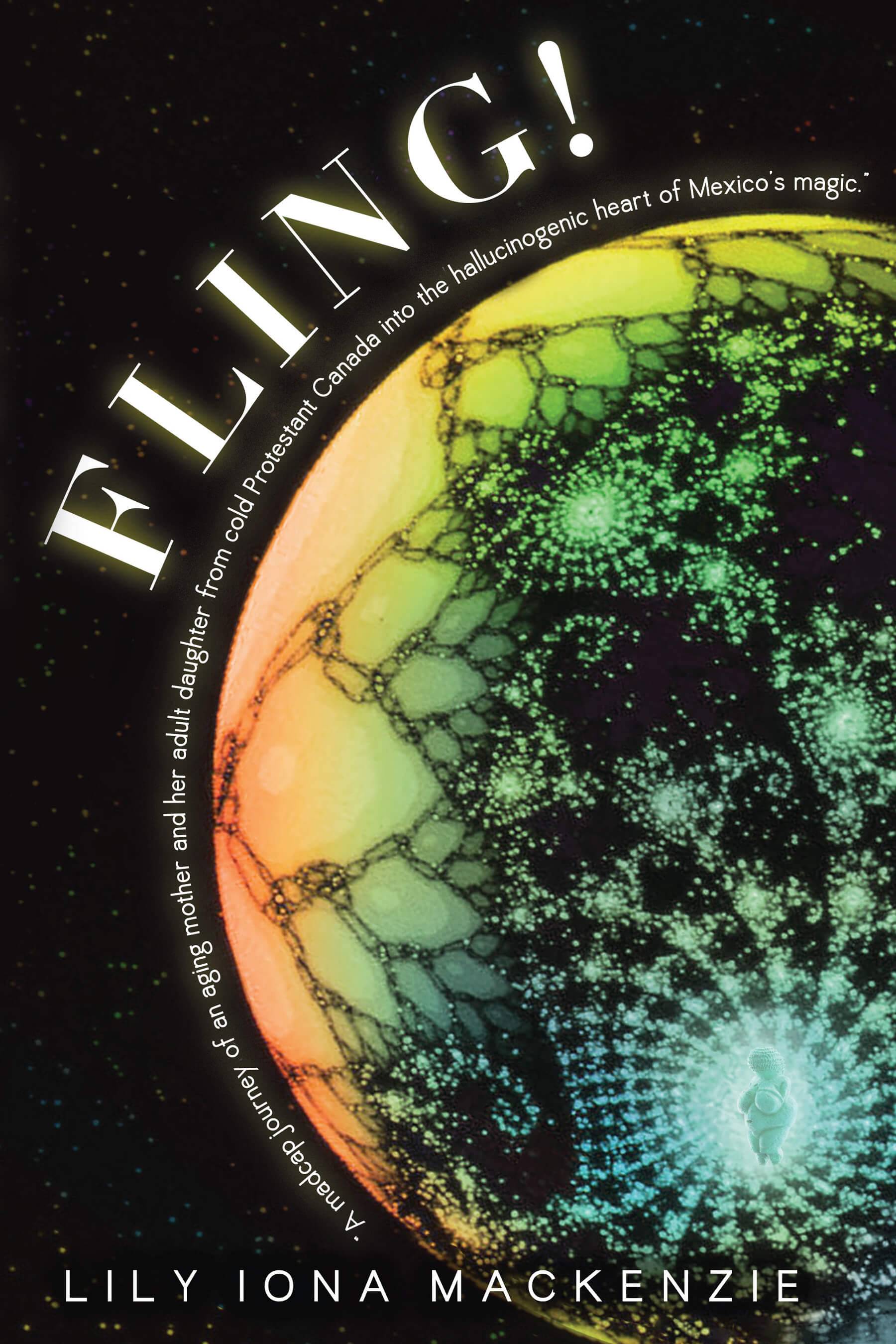
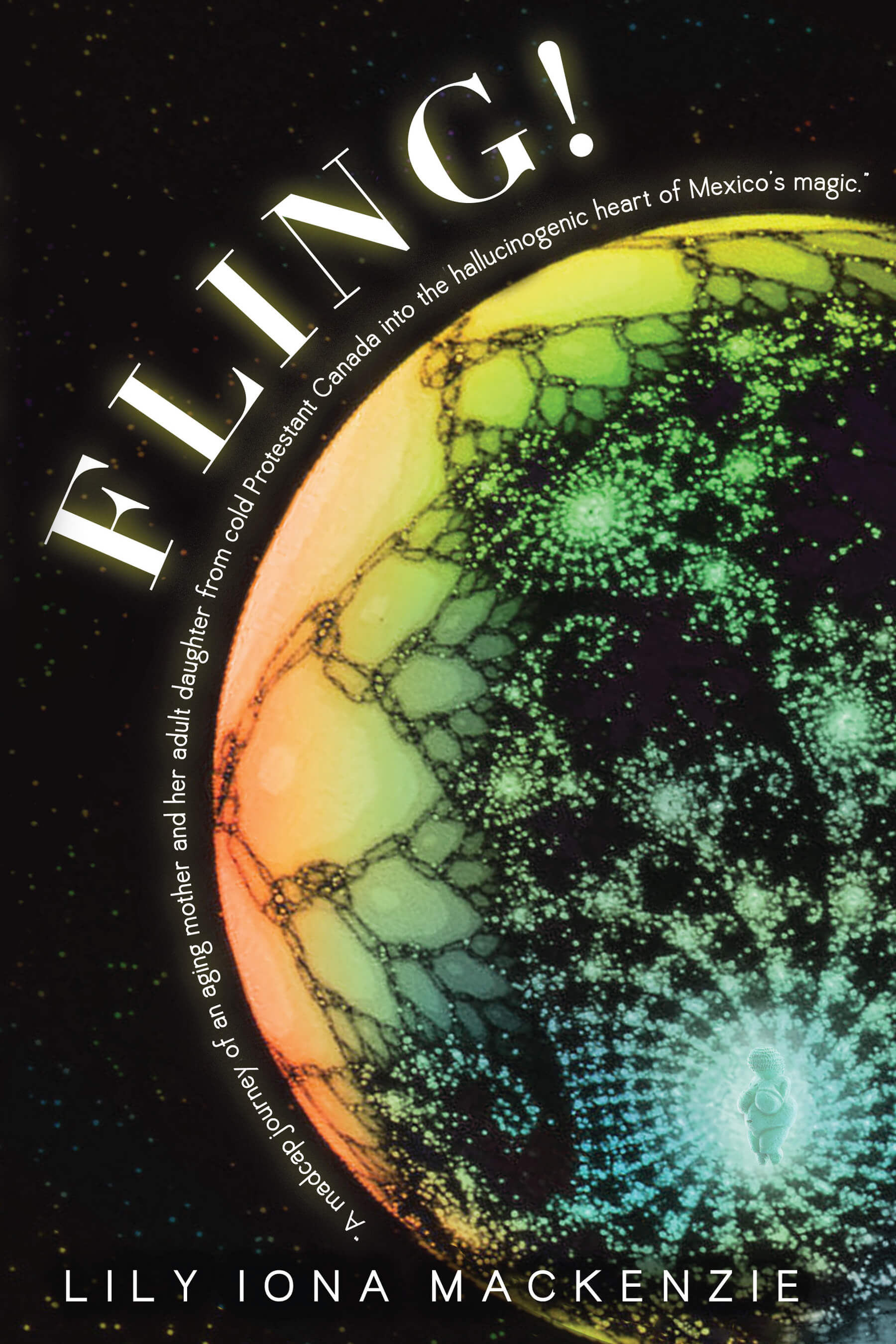
Pen-L Press will be publishing my novel Fling in 2015. A wildly comic romp on mothers, daughters, art, and death, the book should appeal to a broad range of readers. While the main characters are middle-aged and older, their zest for life would draw readers of all ages, male or female, attracting the youthful adventurer in most people. Though women may identify more readily with Feather and Bubbles’ daughter and mother struggles, the heart of the book is how they approach their aging selves and are open to new experiences. Since art and imagination are key to this narrative, artists of all ages would find something to enjoy. And because the book crosses many borders (Scotland, Canada, the U.S., and Mexico), it also can’t be limited to a specific age group, social class, gender, or region.

My first fan letter for Fling came from an 80 year-old woman who lives in the tiny village of Christina Lake, B.C. My son, who also lives there, had given her my manuscript to read. She said, “I just wanted to express to you how very much I enjoyed your writing.  I started it and didn’t stop till I had read it all.  I very much like your style and your subtle humor. Thank you for a most enjoyable read. I can’t understand why it hasn’t been scooped up by some publisher. But I know that it will be. In my estimation I know that it is excellent literary work. I am a voracious reader and have been since grade 4. I remember my first book was Tom Sawyer and I have never stopped since then. I go through 4 to 5 books a week.  We are so fortunate here at the Lake now.  The Library staff in Grand Forks come out here every Wednesday. I have become very fond of the young lady who comes out. She provides me with all the award winning books and orders others for me. Again I want to express to you how very much I enjoyed your manuscript.  Have patience my dear….it will be published to wide acclaim I am so sure.” —Joan Fornelli.

Here is a synopsis:

Feather, an aging hippie, returns to her Calgary home to help her mother, Bubbles, celebrate her 90th birthday. Bubbles has received mail from the dead letter office in Mexico City, asking her to pick up her mother’s ashes, left there seventy years earlier and only now surfacing. Bubbles’ mother, Scottish by birth, had died in Mexico in the late 1920s after taking off with a married man and abandoning her husband and kids.

A woman with a mission, and still vigorous, Bubbles convinces a reluctant Feather to take her to Mexico so she can recover the ashes and give her mother a proper burial. Both women have recently shed husbands and have a secondary agenda: they’d like a little action. And they get it.

Alternating narratives weave together Feather and Bubbles’ odyssey with their colorful Scottish ancestors, creating a family tapestry. The “now” thread presents the two women as they travel south from Canada to San Francisco and then Mexico, covering a span of about six months. “Now” and “then” merge in Mexico when Bubbles’ long-dead mother, grandmother, and grandfather turn up, enlivening the narrative with their antics.

In Mexico, the land where reality and magic co-exist, Feather gets a new sense of her mother. The Indian villagers mistake Bubbles for a well-known rain goddess, praying for her to bring rain so their land will thrive again. Feather, who’s been seeking “The Goddess” for years, eventually realizes what she’s overlooked.

Meanwhile, Bubbles’ quest for her mother’s ashes (and a new man) has increased her zest for life. A shrewd business woman (she’s raised chickens, sold her crafts, taken in bizarre boarders, and has a sure-fire system for winning at bingo and lotteries), she’s certain she’s found the fountain of youth at a mineral springs outside San Miguel de Allende; she’s determined to bottle the water and sell it.

But gambling is her first love, and unlike most women her age, fun-loving Bubbles takes risks, believing she’s immortal. Unlike her daughter, Bubbles doesn’t hold back in any way, eating heartily, lusting after strangers, her youthful spirit and innocence convincing readers that they’ve found the fountain of youth themselves in this character. At ninety, she comes into her own, coming to age, proving it’s never too late to fulfill one’s dreams.

Fling, a meditation on death, mothers and daughters, and art, suggests that the fountain of youth is the imagination, and this is what they all discover in Mexico. It’s what Bubbles wants to bottle, but she doesn’t need to. She embodies it. The whole family does.


In Praise of Libraries!

Yesterday, I had to kill time (terrible metaphor) while waiting to hear a friend of mine do a reading of his memoir Blackboard at Book Passage in Corte Madera. I didn’t want to drive home to the East Bay and then make another trip to Marin County, so after I finished teaching in San Francisco, I took the Golden Gate Bridge to Marin County and hung out at the Corte Madera Library.

With audio and ebooks so popular, I half expected the library to be a ghost town, inhabited by print books but no one there to read them. Happily, I was wrong, and while I only check out library books to listen to on Overdrive, I was reminded of what an amazing place libraries are. I also discovered that readers still use them!

When I first arrived, there were no parking spaces near the building (I’d expected the lot to be vacant). I had to drive around for 10 minutes before I found a spot. When I walked in the door, I realized this was a happening place. It wasn’t just buzzing with library workers. But people of all ages were using the space.

The children’s section had a steady stream of kids carrying books that they wanted to check out. As I walked from the entrance to the back of the building, hoping to find an empty seat where I could work on my laptop, I discovered that nearly every seat was filled. Some visitors were sitting in overstuffed chairs reading magazines or newspapers. Others were in the computer areas, intently focused on the screens. But even more were strolling the aisles of books, checking out the latest and selecting ones they wanted to borrow.

All of this was encouraging: traditional reading has not died out in America. But what I loved most was the feeling of community I felt with this world of readers. The Corte Madera Library’s physical plant has lots of light and wood paneling, so the atmosphere is welcoming. But it also was lovely just to sit there silently with others who were enjoying the space.

No words were exchanged, yet we all clearly were there because we wanted to embrace the world that the words in these books and other printed sources represented. They opened portals onto subjects we otherwise wouldn’t know about. And I was grateful for this opportunity to reconnect with what libraries signify: the egg of learning that never stops hatching as long as we’re open to what it offers.


Pen-L Press will be publishing my novel Fling in 2015. A wildly comic romp on mothers, daughters, art, and death, the book should appeal to a broad range of readers. While the main characters are middle-aged and older, their zest for life would draw readers of all ages, male or female, attracting the youthful adventurer in most people. Though women may identify more readily with Feather and Bubbles’ daughter and mother struggles, the heart of the book is how they approach their aging selves and are open to new experiences. Since art and imagination are key to this narrative, artists of all ages would find something to enjoy. And because the book crosses many borders (Scotland, Canada, the U.S., and Mexico), it also can’t be limited to a specific age group, social class, gender, or region.

My first fan letter for Fling came from an 80 year-old woman who lives in the tiny village of Christina Lake, B.C. My son, who also lives there, had given her my manuscript to read. She said, “I just wanted to express to you how very much I enjoyed your writing.  I started it and didn’t stop till I had read it all.  I very much like your style and your subtle humor. Thank you for a most enjoyable read. I can’t understand why it hasn’t been scooped up by some publisher. But I know that it will be. In my estimation I know that it is excellent literary work. I am a voracious reader and have been since grade 4. I remember my first book was Tom Sawyer and I have never stopped since then. I go through 4 to 5 books a week.  We are so fortunate here at the Lake now.  The Library staff in Grand Forks come out here every Wednesday. I have become very fond of the young lady who comes out. She provides me with all the award winning books and orders others for me. Again I want to express to you how very much I enjoyed your manuscript.  Have patience my dear….it will be published to wide acclaim I am so sure.” —Joan Fornelli.

Here is a synopsis:

Feather, an aging hippie, returns to her Calgary home to help her mother, Bubbles, celebrate her 90th birthday. Bubbles has received mail from the dead letter office in Mexico City, asking her to pick up her mother’s ashes, left there seventy years earlier and only now surfacing. Bubbles’ mother, Scottish by birth, had died in Mexico in the late 1920s after taking off with a married man and abandoning her husband and kids.

A woman with a mission, and still vigorous, Bubbles convinces a reluctant Feather to take her to Mexico so she can recover the ashes and give her mother a proper burial. Both women have recently shed husbands and have a secondary agenda: they’d like a little action. And they get it.

Alternating narratives weave together Feather and Bubbles’ odyssey with their colorful Scottish ancestors, creating a family tapestry. The “now” thread presents the two women as they travel south from Canada to San Francisco and then Mexico, covering a span of about six months. “Now” and “then” merge in Mexico when Bubbles’ long-dead mother, grandmother, and grandfather turn up, enlivening the narrative with their antics.

In Mexico, the land where reality and magic co-exist, Feather gets a new sense of her mother. The Indian villagers mistake Bubbles for a well-known rain goddess, praying for her to bring rain so their land will thrive again. Feather, who’s been seeking “The Goddess” for years, eventually realizes what she’s overlooked.

Meanwhile, Bubbles’ quest for her mother’s ashes (and a new man) has increased her zest for life. A shrewd business woman (she’s raised chickens, sold her crafts, taken in bizarre boarders, and has a sure-fire system for winning at bingo and lotteries), she’s certain she’s found the fountain of youth at a mineral springs outside San Miguel de Allende; she’s determined to bottle the water and sell it.

But gambling is her first love, and unlike most women her age, fun-loving Bubbles takes risks, believing she’s immortal. Unlike her daughter, Bubbles doesn’t hold back in any way, eating heartily, lusting after strangers, her youthful spirit and innocence convincing readers that they’ve found the fountain of youth themselves in this character. At ninety, she comes into her own, coming to age, proving it’s never too late to fulfill one’s dreams.

Fling, a meditation on death, mothers and daughters, and art, suggests that the fountain of youth is the imagination, and this is what they all discover in Mexico. It’s what Bubbles wants to bottle, but she doesn’t need to. She embodies it. The whole family does.


A Case of Identity

I realize that Scotland has already made its decision to remain within Great Britain so that this post might seem a little tardy. But it’s taken me this long to reflect on what has happened.

Given that I have strong Scottish connections (my mother was born in Portree, Isle of Skye; I am part of several generations of Scots on my mother’s side; and I currently have numerous cousins in the country), I have a reason to be interested in the subject. When I first heard of the Scottish independence movement, I was all for it.

Go for it Scotland! Claim your national identity. Don’t let England be your master. I realize that for me, England became an emblem of the patriarch that many women have resisted for centuries. So if Scotland could challenge England’s hegemony, then I might also gain ground in asserting myself as a woman.

Well, that didn’t happen, and I must say that I’m not totally disappointed. As a Canadian, I understand how a nationalistic tendency, a desire to see one’s country as number one, can overwhelm one’s patriotism, an overwhelming pride in one’s origins. However, sometimes reality rules, and we must acquiesce to the powers that be. I am as passionate about Canada’s superiority to the States, a country I hold citizenship in, as many Scots must be about Scotland.

Scots who voted against independence aren’t saying that England is their superior and therefore deserves to rule. Rather, they are being realistic. At the moment, it could be foolhardy for them to step off into the unknown and have to live with the consequences. Similarly, I, as a woman, don’t want to cut off my relationships with all men. I just want to be recognized as having equal worth, and that, I hope, is not just in my future, but also in my Scottish brethren’s.


Pen-L Press will be publishing my novel Fling in 2015. A wildly comic romp on mothers, daughters, art, and death, the book should appeal to a broad range of readers. While the main characters are middle-aged and older, their zest for life would draw readers of all ages, male or female, attracting the youthful adventurer in most people. Though women may identify more readily with Feather and Bubbles’ daughter and mother struggles, the heart of the book is how they approach their aging selves and are open to new experiences. Since art and imagination are key to this narrative, artists of all ages would find something to enjoy. And because the book crosses many borders (Scotland, Canada, the U.S., and Mexico), it also can’t be limited to a specific age group, social class, gender, or region.

My first fan letter for Fling came from an 80 year-old woman who lives in the tiny village of Christina Lake, B.C. My son, who also lives there, had given her my manuscript to read. She said, “I just wanted to express to you how very much I enjoyed your writing.  I started it and didn’t stop till I had read it all.  I very much like your style and your subtle humor. Thank you for a most enjoyable read. I can’t understand why it hasn’t been scooped up by some publisher. But I know that it will be. In my estimation I know that it is excellent literary work. I am a voracious reader and have been since grade 4. I remember my first book was Tom Sawyer and I have never stopped since then. I go through 4 to 5 books a week.  We are so fortunate here at the Lake now.  The Library staff in Grand Forks come out here every Wednesday. I have become very fond of the young lady who comes out. She provides me with all the award winning books and orders others for me. Again I want to express to you how very much I enjoyed your manuscript.  Have patience my dear….it will be published to wide acclaim I am so sure.” —Joan Fornelli.

Here is a synopsis:

Feather, an aging hippie, returns to her Calgary home to help her mother, Bubbles, celebrate her 90th birthday. Bubbles has received mail from the dead letter office in Mexico City, asking her to pick up her mother’s ashes, left there seventy years earlier and only now surfacing. Bubbles’ mother, Scottish by birth, had died in Mexico in the late 1920s after taking off with a married man and abandoning her husband and kids.

A woman with a mission, and still vigorous, Bubbles convinces a reluctant Feather to take her to Mexico so she can recover the ashes and give her mother a proper burial. Both women have recently shed husbands and have a secondary agenda: they’d like a little action. And they get it.

Alternating narratives weave together Feather and Bubbles’ odyssey with their colorful Scottish ancestors, creating a family tapestry. The “now” thread presents the two women as they travel south from Canada to San Francisco and then Mexico, covering a span of about six months. “Now” and “then” merge in Mexico when Bubbles’ long-dead mother, grandmother, and grandfather turn up, enlivening the narrative with their antics.

In Mexico, the land where reality and magic co-exist, Feather gets a new sense of her mother. The Indian villagers mistake Bubbles for a well-known rain goddess, praying for her to bring rain so their land will thrive again. Feather, who’s been seeking “The Goddess” for years, eventually realizes what she’s overlooked.

Meanwhile, Bubbles’ quest for her mother’s ashes (and a new man) has increased her zest for life. A shrewd business woman (she’s raised chickens, sold her crafts, taken in bizarre boarders, and has a sure-fire system for winning at bingo and lotteries), she’s certain she’s found the fountain of youth at a mineral springs outside San Miguel de Allende; she’s determined to bottle the water and sell it.

But gambling is her first love, and unlike most women her age, fun-loving Bubbles takes risks, believing she’s immortal. Unlike her daughter, Bubbles doesn’t hold back in any way, eating heartily, lusting after strangers, her youthful spirit and innocence convincing readers that they’ve found the fountain of youth themselves in this character. At ninety, she comes into her own, coming to age, proving it’s never too late to fulfill one’s dreams.

Fling, a meditation on death, mothers and daughters, and art, suggests that the fountain of youth is the imagination, and this is what they all discover in Mexico. It’s what Bubbles wants to bottle, but she doesn’t need to. She embodies it. The whole family does.


Giant disappointment!

Okay, I’ve been trying to support the SF Giants during their slumps, but this time I can’t. I tell myself it’s a long season, that the game puts severe stress on the players’ bodies and minds. I try to import Bochy’s forgiving attitude (at least the one he shows the press) and make light of their failings. But I want them to win! I want all of the players to earn runs and show the baseball world that they really are giants. So it pains me when Hunter Pence and Pablo Sandoval and Buster Posey don’t capitalize on their talents and put some numbers on the board.

My disappointment makes me wonder about myself and how I handle my own various failings. Do I only support my efforts, whether it’s in my writing or other endeavors, when I’m doing well? Producing? Am I too ready to reject parts of myself when they don’t measure up? Am I only fair-weather friend?

I can’t fully answer these questions at the moment, but I can raise them and at least be aware that by distancing my favorite ball club, I also could be taking a similar attitude towards myself. And maybe I need to learn that losing isn’t the worst thing in the world. It could be that the worst thing is thinking that winning actually makes someone a champion.


Pen-L Press will be publishing my novel Fling in 2015. A wildly comic romp on mothers, daughters, art, and death, the book should appeal to a broad range of readers. While the main characters are middle-aged and older, their zest for life would draw readers of all ages, male or female, attracting the youthful adventurer in most people. Though women may identify more readily with Feather and Bubbles’ daughter and mother struggles, the heart of the book is how they approach their aging selves and are open to new experiences. Since art and imagination are key to this narrative, artists of all ages would find something to enjoy. And because the book crosses many borders (Scotland, Canada, the U.S., and Mexico), it also can’t be limited to a specific age group, social class, gender, or region.

My first fan letter for Fling came from an 80 year-old woman who lives in the tiny village of Christina Lake, B.C. My son, who also lives there, had given her my manuscript to read. She said, “I just wanted to express to you how very much I enjoyed your writing.  I started it and didn’t stop till I had read it all.  I very much like your style and your subtle humor. Thank you for a most enjoyable read. I can’t understand why it hasn’t been scooped up by some publisher. But I know that it will be. In my estimation I know that it is excellent literary work. I am a voracious reader and have been since grade 4. I remember my first book was Tom Sawyer and I have never stopped since then. I go through 4 to 5 books a week.  We are so fortunate here at the Lake now.  The Library staff in Grand Forks come out here every Wednesday. I have become very fond of the young lady who comes out. She provides me with all the award winning books and orders others for me. Again I want to express to you how very much I enjoyed your manuscript.  Have patience my dear….it will be published to wide acclaim I am so sure.” —Joan Fornelli.

Here is a synopsis:

Feather, an aging hippie, returns to her Calgary home to help her mother, Bubbles, celebrate her 90th birthday. Bubbles has received mail from the dead letter office in Mexico City, asking her to pick up her mother’s ashes, left there seventy years earlier and only now surfacing. Bubbles’ mother, Scottish by birth, had died in Mexico in the late 1920s after taking off with a married man and abandoning her husband and kids.

A woman with a mission, and still vigorous, Bubbles convinces a reluctant Feather to take her to Mexico so she can recover the ashes and give her mother a proper burial. Both women have recently shed husbands and have a secondary agenda: they’d like a little action. And they get it.

Alternating narratives weave together Feather and Bubbles’ odyssey with their colorful Scottish ancestors, creating a family tapestry. The “now” thread presents the two women as they travel south from Canada to San Francisco and then Mexico, covering a span of about six months. “Now” and “then” merge in Mexico when Bubbles’ long-dead mother, grandmother, and grandfather turn up, enlivening the narrative with their antics.

In Mexico, the land where reality and magic co-exist, Feather gets a new sense of her mother. The Indian villagers mistake Bubbles for a well-known rain goddess, praying for her to bring rain so their land will thrive again. Feather, who’s been seeking “The Goddess” for years, eventually realizes what she’s overlooked.

Meanwhile, Bubbles’ quest for her mother’s ashes (and a new man) has increased her zest for life. A shrewd business woman (she’s raised chickens, sold her crafts, taken in bizarre boarders, and has a sure-fire system for winning at bingo and lotteries), she’s certain she’s found the fountain of youth at a mineral springs outside San Miguel de Allende; she’s determined to bottle the water and sell it.

But gambling is her first love, and unlike most women her age, fun-loving Bubbles takes risks, believing she’s immortal. Unlike her daughter, Bubbles doesn’t hold back in any way, eating heartily, lusting after strangers, her youthful spirit and innocence convincing readers that they’ve found the fountain of youth themselves in this character. At ninety, she comes into her own, coming to age, proving it’s never too late to fulfill one’s dreams.

Fling, a meditation on death, mothers and daughters, and art, suggests that the fountain of youth is the imagination, and this is what they all discover in Mexico. It’s what Bubbles wants to bottle, but she doesn’t need to. She embodies it. The whole family does.


Heirlooms

For years I felt guilty about breaking the heirloom toys my stepfather’s mother had preserved, relics of another era. I can still remember the excitement of lifting each object out of the boxes where they had been stored, bringing them to life again: tiny china dishes with hand-painted flowers; a miniature stagecoach carrying riders and pulled by horses; dolls with porcelain faces and hands, features frozen in smiles, dressed in stylish Victorian gowns; a doll house with elegant furniture and a family.

I played with these treasures for hours, intrigued with the delicate precision it took to make them. The gold-plated stagecoach with ornate trim had figures riding inside, women wearing long silk dresses over layers of petticoats, real human hair twisted into coiffures under hats that bobbed like ships on the waves beneath. The men wore tight-fitting, long-tailed black suits, collars and cuffs shockingly white in the stagecoach’s dark interior.

Gradually I dismantled or broke the stagecoach and other objects. First I pulled out the riders one by one so I could examine them minutely. However, I wasn’t satisfied only to look; I had to inspect each seam, which meant I ended up with raw material that was unrelated to anything else—bits of cloth; arms; legs; strands of hair; tiny shoes. Lives stripped of society, reduced to their individual parts, were scattered into the four corners of my room, along with the dust balls.

While my behavior could be interpreted as destructive, “acting out” whatever deeper needs weren’t being met by my family life, I believe curiosity motivated me more than a desire to demolish. If hostility was involved, it served an instinctual need to examine closely objects that reflected a world that no longer existed, or if it did, it was only in my imagination. It may have been my first act as a writer.

Unfortunately, what I destroyed so methodically I could not reconstruct. This was the tragic lesson I learned at four. I was not yet capable of seeing the underlying patterns that would have helped me reassemble the toys. So I was left with the ruins.

But as an adult I can enter those rooms I played in as a child and rescue all the discarded parts of those magnificent heirlooms. They have resided in me over the years, the tiny stagecoach door with glass windows, the spokes from the wheel reduced to useless sticks—these remnants from my past and that of my stepfather’s mother merge in my memory.

Now I pick up each object and study it with care. But as a child, I didn’t know that life could be stripped down, reduced to its parts in much the same way as the toys I destroyed. They were models for such a process. I didn’t realize that tearing down was important, that I was acting out of a natural instinct—to live is to destroy. Cells are destroyed constantly in order to create new ones. Love, which unites, also destroys: illusions, former loves, the image of a perfect love. Nor had I discovered yet the god-like creative ability we possess that enables us to pick up the pieces of our fragmented lives and re-form them.


Pen-L Press will be publishing my novel Fling in 2015. A wildly comic romp on mothers, daughters, art, and death, the book should appeal to a broad range of readers. While the main characters are middle-aged and older, their zest for life would draw readers of all ages, male or female, attracting the youthful adventurer in most people. Though women may identify more readily with Feather and Bubbles’ daughter and mother struggles, the heart of the book is how they approach their aging selves and are open to new experiences. Since art and imagination are key to this narrative, artists of all ages would find something to enjoy. And because the book crosses many borders (Scotland, Canada, the U.S., and Mexico), it also can’t be limited to a specific age group, social class, gender, or region.

My first fan letter for Fling came from an 80 year-old woman who lives in the tiny village of Christina Lake, B.C. My son, who also lives there, had given her my manuscript to read. She said, “I just wanted to express to you how very much I enjoyed your writing.  I started it and didn’t stop till I had read it all.  I very much like your style and your subtle humor. Thank you for a most enjoyable read. I can’t understand why it hasn’t been scooped up by some publisher. But I know that it will be. In my estimation I know that it is excellent literary work. I am a voracious reader and have been since grade 4. I remember my first book was Tom Sawyer and I have never stopped since then. I go through 4 to 5 books a week.  We are so fortunate here at the Lake now.  The Library staff in Grand Forks come out here every Wednesday. I have become very fond of the young lady who comes out. She provides me with all the award winning books and orders others for me. Again I want to express to you how very much I enjoyed your manuscript.  Have patience my dear….it will be published to wide acclaim I am so sure.” —Joan Fornelli.

Here is a synopsis:

Feather, an aging hippie, returns to her Calgary home to help her mother, Bubbles, celebrate her 90th birthday. Bubbles has received mail from the dead letter office in Mexico City, asking her to pick up her mother’s ashes, left there seventy years earlier and only now surfacing. Bubbles’ mother, Scottish by birth, had died in Mexico in the late 1920s after taking off with a married man and abandoning her husband and kids.

A woman with a mission, and still vigorous, Bubbles convinces a reluctant Feather to take her to Mexico so she can recover the ashes and give her mother a proper burial. Both women have recently shed husbands and have a secondary agenda: they’d like a little action. And they get it.

Alternating narratives weave together Feather and Bubbles’ odyssey with their colorful Scottish ancestors, creating a family tapestry. The “now” thread presents the two women as they travel south from Canada to San Francisco and then Mexico, covering a span of about six months. “Now” and “then” merge in Mexico when Bubbles’ long-dead mother, grandmother, and grandfather turn up, enlivening the narrative with their antics.

In Mexico, the land where reality and magic co-exist, Feather gets a new sense of her mother. The Indian villagers mistake Bubbles for a well-known rain goddess, praying for her to bring rain so their land will thrive again. Feather, who’s been seeking “The Goddess” for years, eventually realizes what she’s overlooked.

Meanwhile, Bubbles’ quest for her mother’s ashes (and a new man) has increased her zest for life. A shrewd business woman (she’s raised chickens, sold her crafts, taken in bizarre boarders, and has a sure-fire system for winning at bingo and lotteries), she’s certain she’s found the fountain of youth at a mineral springs outside San Miguel de Allende; she’s determined to bottle the water and sell it.

But gambling is her first love, and unlike most women her age, fun-loving Bubbles takes risks, believing she’s immortal. Unlike her daughter, Bubbles doesn’t hold back in any way, eating heartily, lusting after strangers, her youthful spirit and innocence convincing readers that they’ve found the fountain of youth themselves in this character. At ninety, she comes into her own, coming to age, proving it’s never too late to fulfill one’s dreams.

Fling, a meditation on death, mothers and daughters, and art, suggests that the fountain of youth is the imagination, and this is what they all discover in Mexico. It’s what Bubbles wants to bottle, but she doesn’t need to. She embodies it. The whole family does.


WP to LinkedIn Auto Publish Powered By : XYZScripts.com