




 I guess there is something comforting about the way today’s youth have become accustomed to their parents/guardians checking on them at all times via smart phones, etc. It may feel like being held in a kind of web (and here I’m not referring to the World Wide Web), a loving network. But it also suggests to me what it’s like to be trapped in a spider’s snare. The idea that none of us can have a moment when we aren’t being scrutinized in some way makes me shudder. What has happened to the notion of privacy and freedom? Am I old-fashioned to think they still are virtues?
 I’m grieving the loss of dictionaries, thick, massive volumes that I used to get lost in. I would open a page and find hundreds of words, all of them demanding my attention, each a miniature world to explore. But now I’ve become a victim of on-line lexicons because they are handier than putting aside my laptop computer and marching into the other room to unload the Oxford from a bookshelf where it resides.
  Foghorns blast through the 7 AM San Francisco overcast. The only woman in the place, I saunter into the longshoreman’s union hall, trying to appear as if I did this every day. A few cigarette-scarred wooden tables offer a place for the men to gather and talk while waiting to be called to work. Billowing clouds of cigarette smoke hang ominously over everyone.
  Like detectives, writers need to be constantly observant, picking up clues from what people are wearing, how they gesture, the words they speak, the way they interact with others. They study people’s facial expressions and what they might suggest about the person, storing away the data in their memory banks. Or they’ll take notes in a writer’s journal that they’ll refer to later.
  Memoir writing blurs the line between truth and imagination in this revealing conversation with Lily Iona MacKenzie. We explore how creative writing techniques shape both fiction narrative and personal stories, as Lily explains her unique approach: “you lie in service of the truth.”
 Yesterday, I had to kill time (terrible metaphor) while waiting to hear a friend of mine do a reading of his newly published memoir at a Corte Madera bookstore. So I hung out at Marin County’s Corte Madera Library.
  For years I felt guilty about breaking the heirloom toys my stepfather’s mother had preserved, relics of another era. I can still remember the excitement of lifting each object out of the boxes where they had been stored and bringing them to life again: tiny china dishes with hand-painted flowers; a miniature stagecoach carrying riders and pulled by horses; dolls with porcelain faces and hands, features frozen in smiles, dressed in stylish Victorian gowns; a doll house with elegant furniture and a family.


 Editing writing requires tremendous restraint. I was reminded of this recently when a poem I had submitted to an anthology was accepted providing I approved of the editor’s changes. I’m open to thoughtful revision suggestions—a text can always be improved—but I assume the recommendations will be just that, insightful observations that cause me to re-think my work. In that light, I can re-enter a poem or story and see if any of the ideas resonate enough for me to make changes. Yet since I’m the poem’s creator, I expect to revise it myself and have the last word on its content.
  I’ve been thinking about how loosely we use abstract words like love, happiness, and truth as if they had concrete, observable meaning. I tend to revolt from using love to close my email or other exchanges unless I really feel love for the person I’m corresponding with. It bothers me when people sign their correspondence “love” without considering whether or not the emotion really applies to the recipient. Maybe you feel loving towards someone on most days, but not every day. Isn’t it deceitful to say “love” if you aren’t feeling it at the moment? Wouldn’t such a response seem confusing? It leads the reader to believe that the writer actually has such strong feelings, that somehow we’re part of the writer’s inner circle. Often that isn’t true.
  Being a first-rate writer requires the same kind of training that an architect receives. A typical program includes courses in architectural history and theory, building design, construction methods, professional practice, math, physical sciences, and liberal arts. Writers may not need to study math or the physical sciences, but they do need to give themselves the best liberal arts education they can find, both formal and informal. And like architects, in order to be successful in their field, writers need not only vision and a rich imagination but also a strong foundation.
  Thank you, Zackary Vernon, for taking the time to share your professional writing journey with me and my readers.
  Being part of an on-line writing group for several years has provided many benefits. But with the positives come a few negatives.
 Until recently, if I had wanted a restful getaway, I would not have chosen San Francisco or any big city. Getting away meant heading out of town, usually for a coastal inn. I wanted the leisurely pace and ocean views of Mendocino, Pacific Grove, Carmel, or Big Sur.
  Onyx wind chimes shaped like birds hang outside my bedroom. Each time a breeze stirs them, their music reminds me of the first trip I took to Mexico. While there, I was hoping to discover a part of the country that photographs can’t capture—the spirit of the place. Lawrence Durrell claims that landscape communicates this aspect. He says, “All landscapes ask the same question in the same whisper, ‘I am watching you—are you watching yourself in me’?”
  I recently reread Henry James’ The Portrait of a Lady and have mixed feelings about the era and the characters. It’s difficult to read about Victorian morés from a 21st Century perspective. Not only do I need lenses that will give me a bi-cultural perspective, but I also feel squashed between a culture clash. Not long after I finished with Portrait, I read a review of A. M. Homes’ book May We Be Forgiven in The New York Review of Books. One of her main characters says,
 Book Marketing 101 (Part One)
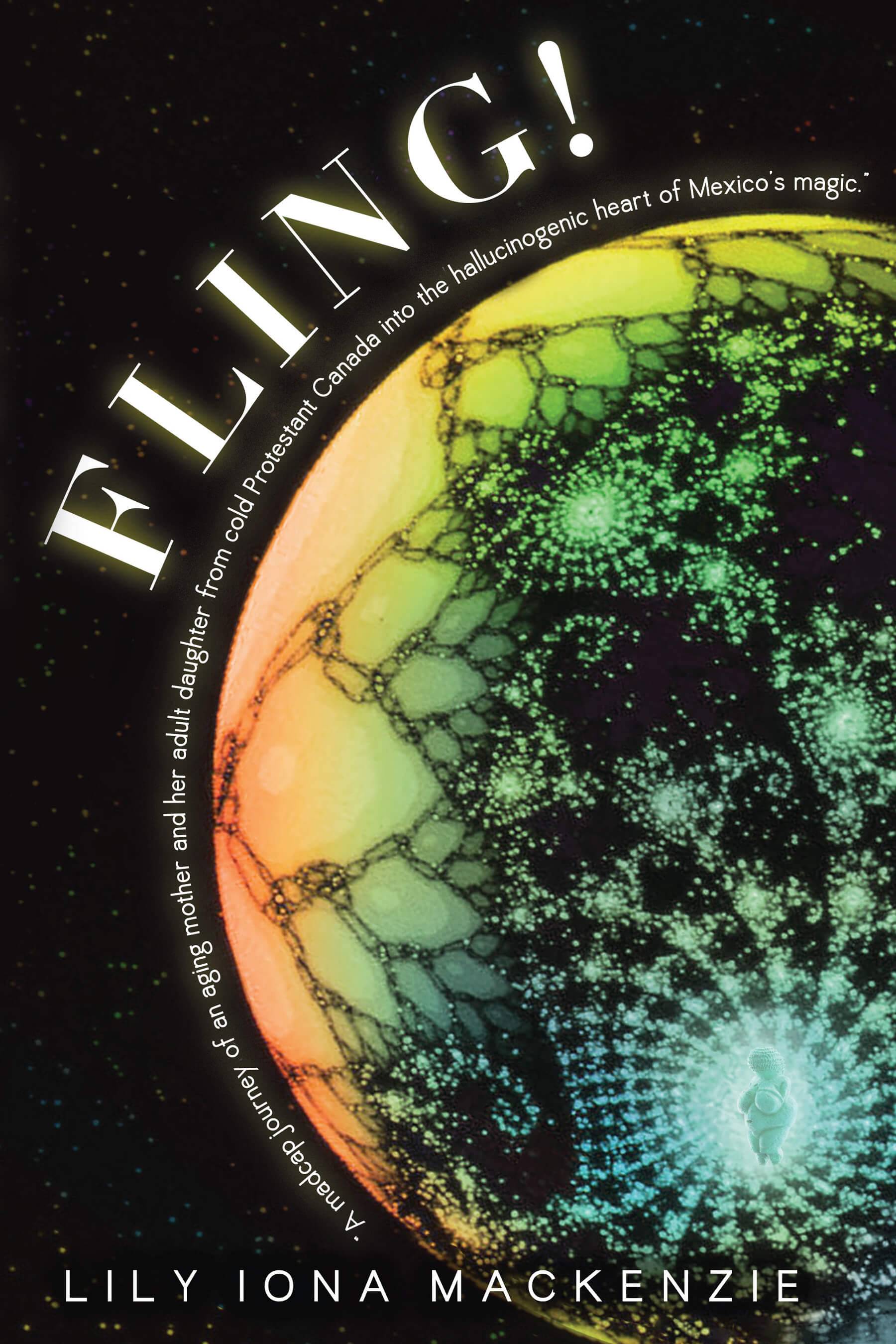
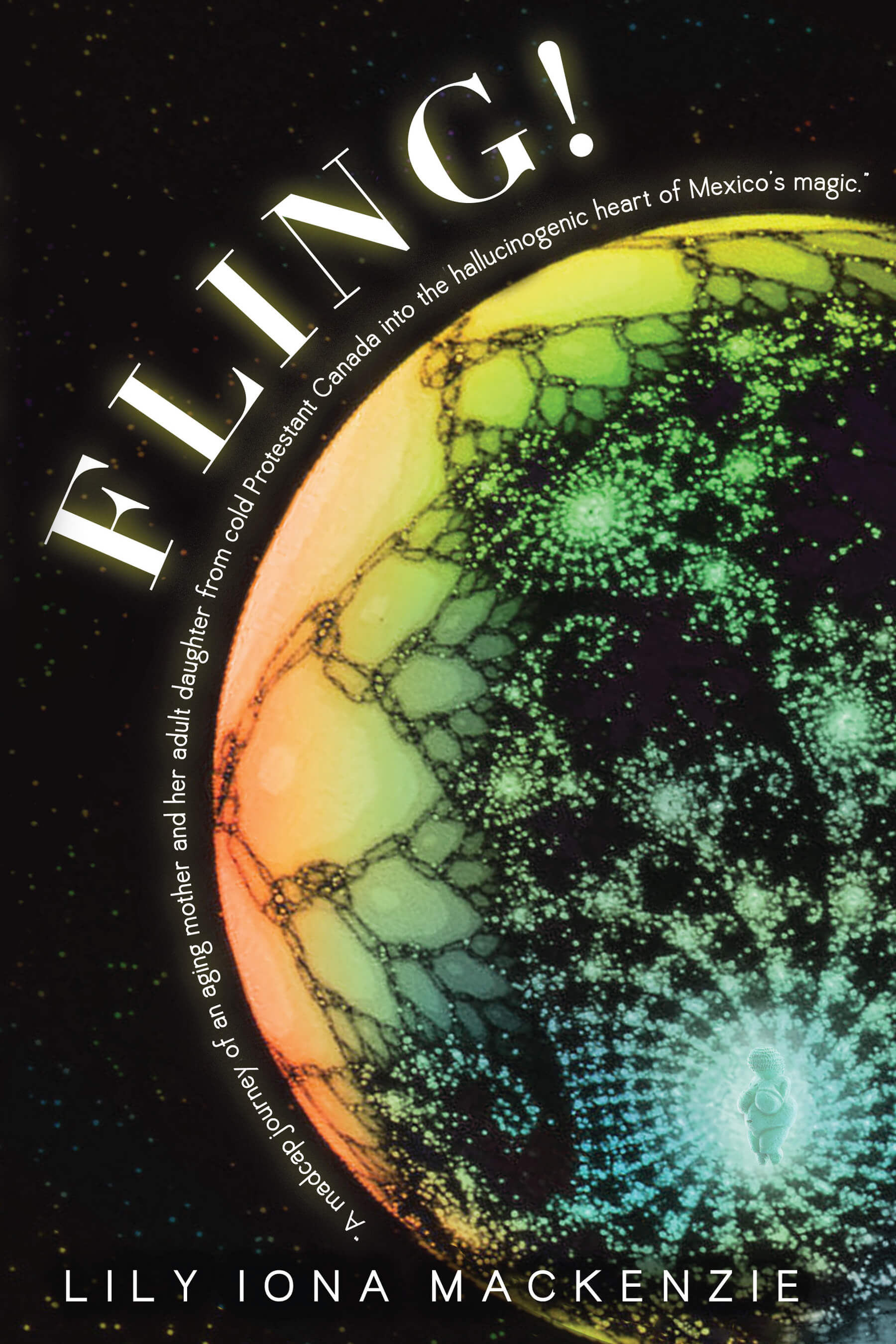
We writers are innocents in many ways, especially regarding the selling side of the publishing business. As long as we can stay in front of our computers, engaged in the dream world of our fictions, we don’t have to think of how these narratives will find their readers. Now that my novel Fling! has been published, I’ve had to make the adjustment. It hasn’t been easy.
Since I was born and raised in Canada, a high school drop out and a single mum when I left and moved to California, I wanted to do my book launch in the land of my birth. My son, who had read my novel in manuscript form and was a great early promoter of the work, suggested I do my first reading at Christina Lake, B.C., where he now lives. He set up an event at the Living Arts Center and also contacted a nearby library that was interested in hosting me. He even talked to the manager of Pharmasave, a local version of Wal-Mart. She was willing to put my books on display and set aside time one day during my visit for an author-signing session.
All of this sounded exciting, but I felt I also needed to include Calgary in my plans, the town where I had grown up. Local girl/woman makes good as debut author. I thought the story might attract potential readers, and I hoped the local papers would interview me (they didn’t). Since one of the novel’s main characters is a feisty 90 year old, I booked readings at the Kerby Senior Center as well as a senior retirement home that caters to ambulatory residents. I also made arrangements for a reading at Page’s bookstore, an independent bookseller that has a good reputation in the city. In addition, CJSW, the University of Calgary radio station, invited me to join the program Suffragette City for an interview. Finally, I registered for the conference that was happening during the dates I would be in Calgary, “Where Words Collide,” hoping it would give me exposure to potential readers through a workshop I offered on “The Origins of Fiction” and a reading I gave there on the last night of the event.
Then I had to make sure these events received copies of my book. But in order to sell them in Canada, I had to apply for a business number and an import/export account. Once I accomplished that, I checked with the venues where I would be reading to see if I could have my publisher mail books so I could reduce the number I would need to carry with me. All except Page’s Books were am enable. But what I hadn’t anticipated, and nor had they, was the import tax/duty they would have to pay upon receiving the books. In each case, this fee amounted to around $20. Multiplied by six, in addition to shipping charges that I had to pay, it was a costly venture. Clearly, I wasn’t going to be making any money on this tour. It would be mainly for exposure and experience and vanity.
Not knowing what the demand might be for my novel, I also packed about 50 or more copies in our suitcases, almost destroying my husband’s back and ramping up our expenses because our luggage was overweight.
Was all of this effort and expense worth it? While I didn’t sell as many copies of Fling! as I’d hoped to, I did expose the novel to a wider world than the SF Bay Area where I live. I also met a number of people that otherwise might not have attended a book reading/launch and gave them insight into one writer’s world.
Then there are the intangibles. The radio interview I did could have opened doors (and windows) I’ll never be aware of. People do talk about what they see, do, and hear during their days, and I can hope that some might mention Fling!
I also learned a good deal from the tour. I will never again sign up for a writer’s conference unless I know what kind of books are being featured. “Where Words Collide” presented mainly genre books: young adult, romance, mystery, fantasy, sci fi, etc. Those who attended weren’t interested in my somewhat conventional magical realism work. I wasted two days there that could have been more productive. It’s also difficult to make one’s book stand out in a sea of books no matter what the genre is. So I’m questioning the value of such events for promoting books in general.
In my next post, I’ll explore what seems to have been my most successful marketing attempts.
![vanessa photo small[2]](https://i0.wp.com/lilyionamackenzie.com/wp-content/uploads/2015/07/vanessa-photo-small2.jpg?ssl=1)
![TGL Cover[2]](https://i0.wp.com/lilyionamackenzie.com/wp-content/uploads/2015/07/tgl-cover2.jpg?resize=207%2C300&ssl=1) was Baggy Piggy, who had a curly Q tail that never ended (I knew this, because I drew him incessantly with pink crayons). I remember, before I could even write, ‘writing’ (aka doodling) on paper and then reading them to my great grandmother. Storytelling is in my blood. I guess that’s enough of a reason why.
was Baggy Piggy, who had a curly Q tail that never ended (I knew this, because I drew him incessantly with pink crayons). I remember, before I could even write, ‘writing’ (aka doodling) on paper and then reading them to my great grandmother. Storytelling is in my blood. I guess that’s enough of a reason why.