March 4, 2024
2 Comments
 Mimi Herman is the author of The Kudzu Queen, A Field Guide to Human Emotions, and Logophilia. Her novel The Kudzu Queen was selected by The North Carolina Center for the Book for the 2023 Library of Congress “Great Reads from Great Places” program and longlisted for the Center for Fiction First Novel Prize. Her writing has appeared in LitHub, Michigan Quarterly Review, Shenandoah, Crab Orchard Review and many other journals. Mimi is a member of the Board of Directors for the Association of Writers & Writing Programs, a Kennedy Center Teaching Artist, a Warren Wilson MFA alumna, and a Hermitage Artist Retreat Fellow. She directs weeklong Writeaways writing workshops in France, Italy, Ireland, New Mexico and online. For more information visit her at www.mimiherman.com andwww.writeaways.com.
As people learned about your book, what unexpected things happened along the way?
The Kudzu Queen has brought the world to my door—and to my inbox—in ways I never anticipated. Since publication, I’ve rediscovered friends from childhood, high school, college, grad school and beyond, who write to tell me their favorite characters, to give me chapter-by-chapter updates on their reading, to invite me to their book groups. I used to go to the library and think: there are millions of books here, thousands no one ever reads, so why bother? To have people say that they’re reading my book—and loving it—is a gift beyond anything I imagined.
Do you neglect personal hygiene or housekeeping to write? Or vice versa?
Housekeeping? What’s that? Oh, right, that’s the thing I spend two days doing before I have people over for dinner or a party. Or the thing I do when the  writing isn’t going well, and I need to create order somewhere, even if it’s not appearing on the page. I’m an overachiever, so the problem with housekeeping and me is that I’ll start out cleaning the bathtub, and end up replacing the plumbing. As for personal hygiene, you’ll be relieved to know that I tend to keep that up pretty well, no matter how the writing is going.
What writing mistakes do you find yourself making most often?
After all these years of writing, you’d think I’d learn to write a book in order, instead of creating an eighteen-foot smorgasbord of scenes and then trying to organize it into a four-course meal of a novel.
Why should people want to read your books?
I’m not a great advocate of “shoulds,” but I like the idea of people reading my books because I listen to characters with the same interest and affection that I have for actual people. My goal is always to understand who my characters really are, in all their complexities and quirks, and to help their stories live in the world in ways that allow readers to understand their own lives.
What do you read that people wouldn’t expect you to read? What’s the trashiest book you’ve ever read?
I’m a cyberfiction geek. Two of my favorite writers of all time are William Gibson and Neal Stephenson. Check out Gibson’s Pattern Recognition and Stephenson’s REAMDE!I also love mysteries. As for the trashiest book I’ve ever read, suffice it to say that yes, I read trash. When I first started writing fiction, I considered myself the original plotless wonder, and I figured out that trashy fiction is great for learning how to write plot. Or maybe that’s just an excuse for the fact that sometimes I need to crawl into bed and indulge in a delicious diet of literary bonbons.
Are you fluent in any other languages? If so, do you find that knowledge has any effect on your writing? Is it important for people to learn other languages? Why?
Fluent, no, but I learned French and Hebrew by the age of 14. I also studied Latin for four years in high school and Sign Language for two in college. Since then I’ve Duolingoed my way back to French and ventured into Italian. I think knowing languages can be useful in understanding how other people think. It’s not just the vocabulary, but also the syntax, the way people from different nationalities organize words in a sentence. For writers, having a familiarity in a second language lets you to consider the connotations and derivations of the words you use. Plus, learning a language teaches you to listen, an essential skill in writing good dialogue.
What surprising skills or hobbies do you have?
I love building—and rebuilding. My house is turning 100 years old this year, and over the time I’ve lived here, I’ve built kitchen cabinets and countertops, installed two sinks and three toilets, refinished floors, built a deck, designed and soldered a copper wineglass rack, and patched and painted almost every wall in the house.
Has your education helped you become a better writer?
Absolutely, and by that I mean my education at all levels. My wonderful 4th grade teacher, Miss Stevens, got me started with poetry. And my 6th grade teacher, Mrs. Williams, let me design an extra credit project, writing a book of animal poems.
In high school at Carolina Friends School, I got to do all the arts—writing, acting, making art, dancing, singing—and fell in love with learning. This made me a better writer and, I hope, a better teacher and human being. Throughout my professional life I’ve tried to make learning as magical for my students as it was for me.
In college I was lucky enough to be mentored by Max Steele and Doris Betts, who taught me how to write (Doris with her beautiful calligraphed “Don’t turn off the picture” in the margins of pages of unmitigated dialogue) and how to feel safe and comfortable in the presence of someone I admire (hours spent in Max’s comfortable office armchair, talking about writing and the fact that characters in student fiction never seem to have to do things like pay the rent or buy groceries).
And in the Warren Wilson MFA Program for Writers, I had the gift of four brilliant mentors: Richard Russo, Robert Boswell, C. J. Hribal and Charles Baxter. Do you have hours? Because that’s how long it would take me to describe all I learned from these amazing writers and teachers—and dancers! Dances at Warren Wilson were legendary, and have led—I’d like to believe—to a sense of balance and risk in my own writing.
How long did it take you to write your book?
When I first started talking about The Kudzu Queen, in podcasts and other interviews, I remembered that I’d been working on it off and on for a long time. Sixteen years or so, I thought. But late last summer I came across my very first handwritten pages—some of which are actually in the completed book—and realized I began writing it in August 1994!
Of course, while writing this book, I did a few other things: published a couple collections of poetry and a nonfiction book, designed and directed Poetry Out Loud for the state of North Carolina, became a Kennedy Center Teaching Artist, taught over 20,000 students and teachers, and cofounded Writeaways writing workshops in France, Italy, Ireland and New Mexico. But the book got its start, well…quite some time ago.
What’s next for you?
I’m currently working on my next novel, set in Ireland in the mid-1980s, which involves a young American woman just out of college, a missing child, and a drag queen named Holly Unlikely.

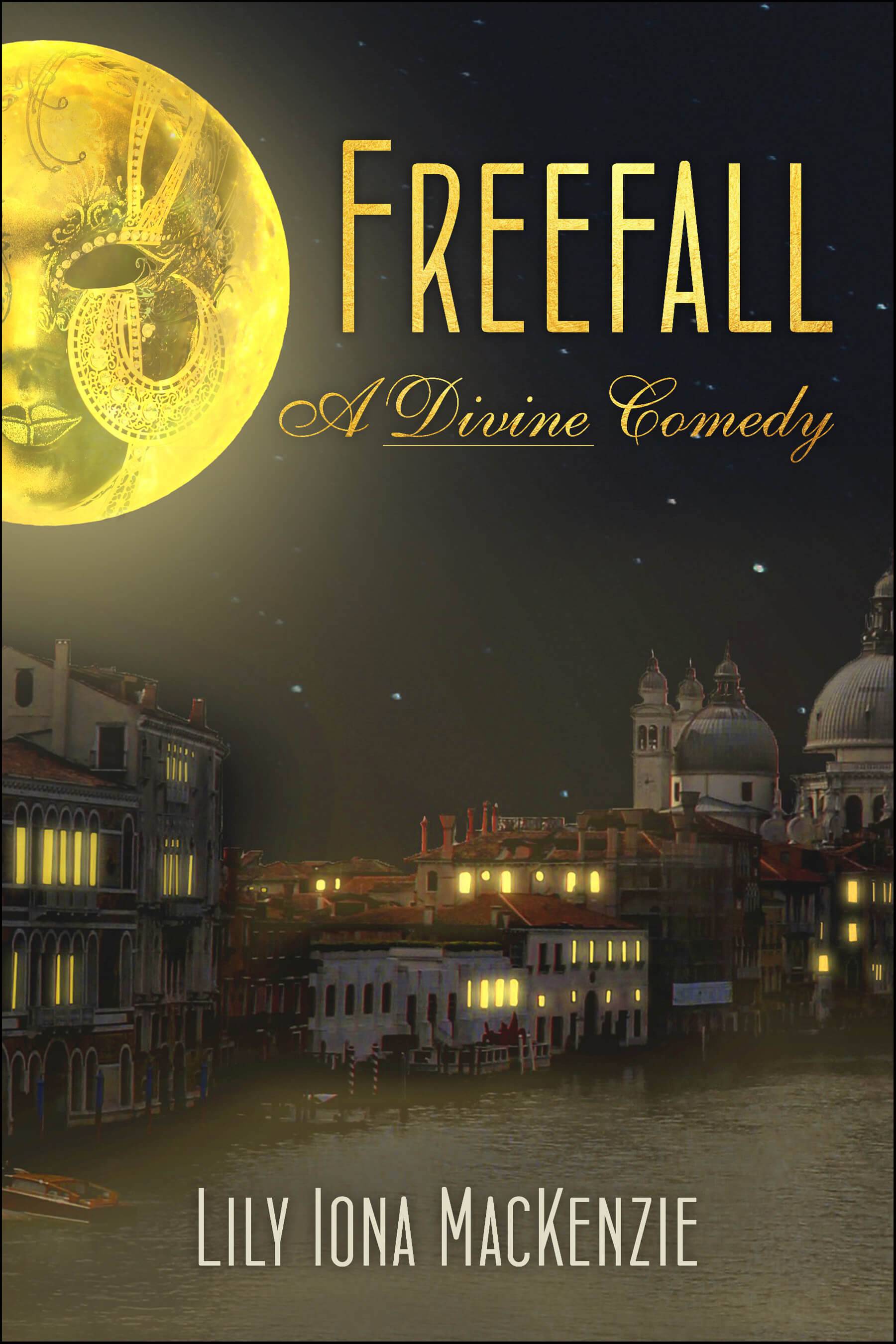

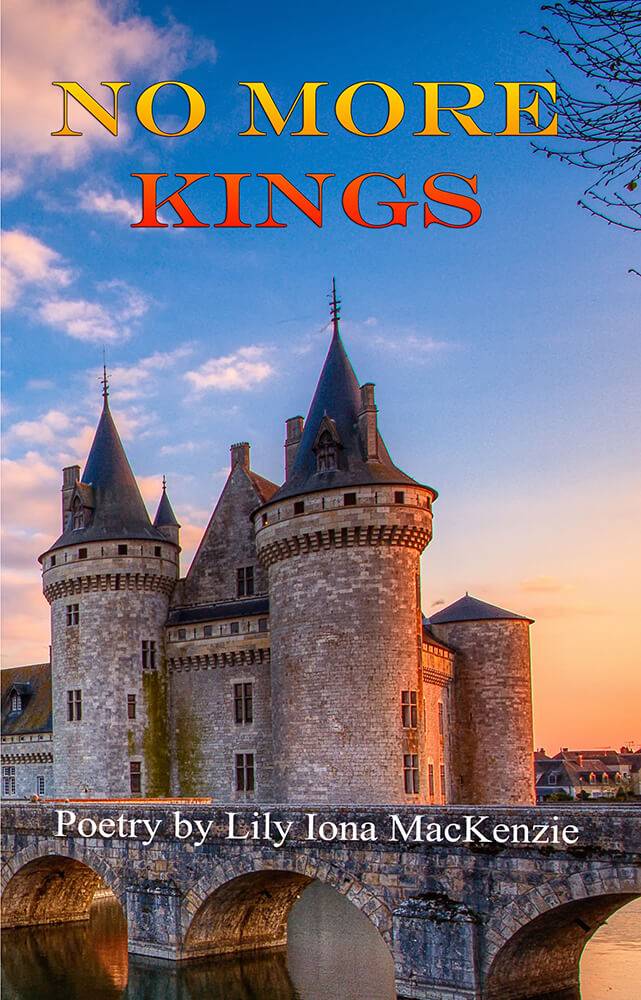
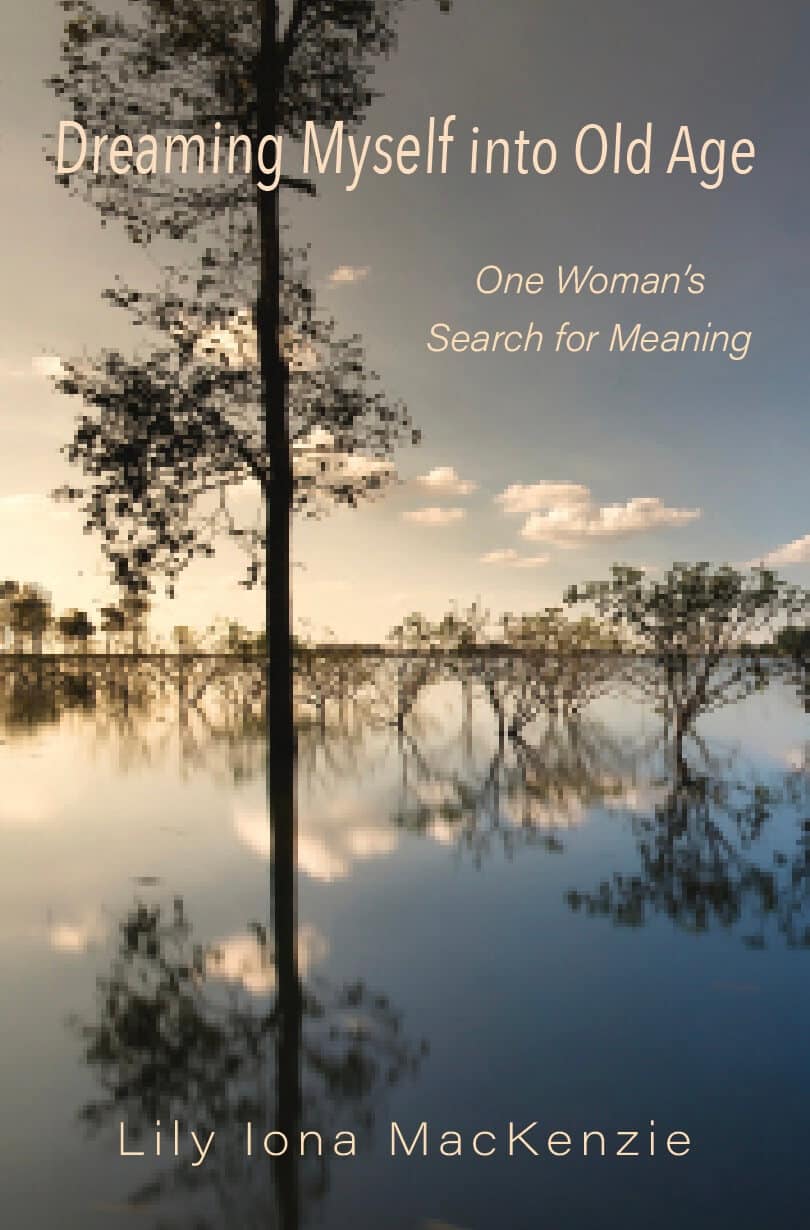
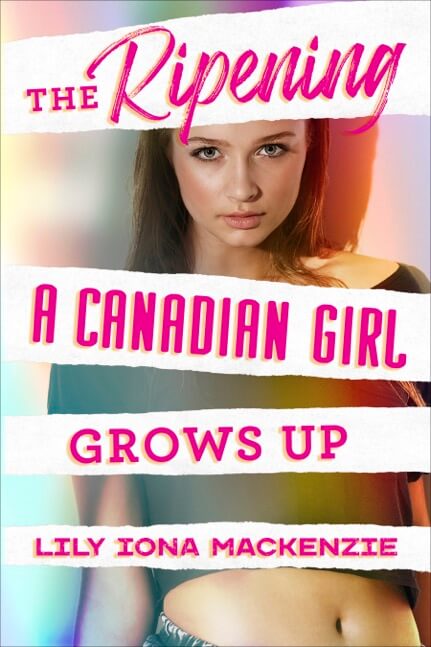


 I’m grieving the loss of dictionaries, thick, massive volumes that I used to get lost in. I would open a page and find hundreds of words, all of them demanding my attention, each a miniature world to explore. But now I’ve become a victim of on-line lexicons because they are handier than putting aside my laptop computer and marching into the other room to unload the Oxford from a bookshelf where it resides. (more…)
 Foghorns blast through the 7 AM San Francisco overcast. The only woman in the place, I saunter into the longshoreman’s union hall, trying to appear as if I did this every day. A few cigarette-scarred wooden tables offer a place for the men to gather and talk while waiting to be called to work. Billowing clouds of cigarette smoke hang ominously over everyone.
  Like detectives, writers need to be constantly observant, picking up clues from what people are wearing, how they gesture, the words they speak, the way they interact with others. They study people’s facial expressions and what they might suggest about the person, storing away the data in their memory banks. Or they’ll take notes in a writer’s journal that they’ll refer to later.
  Memoir writing blurs the line between truth and imagination in this revealing conversation with Lily Iona MacKenzie. We explore how creative writing techniques shape both fiction narrative and personal stories, as Lily explains her unique approach: “you lie in service of the truth.”
 Yesterday, I had to kill time (terrible metaphor) while waiting to hear a friend of mine do a reading of his newly published memoir at a Corte Madera bookstore. So I hung out at Marin County’s Corte Madera Library.
  For years I felt guilty about breaking the heirloom toys my stepfather’s mother had preserved, relics of another era. I can still remember the excitement of lifting each object out of the boxes where they had been stored and bringing them to life again: tiny china dishes with hand-painted flowers; a miniature stagecoach carrying riders and pulled by horses; dolls with porcelain faces and hands, features frozen in smiles, dressed in stylish Victorian gowns; a doll house with elegant furniture and a family.


 Editing writing requires tremendous restraint. I was reminded of this recently when a poem I had submitted to an anthology was accepted providing I approved of the editor’s changes. I’m open to thoughtful revision suggestions—a text can always be improved—but I assume the recommendations will be just that, insightful observations that cause me to re-think my work. In that light, I can re-enter a poem or story and see if any of the ideas resonate enough for me to make changes. Yet since I’m the poem’s creator, I expect to revise it myself and have the last word on its content.
  I’ve been thinking about how loosely we use abstract words like love, happiness, and truth as if they had concrete, observable meaning. I tend to revolt from using love to close my email or other exchanges unless I really feel love for the person I’m corresponding with. It bothers me when people sign their correspondence “love” without considering whether or not the emotion really applies to the recipient. Maybe you feel loving towards someone on most days, but not every day. Isn’t it deceitful to say “love” if you aren’t feeling it at the moment? Wouldn’t such a response seem confusing? It leads the reader to believe that the writer actually has such strong feelings, that somehow we’re part of the writer’s inner circle. Often that isn’t true.
  Being a first-rate writer requires the same kind of training that an architect receives. A typical program includes courses in architectural history and theory, building design, construction methods, professional practice, math, physical sciences, and liberal arts. Writers may not need to study math or the physical sciences, but they do need to give themselves the best liberal arts education they can find, both formal and informal. And like architects, in order to be successful in their field, writers need not only vision and a rich imagination but also a strong foundation.
  Thank you, Zackary Vernon, for taking the time to share your professional writing journey with me and my readers.
  Being part of an on-line writing group for several years has provided many benefits. But with the positives come a few negatives.
 Until recently, if I had wanted a restful getaway, I would not have chosen San Francisco or any big city. Getting away meant heading out of town, usually for a coastal inn. I wanted the leisurely pace and ocean views of Mendocino, Pacific Grove, Carmel, or Big Sur.
  Onyx wind chimes shaped like birds hang outside my bedroom. Each time a breeze stirs them, their music reminds me of the first trip I took to Mexico. While there, I was hoping to discover a part of the country that photographs can’t capture—the spirit of the place. Lawrence Durrell claims that landscape communicates this aspect. He says, “All landscapes ask the same question in the same whisper, ‘I am watching you—are you watching yourself in me’?”
  I recently reread Henry James’ The Portrait of a Lady and have mixed feelings about the era and the characters. It’s difficult to read about Victorian morés from a 21st Century perspective. Not only do I need lenses that will give me a bi-cultural perspective, but I also feel squashed between a culture clash. Not long after I finished with Portrait, I read a review of A. M. Homes’ book May We Be Forgiven in The New York Review of Books. One of her main characters says,
  I’m remembering a fascinating article I read in the New York Review of Books some time ago about Joseph Cornell. In many ways, he feels like my spiritual father. I love his quirkiness, his living on the periphery, his unique vision. Reading about him makes me want to go out and haunt junk shops for interesting memorabilia to make things with, to start a collection that I can draw from. I had an image of turning an old radio into a kind of Cornell box.
  At a recent poetry reading I gave, I was asked if I wrote for a particular ideal reader, something I hadn’t given much thought to. So here is my response to that question, though I’m sure other writers will approach it differently. (more…)
 Ellen Birkett Morris is the author of