 Mimi Herman is the author of The Kudzu Queen, A Field Guide to Human Emotions, and Logophilia. Her novel The Kudzu Queen was selected by The North Carolina Center for the Book for the 2023 Library of Congress “Great Reads from Great Places” program and longlisted for the Center for Fiction First Novel Prize. Her writing has appeared in LitHub, Michigan Quarterly Review, Shenandoah, Crab Orchard Review and many other journals. Mimi is a member of the Board of Directors for the Association of Writers & Writing Programs, a Kennedy Center Teaching Artist, a Warren Wilson MFA alumna, and a Hermitage Artist Retreat Fellow. She directs weeklong Writeaways writing workshops in France, Italy, Ireland, New Mexico and online. For more information visit her at www.mimiherman.com andwww.writeaways.com.
As people learned about your book, what unexpected things happened along the way?
The Kudzu Queen has brought the world to my door—and to my inbox—in ways I never anticipated. Since publication, I’ve rediscovered friends from childhood, high school, college, grad school and beyond, who write to tell me their favorite characters, to give me chapter-by-chapter updates on their reading, to invite me to their book groups. I used to go to the library and think: there are millions of books here, thousands no one ever reads, so why bother? To have people say that they’re reading my book—and loving it—is a gift beyond anything I imagined.
Do you neglect personal hygiene or housekeeping to write? Or vice versa?
Housekeeping? What’s that? Oh, right, that’s the thing I spend two days doing before I have people over for dinner or a party. Or the thing I do when the  writing isn’t going well, and I need to create order somewhere, even if it’s not appearing on the page. I’m an overachiever, so the problem with housekeeping and me is that I’ll start out cleaning the bathtub, and end up replacing the plumbing. As for personal hygiene, you’ll be relieved to know that I tend to keep that up pretty well, no matter how the writing is going.
What writing mistakes do you find yourself making most often?
After all these years of writing, you’d think I’d learn to write a book in order, instead of creating an eighteen-foot smorgasbord of scenes and then trying to organize it into a four-course meal of a novel.
Why should people want to read your books?
I’m not a great advocate of “shoulds,” but I like the idea of people reading my books because I listen to characters with the same interest and affection that I have for actual people. My goal is always to understand who my characters really are, in all their complexities and quirks, and to help their stories live in the world in ways that allow readers to understand their own lives.
What do you read that people wouldn’t expect you to read? What’s the trashiest book you’ve ever read?
I’m a cyberfiction geek. Two of my favorite writers of all time are William Gibson and Neal Stephenson. Check out Gibson’s Pattern Recognition and Stephenson’s REAMDE!I also love mysteries. As for the trashiest book I’ve ever read, suffice it to say that yes, I read trash. When I first started writing fiction, I considered myself the original plotless wonder, and I figured out that trashy fiction is great for learning how to write plot. Or maybe that’s just an excuse for the fact that sometimes I need to crawl into bed and indulge in a delicious diet of literary bonbons.
Are you fluent in any other languages? If so, do you find that knowledge has any effect on your writing? Is it important for people to learn other languages? Why?
Fluent, no, but I learned French and Hebrew by the age of 14. I also studied Latin for four years in high school and Sign Language for two in college. Since then I’ve Duolingoed my way back to French and ventured into Italian. I think knowing languages can be useful in understanding how other people think. It’s not just the vocabulary, but also the syntax, the way people from different nationalities organize words in a sentence. For writers, having a familiarity in a second language lets you to consider the connotations and derivations of the words you use. Plus, learning a language teaches you to listen, an essential skill in writing good dialogue.
What surprising skills or hobbies do you have?
I love building—and rebuilding. My house is turning 100 years old this year, and over the time I’ve lived here, I’ve built kitchen cabinets and countertops, installed two sinks and three toilets, refinished floors, built a deck, designed and soldered a copper wineglass rack, and patched and painted almost every wall in the house.
Has your education helped you become a better writer?
Absolutely, and by that I mean my education at all levels. My wonderful 4th grade teacher, Miss Stevens, got me started with poetry. And my 6th grade teacher, Mrs. Williams, let me design an extra credit project, writing a book of animal poems.
In high school at Carolina Friends School, I got to do all the arts—writing, acting, making art, dancing, singing—and fell in love with learning. This made me a better writer and, I hope, a better teacher and human being. Throughout my professional life I’ve tried to make learning as magical for my students as it was for me.
In college I was lucky enough to be mentored by Max Steele and Doris Betts, who taught me how to write (Doris with her beautiful calligraphed “Don’t turn off the picture” in the margins of pages of unmitigated dialogue) and how to feel safe and comfortable in the presence of someone I admire (hours spent in Max’s comfortable office armchair, talking about writing and the fact that characters in student fiction never seem to have to do things like pay the rent or buy groceries).
And in the Warren Wilson MFA Program for Writers, I had the gift of four brilliant mentors: Richard Russo, Robert Boswell, C. J. Hribal and Charles Baxter. Do you have hours? Because that’s how long it would take me to describe all I learned from these amazing writers and teachers—and dancers! Dances at Warren Wilson were legendary, and have led—I’d like to believe—to a sense of balance and risk in my own writing.
How long did it take you to write your book?
When I first started talking about The Kudzu Queen, in podcasts and other interviews, I remembered that I’d been working on it off and on for a long time. Sixteen years or so, I thought. But late last summer I came across my very first handwritten pages—some of which are actually in the completed book—and realized I began writing it in August 1994!
Of course, while writing this book, I did a few other things: published a couple collections of poetry and a nonfiction book, designed and directed Poetry Out Loud for the state of North Carolina, became a Kennedy Center Teaching Artist, taught over 20,000 students and teachers, and cofounded Writeaways writing workshops in France, Italy, Ireland and New Mexico. But the book got its start, well…quite some time ago.
What’s next for you?
I’m currently working on my next novel, set in Ireland in the mid-1980s, which involves a young American woman just out of college, a missing child, and a drag queen named Holly Unlikely.




 In addition to writing adult fiction and non-fiction, I also create pieces for children. Today, I tried to start a children’s story of a girl sleeping in an elegant dollhouse based on a dream image that has stayed with me. But after a few sentences, I felt extremely critical of what I had written. I had to stop. For now. Let it breathe, I said to myself. Let the criticalness soften—fall away. (more…)
 At a recent poetry reading I gave, I was asked if I wrote for a particular ideal reader, something I hadn’t given much thought to. So here is my response to that question, though I’m sure other writers will approach it differently.
  Ellen Birkett Morris is the author of
  One of the best things about being a writer is that you can take your work with you no matter where you go. Of course, this is true now for lots of jobs because of Zoom and the internet and the acceptance of hybrid work. But a writer has always been a
 I recently read the book Words as Eggs by Jungian analyst Russell Lockhart. The idea for the work, and the chapter from which the title comes, originated in one of Lockhart’s dreams. A voice in his dream said “Do you not know that words are eggs, that words carry life, that words give birth?” (92).
  Fiction writers have been called many things, but magician seems to me the best description. They dip into the black hat of their imagination and produce an endless variety of characters, situations, images, genres, events, and styles. The effect on readers is nothing less than magical, the reader also becoming a magician, assisting in making visible what wasn’t there before.
  A writing friend of mine has papered her bathroom with rejection slips. Viewed in that context, they become less weighty and are put into perspective. As writers, we tend to think of rejections from publishers as negative. But rejections can be gifts in disguise, offering us a way to make lemonade out of lemons.
  Small presses don’t have the reputation that larger presses do of maintaining high editorial standards. But my experience with these presses, especially Regal House, the one that published
  Sometimes I get stuck in feeling I must complete something I’m working on. Or must make a scene into a story rather than just letting myself have fun with the writing. I get too bogged down in the heavy stuff of being a writer. I’ve discovered that to get unstuck, I need to push aside my concerns and just write whatever is surfacing in the moment that wants to be heard. That freedom then allows me to dig into a draft I’ve gotten stuck in and usually enables me to make progress again.
  I continue to learn from the journals I kept almost 40 years ago.
 I’ve been rereading journals I wrote almost 40 years ago that still have relevance. I had attended a writing workshop at Wellspring, a former retreat center in Philo, CA. The property had the Navarro River passing through it, as well as several rustic but delightful cabins for guests. For me, the focus on writing was important, but my main reason for being there was the exposure to nature. I was enjoying my time at this Wellspring workshop and being immersed for the weekend in nature.
  My interest in fairy tales has been revived from reading my journals from forty years ago. At that time, I was investigating the art fairy tale. The Grimm’s fairy tales grew out of the oral tradition, but ones that Hans Christian Andersen and others wrote are part of the art fairy tale genre. I was interested then in exploring that mode in my own writing. I’d discovered that some of the stories I’d created fit there. Discovering this accepted category had heartened me to be do more of them and to believe in their worth.
  Michael Bourne is the author of
  I was having dinner with friends the other night that had read my novel
  I wish I could get excited about graphic novels. I looked at Maus many years ago and tried to get into it. I couldn’t. I didn’t like having prefab images put my own imagination on hold. I didn’t like the lack of complexity that I enjoy so much in a literary novel (no graphics). It was like watching tv in print. Everything is oversimplified. Reduced to its lowest common denominator.
  I see a relationship between impressionism, some kinds of abstract paintings, and the poetry I want to write—of just suggesting something. Giving only enough information/detail to set the readers’ imagination working. I don’t want everything spelled out. I want mystery in my poems (and my prose)—new worlds.
 Publishing three novels and a poetry collection has forced me to embrace the world of social networking. From it, I’ve discovered a whole culture that I hadn’t experienced before.
  “I write to make sense of my life.” John Cheever
 From inside my study, one wall book-lined, the other holding a large mirror that makes the room appear bigger, I sit on the loveseat, listening to Strauss and the waterfall powered by a tiny electric pump. When I’m home, I turn it on, the sound of water like a heart beat in this house, a tangible reminder of what usually is invisible, at least to waking life—water for me representing the unconscious and all that lives there.
  Being in Italy has caused me to rethink my reaction to problems that accost us on a daily basis. Before leaving on this trip, if something went wrong, I would tighten up and lose my sense of humor, creating a concrete wall that was difficult to penetrate.
  My husband and I like to travel when we have the time and money. We’ve managed to visit St. Petersburg, Moscow, the Atlas Mountains in Morocco, Marrakech, Fes, Rabat, Istanbul, the entire Aegean/Mediterranean coast off Turkey, Norway, Sweden, Denmark, and many other countries.
  In “Spirit of the Law,” a short story I’ve written, I wanted to explore life after death and something else—how the dead go on living or not living if only in our memory and in the physical places where we’ve known them.
  I recall reading a review by Elaine Blair of Rachel Cusk’s novel Outline in the New Yorker a few years ago. Blair says, Cusk has written admiringly about Karl One Knausgaard, and her proposed cure for the trouble with fiction sounds like a gloss of his. ‘Autobiography is increasingly the only form in all the arts,’ she told the Guardian.” Blair goes on to say that some writers are hewing closer to the author’s subjective experiences, of effacing the difference between fiction and their own personal lives.
  Writing is such a major part of my day that if I don’t get to it, I’m constantly distracted, as if I have a lover I’m thinking about. It’s like a siren’s call, pulling me away. My husband notices it. He comments on me seeming drifty. He’s right. I’m not fully there. But the discipline of writing an hour or more a day pulls me into myself, gives me the contemplative part I need. Balance.
  Those of us who write undergo a personal odyssey each time we pick up our pens or apply fingers to a computer. We also participate in discovering the origins of fiction. But what starts us out on these explorations of other’s lives?
  Readers who aren’t writers themselves tend to think that most aspects of a novel come directly from an author’s imagination. Some novels do arrive in that fashion, but most don’t. These readers don’t understand how characters can appear and then evolve during a narrative, learning and growing through their actions and the resulting events that unfold.
  I may be a little late to celebrate National Library Week, but I have been thinking about my own evolution as a reader. At some point in my early years, my parents purchased a set of the Books of Knowledge. My grandfather, a Scots’ school-master, must have urged my mother and stepfather to buy the encyclopedia since neither of them were determined to develop my intellect. Mother had only finished high school; my stepfather had dropped out of school after the eighth grade. They didn’t have money for extras and never touched the books themselves that I recall, so there was no reason for them to buy the set.
  For several days, I’ve been absorbed by Jill Lepore’s The Secret History of Wonder Woman. I once idealized (and still do) this superheroine. As a girl, I read every comic I could find about her because she embodied something lacking in many female’s lives: power. And freedom. Though she had a public persona as the secretary Diana Prince, she could shed that mask and become her true self—an Amazon who was Superman’s equal.
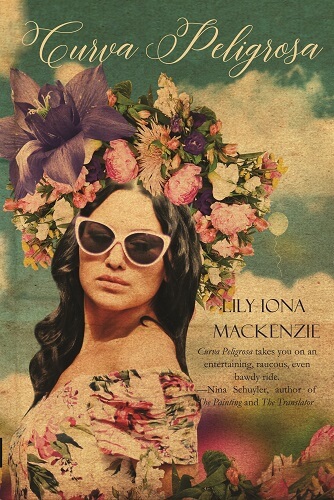
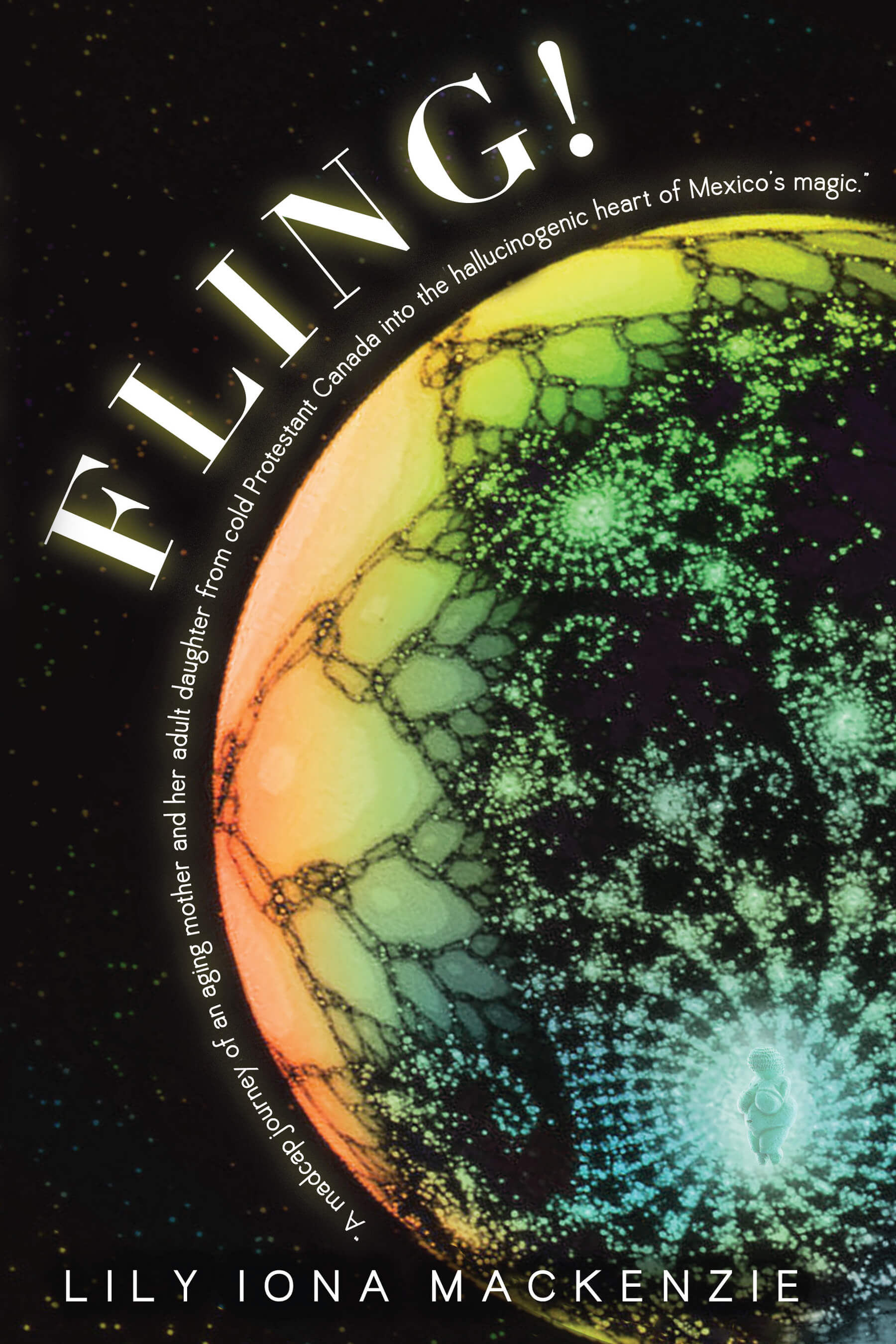
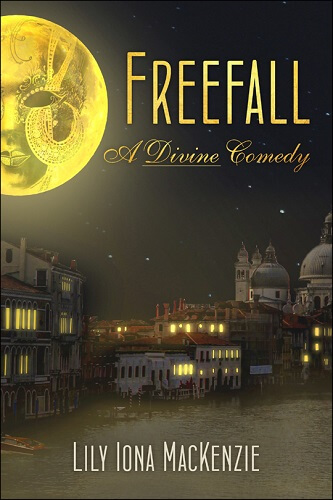
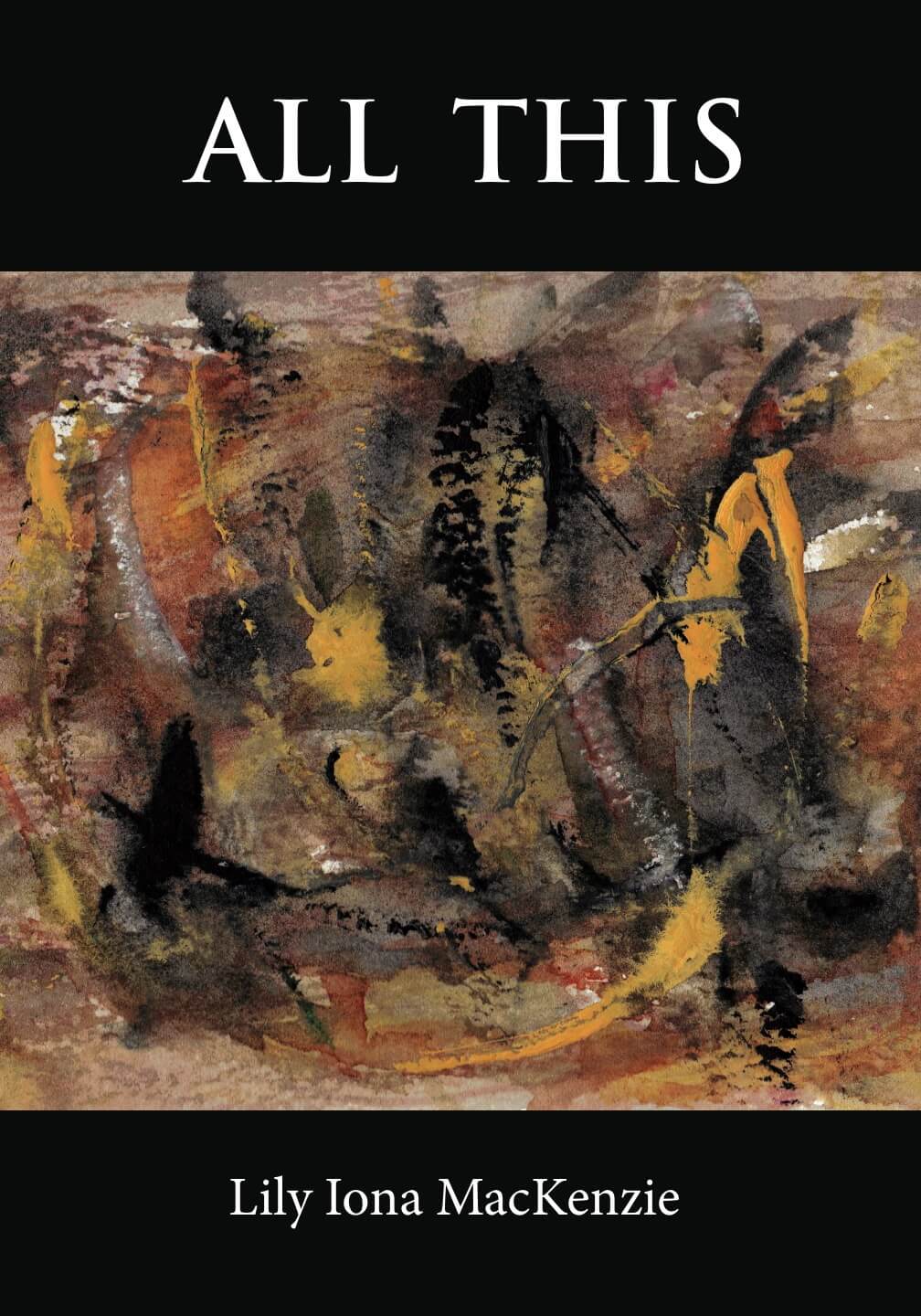
  Fling!was published in 2015, my publisher told me to create a fan base. I don’t think he was referring to the kind of fan I’m used to, a mechanical object with rotating blades that whirl around and stir the air. In a way, though, I suppose the kind of fan my publisher was referring to can stir things up and call attention to our work.