






 I guess there is something comforting about the way today’s youth have become accustomed to their parents/guardians checking on them at all times via smart phones, etc. It may feel like being held in a kind of web (and here I’m not referring to the World Wide Web), a loving network. But it also suggests to me what it’s like to be trapped in a spider’s snare. The idea that none of us can have a moment when we aren’t being scrutinized in some way makes me shudder. What has happened to the notion of privacy and freedom? Am I old-fashioned to think they still are virtues?
 I’m grieving the loss of dictionaries, thick, massive volumes that I used to get lost in. I would open a page and find hundreds of words, all of them demanding my attention, each a miniature world to explore. But now I’ve become a victim of on-line lexicons because they are handier than putting aside my laptop computer and marching into the other room to unload the Oxford from a bookshelf where it resides.
  Foghorns blast through the 7 AM San Francisco overcast. The only woman in the place, I saunter into the longshoreman’s union hall, trying to appear as if I did this every day. A few cigarette-scarred wooden tables offer a place for the men to gather and talk while waiting to be called to work. Billowing clouds of cigarette smoke hang ominously over everyone.
  Like detectives, writers need to be constantly observant, picking up clues from what people are wearing, how they gesture, the words they speak, the way they interact with others. They study people’s facial expressions and what they might suggest about the person, storing away the data in their memory banks. Or they’ll take notes in a writer’s journal that they’ll refer to later.
  Memoir writing blurs the line between truth and imagination in this revealing conversation with Lily Iona MacKenzie. We explore how creative writing techniques shape both fiction narrative and personal stories, as Lily explains her unique approach: “you lie in service of the truth.”
 Yesterday, I had to kill time (terrible metaphor) while waiting to hear a friend of mine do a reading of his newly published memoir at a Corte Madera bookstore. So I hung out at Marin County’s Corte Madera Library.
  For years I felt guilty about breaking the heirloom toys my stepfather’s mother had preserved, relics of another era. I can still remember the excitement of lifting each object out of the boxes where they had been stored and bringing them to life again: tiny china dishes with hand-painted flowers; a miniature stagecoach carrying riders and pulled by horses; dolls with porcelain faces and hands, features frozen in smiles, dressed in stylish Victorian gowns; a doll house with elegant furniture and a family.


 Editing writing requires tremendous restraint. I was reminded of this recently when a poem I had submitted to an anthology was accepted providing I approved of the editor’s changes. I’m open to thoughtful revision suggestions—a text can always be improved—but I assume the recommendations will be just that, insightful observations that cause me to re-think my work. In that light, I can re-enter a poem or story and see if any of the ideas resonate enough for me to make changes. Yet since I’m the poem’s creator, I expect to revise it myself and have the last word on its content.
  I’ve been thinking about how loosely we use abstract words like love, happiness, and truth as if they had concrete, observable meaning. I tend to revolt from using love to close my email or other exchanges unless I really feel love for the person I’m corresponding with. It bothers me when people sign their correspondence “love” without considering whether or not the emotion really applies to the recipient. Maybe you feel loving towards someone on most days, but not every day. Isn’t it deceitful to say “love” if you aren’t feeling it at the moment? Wouldn’t such a response seem confusing? It leads the reader to believe that the writer actually has such strong feelings, that somehow we’re part of the writer’s inner circle. Often that isn’t true.
  Being a first-rate writer requires the same kind of training that an architect receives. A typical program includes courses in architectural history and theory, building design, construction methods, professional practice, math, physical sciences, and liberal arts. Writers may not need to study math or the physical sciences, but they do need to give themselves the best liberal arts education they can find, both formal and informal. And like architects, in order to be successful in their field, writers need not only vision and a rich imagination but also a strong foundation.
  Thank you, Zackary Vernon, for taking the time to share your professional writing journey with me and my readers.
  Being part of an on-line writing group for several years has provided many benefits. But with the positives come a few negatives.
 Until recently, if I had wanted a restful getaway, I would not have chosen San Francisco or any big city. Getting away meant heading out of town, usually for a coastal inn. I wanted the leisurely pace and ocean views of Mendocino, Pacific Grove, Carmel, or Big Sur.
  Onyx wind chimes shaped like birds hang outside my bedroom. Each time a breeze stirs them, their music reminds me of the first trip I took to Mexico. While there, I was hoping to discover a part of the country that photographs can’t capture—the spirit of the place. Lawrence Durrell claims that landscape communicates this aspect. He says, “All landscapes ask the same question in the same whisper, ‘I am watching you—are you watching yourself in me’?”
  I recently reread Henry James’ The Portrait of a Lady and have mixed feelings about the era and the characters. It’s difficult to read about Victorian morés from a 21st Century perspective. Not only do I need lenses that will give me a bi-cultural perspective, but I also feel squashed between a culture clash. Not long after I finished with Portrait, I read a review of A. M. Homes’ book May We Be Forgiven in The New York Review of Books. One of her main characters says,
 Venice: La Serenissima
My husband and I are planning a month-long trip to Italy in June 2015, so an article about Venice in Border Crossings interested me. It has helped me to better understand why that city moved me so much.
In its description of St. Mark’s church, it says,”‘You are going to be shocked when you go inside,’ the guide said solemnly. It is very oriental.’ Pause. ‘You see, the mosaics were made by Greeks. You’re going to see Greek words on the mosaics. A surprise in a Christian Church’.”
My father was born in Central Greece, the village of Karditsa. Some years ago, I stopped in Venice before flying to Greece for ten days to explore that part of my heritage. Immediately, I felt at home there. Before that trip, I hadn’t realized how much the East had influenced Venice in architecture and design, a mix of ornate decoration and classical elements. It gives a unique feeling, a magical quality. The city is not exactly Italian or European but Venetian. Its own world. The bride of the sea.
The city has great symbolic value to me, the bridge between east and west, between my Scottish heritage on my mother’s side and my father’s.
Venice, a mix of cultures and peoples, is the opposite of more dignified Florence. There’s a dreamy quality to life in Venice. Slow moving—you can’t go that fast on the water, so the pace of life is easier. Seeing water everywhere also makes one feel reflective, suspended. It’s truly miraculous that men were able to build the town in water, in mud.
It was incredible to sit in St. Mark’s square, drinking a beer, watching the tourists amble by, some dancing to the elegant pop music, violins, accordions, sweet sounds. Not the clashing ones of rock. Venetian feeling. From where I sat in a restaurant, I could see a pigeon making a nest in the fold of a canvas curtain. The activity was touching in the midst of all that commotion.
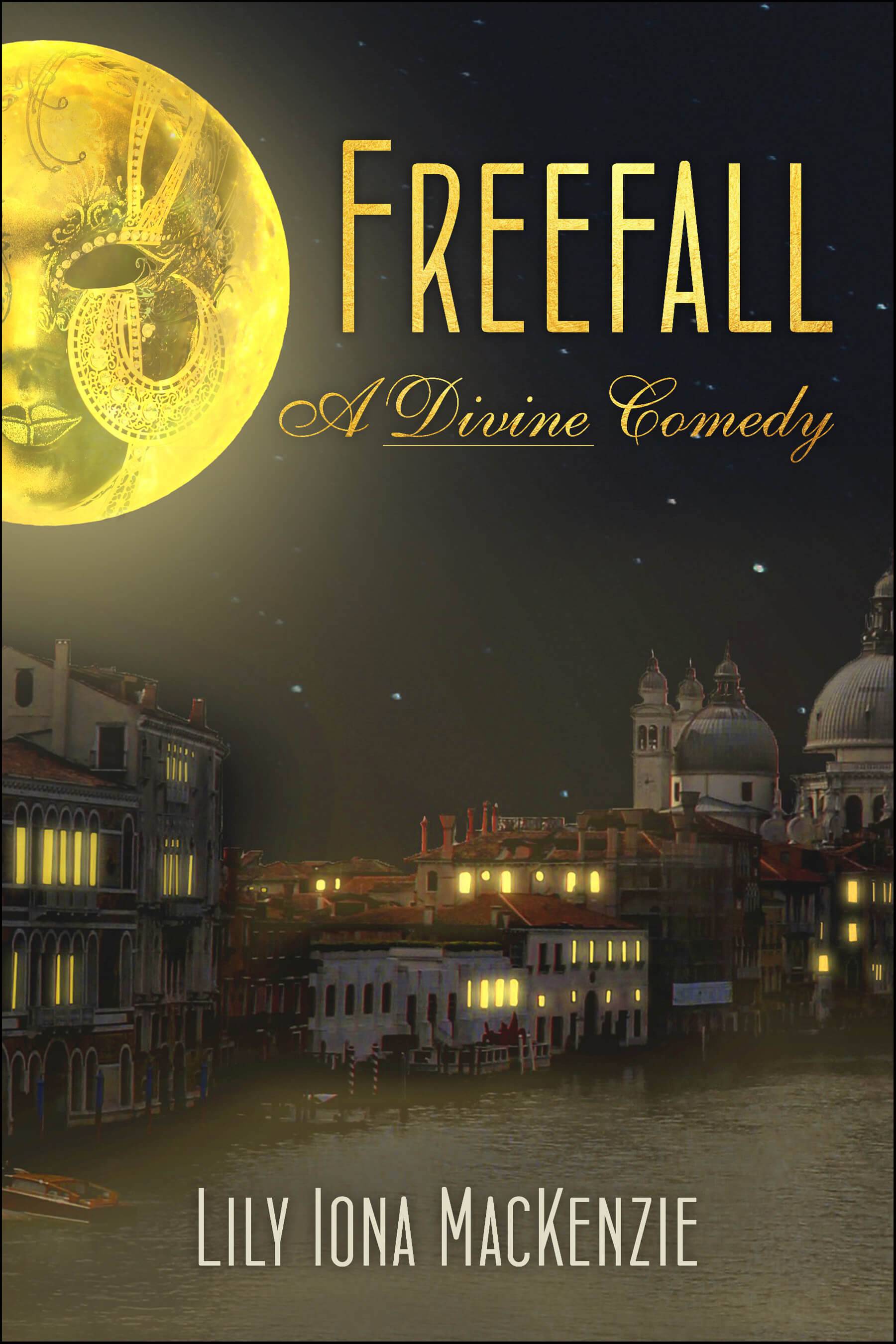
The boat rides after dark also were lovely, spots of light illuminating the night and reflecting in the water, gondoliers snaking through the canal, paddles soundlessly cutting into the depths, passengers reclining and enjoying the ride. So many of the buildings seemed only partially inhabited, many windows dark. Of course, the shutters may have been closed against mosquitoes and noise from the canal. But it was dramatic to view the places that were illuminated, glimpses into elegant parlors, walls and ceilings ornately decorated. A woman stepping out on her balcony was silhouetted against the light. It was like being on a giant stage.
The day I visited St. Mark’s, I realized why this city is so important to me. I was looking at things saved from Constantinople, items Venetians had ransacked during that great city’s demise. I understood its impact then emotionally, not just intellectually: Venice is the gateway into Greece, into that part of my heritage. It has a strong Greek influence (the Greek cross is used in the sanctuary, the Greek Orthodox church putting more emphasis on resurrection than the crucifixion, on completeness).
Nearly everything about Venice pleases me—the ambiance, the beauty, the color, the art, the architecture. The mix of so many periods and styles. I like that kind of blending. There is also an assortment of races not found so much in other Italian communities.
The Border Crossing’s article also pointed out that “Venice herself is understood to be female, either La Serenissima or, to use Apollinaire’s nasty phrase, the ‘sexe femelle de l’Europe’ (the she-animal of Europe).” No wonder I felt at home there.
(Here are more wonderful images of Venice: http://shootingveniceandberlin.wordpress.com/2015/01/03/stillness/)