







 I’m thinking this morning of when my husband and I returned from a couple of nights in Calistoga, a charming town in California’s Napa Valley. Yes, it has its share of upwardly mobile types who go there to visit the many wineries. But there also are others who need to be replenished by the pastoral setting and many opportunities to take walks in the surrounding hills. I need that uplift today. (more…)
 For everybody except those hiding under a rock, it’s impossible to avoid AI these days.

 I’m grateful to Al Sirois, a fellow Regal House author, for sharing with us his writing journey.

 Since my late 20s, I’ve recorded my dreams every morning, curious about the wonderful dramas that unfold each night in the subterranean depths. During a trip we took a while back to Osoyoos, B.C., I got a better understanding of dreams and the role they play in our lives.

 I recall returning home a while back after spending time at a recently built rental home on the Oxnard, California, beach. It had a wonderful view overlooking the harbor and ocean. You might think I would miss the incredible views and location, as well as the house, brimming with technological toys. But I didn’t. It was a relief to return to our simple Richmond abode, built in the 1940s.
 As a young woman in the 50s growing up in Canada, I was intrigued by hockey and football. Baseball didn’t exist for me then. It hadn’t entered Canadian consciousness, and it would take some years before it did. But I didn’t feel deprived. Hockey and football had much to offer at that time, including handsome, vigorous guys.
 Being part of an on-line writing group for several years provided me with many benefits. But the positives also produced a few negatives.
 I didn’t get to sleep till 1 AM this morning after reading a fascinating article about the assemblage artist Joseph Cornell. I’ve felt that in many ways, he’s my spiritual father. A-I describes his work as intricate “signature boxes, glass-fronted shadow boxes that serve as miniature, poetic theaters. Inside, he meticulously arranged collages and three-dimensional ‘found objects’—such as old maps, vintage photographs, watch parts, and marbles—to create dreamlike, nostalgic universes that celebrate memory, astronomy, and romantic cinema.”
 I’ve just finished rereading Henry James’ The Portrait of a Lady and have mixed feelings about the era and the characters. It’s difficult to read about Victorian morés from a 21st Century perspective. Not only do I need lenses that will give me a bi-cultural perspective, but I also feel squashed between a culture clash. Just after I finished with Portrait, I read a review of A. M. Homes’ book May We Be Forgiven in The New York Review of Books. One of her main characters says,
 In the SF Bay area, we’ve recently had unseasonably warm days, totally out of character for us at this time of year in San Francisco and the other nearby coastal regions. Most of us have been delighted to sit out in our yards at night and enjoy this new balmy climate. But then I read in the paper recently that the planet has been recording one of the hottest springs, reminding me that while I’m luxuriating in these above-average temperatures, the weather extremes are killing the planet. It’s a startling and disturbing statistic.


 I guess there is something comforting about the way today’s youth have become accustomed to their parents/guardians checking on them at all times via smart phones, etc. It may feel like being held in a kind of web (and here I’m not referring to the World Wide Web), a loving network. But it also suggests to me what it’s like to be trapped in a spider’s snare. The idea that none of us can have a moment when we aren’t being scrutinized in some way makes me shudder. What has happened to the notion of privacy and freedom? Am I old-fashioned to think they still are virtues?
Thanks to Joe Casciani for introducing me to his great podcast: Living to 100 Club and for this fun interview. Join us!
April 9, 2025
2 Comments

Joseph M. Casciani
What does it mean to truly embrace aging—not just physically, but emotionally, intellectually, and spiritually?
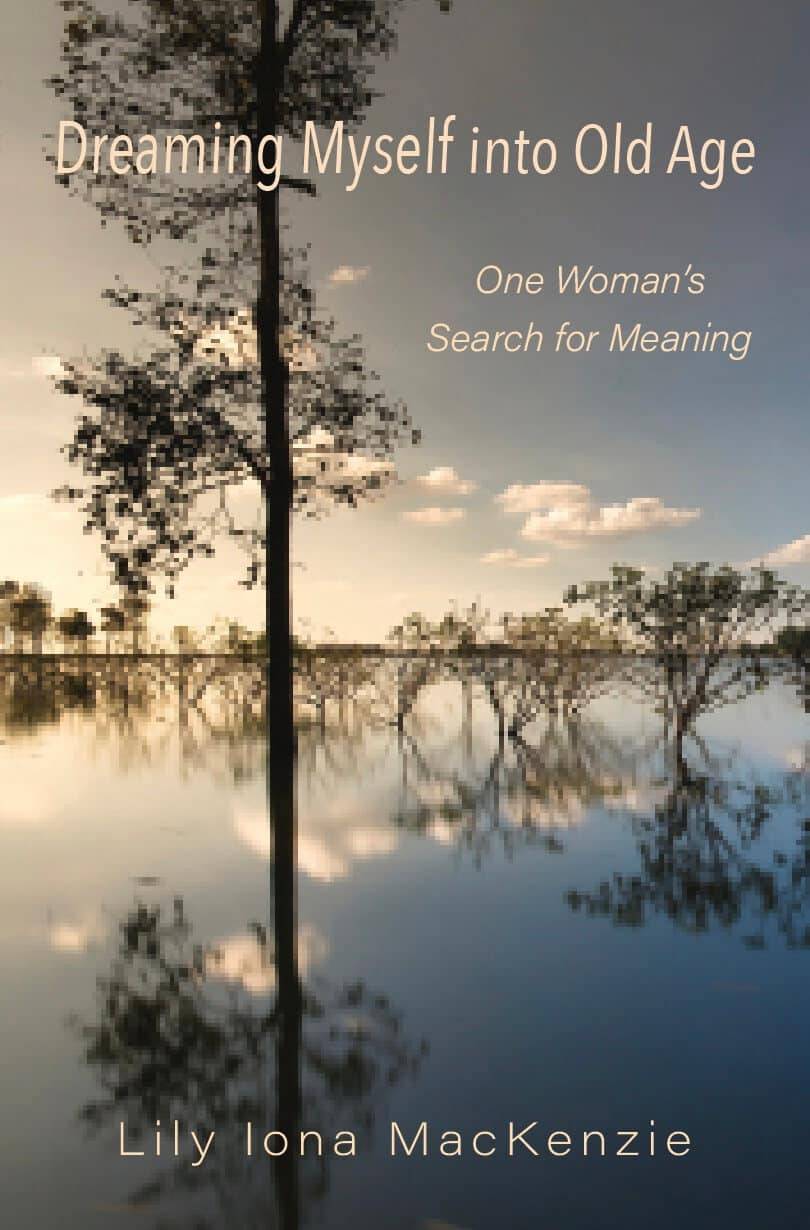
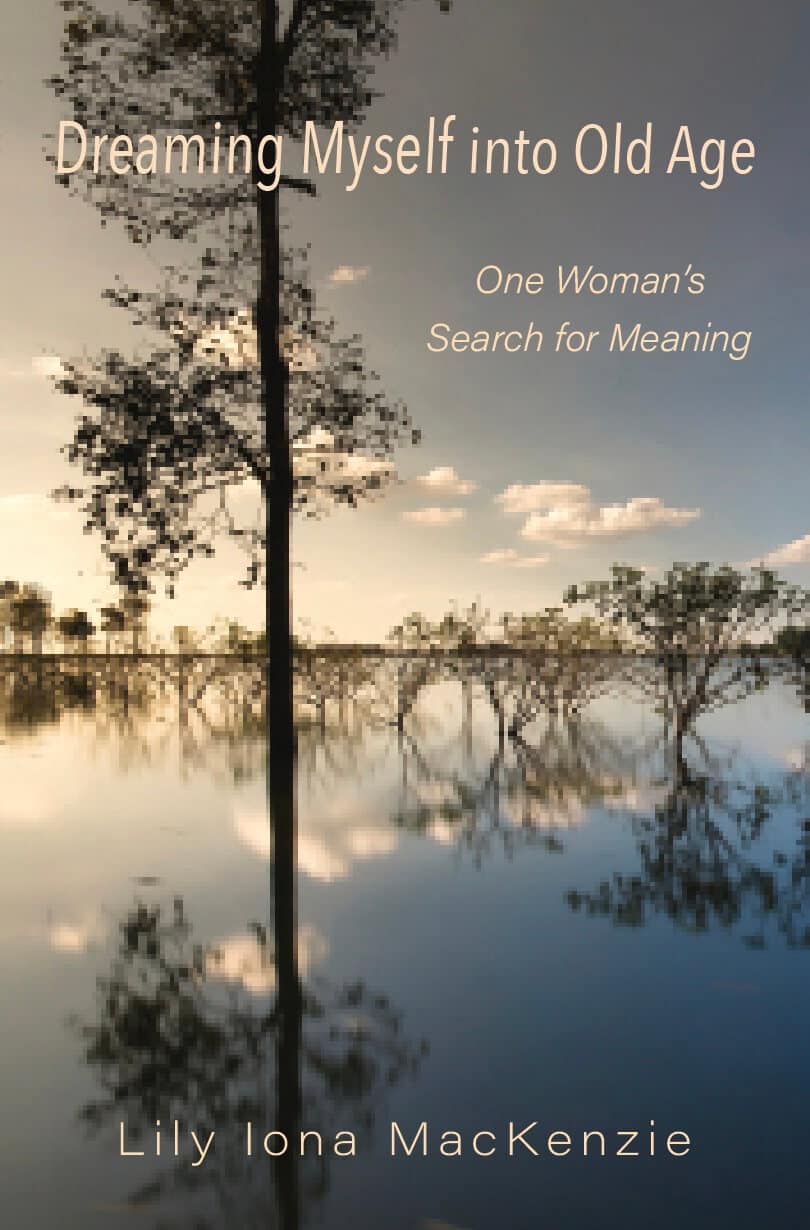
In a recent episode of The Living to 100 Club Podcast, I had the pleasure of speaking with author and educator Lily Iona MacKenzie, whose new hybrid memoir, Dreaming Myself into Old Age: One Woman’s Search for Meaning, offers a profound and poetic exploration of life’s later chapters. Lily’s journey—from a high school dropout on a Canadian farm to a published author and university professor—embodies transformation and the lifelong potential for growth.
Aging as a Creative and Spiritual Journey
Too often, aging is viewed through a narrow lens: loss, decline, and limitation. But what if we saw it instead as a time of expansion?
Lily speaks beautifully about how dreams, imagination, and self-inquiry have guided her through aging. Drawing on Jungian ideas and her background in creative writing, she reminds us that our inner lives deepen with time. As we get older, we have more raw material—more stories, more reflection, more questions—and this can be a wellspring for creativity, meaning, and resilience.
“The older I get,” Lily shared, “the more I realize that the unknown isn’t something to fear. It’s something to lean into.”
Finding Purpose and Voice—At Any Age
One of the most inspiring parts of Lily’s story is that she became a published novelist later in life. Her memoir isn’t just about aging; it’s a celebration of finding your voice, owning your story, and giving yourself permission to keep evolving—whether you’re 40, 60, 80, or beyond.
She also reflects on how aging reshapes our relationships, priorities, and sense of time. Through dreams, she’s discovered recurring patterns and symbols that have helped her make sense of unresolved emotions and better understand her past—and present.
Lessons for Us All
Whether you’re navigating your own path of aging, caring for a loved one, or working in the field of aging services, this conversation is a gentle reminder that getting older doesn’t mean becoming less—it can mean becoming more. More reflective, more accepting, more curious. As Lily puts it, aging is a mystery—and that’s what makes it so rich with possibility. Here’s the Youtube link to the podcast: https://www.youtube.com/watch?v=B8bP7q-W9E0
About Lily Iona MacKenzie
Lily is the author of several novels, poetry collections, and essays. Her latest book, Dreaming Myself into Old Age, blends memoir with philosophical and creative reflection. A lifelong educator, she taught at the University of San Francisco for over 30 years and continues to mentor writers. Her work has been featured in over 165 publications. She blogs at lilyionamackenzie.com
