November 24, 2025
2 Comments
MEET PROLIFIC AUTHOR MICHAEL C. WHITE WHO TAKES US INSIDE HIS WRITING LIFE IN THIS INTERVIEW!

Michael C. White is the author of seven novels: Soul Catcher (William Morrow), which was a Booksense and Historical Novels Review selection, as well as a finalist for the Connecticut Book Award; A Brother’s Blood (Harper Collins), which was a New York Times Book Review Notable Book, a Barnes and Noble Discover Great New Writers nominee, and an Edgar Award Finalist; The Blind Side of the Heart (Harper Collins), A Dream of Wolves (Harper Collins), and The Garden of Martyrs (St. Martins), also a Connecticut Book Award finalist and made into an opera. His novel Beautiful Assassin (William Morrow) won the 2011 Connecticut Book Award for Fiction. His last novel, Resting Places, won the $5000 National Tuscany Prize for the Novel and
 was recently selected as a runner-up for the Indie Author Project General Fiction Award. A collection of his short stories, Marked Men, was published by the University of Missouri Press. He has also published over 50 short stories in literary and national magazines. He was the founding editor of the yearly fiction anthologies American Fiction and Dogwood, and was the founder and former director of Fairfield University’s MFA in Creative Writing Program. He lives along the New England coast with his wife Reni and his two Labradors, Falstaff and Lincoln.
Who are your literary influences or inspiration?
Through my undergrad and Ph.D. programs I was influenced, sometime unduly so, by the great American writers in the canon: Melville, Crane, Hemingway, and Faulkner. I especially found myself in the thrall of the two opposing masters, Hemingway (made a pilgrimage to his grave in Ketcham, Idaho) and Faulkner. I wrote short cryptic stories in the manner of Hemingway and an entire (bad) novel trying to do a modern, As I Lay Dying, in multiple voices. For almost two decades I stopped reading or trying to write novels, and tried to learn the craft of short fiction. I read widely—Melville’s and Crane’s stories, Carver, Bobbie Ann Mason, the great stories of Flannery O’Connor and John Cheever—and published over 50 stories in lit journals. I even started a couple of lit magazines, one of which is still publishing now. During this time I read hundreds and later thousands of short stories manuscripts submitted to me. I found that this was very much a second graduate degree in writing. I learned both from the good stories, but even more from the not-so-good ones. Since writing and publishing novels I have learned a great deal from both debut novelists and from those who have published dozens of books. Though I’ve published eight novels, I still try to learn something from every novel I read. They are my best teacher.
Why do you write?
I wish I could say that I was one of those bookish kids that couldn’t wait to open a novel on a rainy day and spend the time reading. But, alas, I was not. We had no books in my house—I mean none, and not a single bookcase. Until my senior year in high school, I was a three-sport jock in school. I yearned not to write the Great American Novel, but to play shortstop for the New York Yankees (I would even have considered the Red Sox). My father was a farmer, and then a carpenter. As a little boy I used to go with him to work at his jobsites, and later to earn some money (to see a dramatization of this relationship, check out my novel Skunktown). My father was a heavy drinker, and during the day as we worked, he would take nips from the pint bottle in his back pocket and tell me stories, tall, Bunyonesque tales of the Vermont woods where he was raised on a farm. After work, we’d go to some tavern or gin mill, where the drinking and story-telling continued. “What are you drinking? Tell us a story, Wes,” men would cry out as soon as he entered. I would sit in some corner booth, sipping a coke, listening and watching as grown, hardscrabble men—electrician and masons and farmers—fell under his sway of his voice. He continued to tell stories, which got bigger and bolder, as long as they continued to buy drinks for him. Though I wasn’t bookish at all, I found myself thrilled by my father performance. I thought to myself: I’d like to do that. Tell stories that people want to hear.
Tell an anecdote about an interaction between you and one of your more articulate fans.
My second novel, The Blind Side of the Heart, was a story I based loosely on a priest in Western Massachusetts accused of sexual abuse and later of murder. Because of the close connection of my book to the real priest, I got a lot of local publicity as well as letters and emails. But there was one that shocked me. I opened the letter and saw that the letterhead said it was from the maximum security men’s prison in Nashua, New Hampshire. The letter was five, typed, single-spaced page. I read the first two paragraphs with the delight that comes from an obvious fan of your work. Even more than that, I was struck by how articulate and educated the writer appeared. Here was someone who was himself a writer, I thought. But as I read on, I realized he wasn’t a professional writer; rather he was a priest, and he liked my book for having captured the interior life of a priest. More than that though, he was struck by how similar my priest’s situation in the book was to that of his own! By the end of the letter I came to understand that the writer/priest was serving a 35-70 year term for sexually abusing several boys in his congregation. Like my own character in the novel, he swore that he was innocent. He told me that a journalist from the Wall Street Journal was investigating his case in the hopes of finding him innocent. He said that since we had so much in common (I debated that) he wondered if the two of us could meet. It took eight months to get on his visitor list, but out of curiosity to see my character “in the flesh,” as it were, I finally did and was able meet him. That was one of the most surprising letters I’d ever receive from one of my readers.
Where do your characters come from?
I usually begin with story and slowly build my characters around the story. However, I often will find characters along the way that are based loosely on people I know. For instance, in my novel A Dream of Wolves, I based one of the main characters on a woman who was a good friend. I based the character’s looks on this woman, but most importantly, I used the real woman’s very peculiar laugh for that of my character. Though having said that I start with story and then find my characters, in my new novel Skunktown, I started with character first. The main character and narrator, Lyman, was based on my own life, and the father in the novel is based on my father.
How do you start a novel?
As I said previously, I usually start with story, particularly with a kernel of a story. It may be something I read in a newspaper or heard on TV, or it may come from a story someone has told me. My novel Beautiful Assassin, a novel about Russian female sniper in WWII, started from a snippet of a documentary I heard on TV. It was about a real sniper named Ludmila Pavlichenko, who had 306 German kills in the war and was invited by Eleanor Roosevelt to the White House. All of this I used in the novel. In the first chapter, I put my character in a tree hoping to get a better shot at a fellow German sniper. This was based on an interview the real sniper gave to an American magazine about one terrifying moment during the war.
Where do your ideas come from for narratives/poems? Do you travel to research your book(s)?
I do a lot of research. Besides, textual research—books and articles—about the subject I’m writing about, I try to visit the places that my characters inhabit. An example of this is making over twenty trips to northern Maine for my first novel A Brother’s Blood. Visting a place helps me to see and feel what my character sees and feels. Besides helping to establish my credibility to write a particular story, I often get ideas about character and plot. An instance of this was in my novel Soul Catcher, about a slave catcher after a runaway slave. Since I envisioned my runaway traveling to northern New York to escaped slave encampment—one that John Brown actually lived at and helped to run—I went to North Elba, New York, to see the encampment for myself. While there, walking the grounds of John Brown’s old farm, I pictured two distinct scenes that would later become chapters. Also, I decided then and there that John Brown would become a crucial part of my narrative.
We’ve all heard the advice that authors should “write what they know.” But fiction emerges from imagination and creation of new worlds. Do you feel a tension between what you’ve experienced and what lives only in your mind?
If a writer writes only what they know, they are going to find out pretty quickly that they run out of stories to tell. But the “write what you know” dictum is still important because whatever you write about you have to prove to yourself and to your reader that you know the subject and your characters. I tell my own fiction students to write about what they are passionate about. And if they don’t know the subject or the period, they need to learn about it. For example, one of my characters in The Garden of Martyrs was based loosely on a French priest named Jean Cheverus, who survived the French Revolution’s “September Massacres” of 1792 and came to America. I knew very little about the period or about the inner lives of priests, so I had to read much. I was teaching at a Jesuit University at the time and would talk over lunch with several priests, about their daily lives, their thoughts and feelings. By the end, I felt comfortable enough to write about this topic and this priest.
When did you start writing?
As I mentioned I came to writing—and reading—late. But instead of starting the way most writers do with short stories, I jumped in the deep end. I wrote in succession two pretty bad novels. What it did teach me, however, was the discipline of writing a long narrative. I was going to college full-time and working 30 hours a week pumping gas or working as a security guard in a defense industry factory, and I’d either get up early and write, or write when I came home. Though it was only an hour a day, it did get me in the habit of writing, of thinking like a writer—looking at the world as an on-going story filled with possibilities. While nothing of note came from those early years of writing, I learned to feel that I was a writer.
Has your education helped you become a better writer?
My undergraduate and Master’s in literature allowed me to read widely, and to catch up on the reading I had missed growing up. But I can’t say that the earlier part of my education helped me as a writer. I learned the craft of fiction when I entered my Ph.D. program with a specialty in creative writing. I had never taken a creative writing course before this (big mistake). In my very first workshop with John Williams, who won the National Book Award, I learned the most basic things about the craft of fiction, like scene management, dialogue, character development, use of backstory, and the importance of conflict. I recall being terribly anxious before the workshop, being in the class of a National Book Award winner, and afterwards embarrassed that I didn’t know some of the most basic things about writing fiction. But over the next three years I would learn a great deal and I was able to apply it to my fiction. Before I left the program I had published a number of short stories in journals. Within a couple of years after the leaving grad school, I was able to publish 50 stories. So while my literature education was not directly helpful, my Ph.D. degree was extremely so.
Do you come to your writing through a particular lens? I have a friend who emphasizes style over everything else, though this approach leads him to character development and plot. Do you sketch out the plot first and work out other aspects of the story in relation to that consideration? Do characters spring up in your mind asking you write their stories?
I mentioned earlier that for me story—the “what happened” part of the novel—begins the journey. But after I sketch out a rough draft of the first third of the book (leaving the last two-thirds open), I focus on language and character, dialogue and description. Every day I read and reread my prose, often thirty or forty pages that I’ve already written, before I move on to the next scene or part. During this very fertile time of revising and rethinking and polishing what I’ve written, I also deepen my characters. I begin to see and hear and feel them in ways I hadn’t at the beginning of the novel. I know my characters more and more each day, particularly their inner landscape of thoughts and feelings. At the same time, description of their outer landscape is also important to me. Where are they? What does it look and feel like—whether it be a hospital bed of the dying Lyman in Skunktown, or town that the young Lyman grows up in. So, while my process starts with story, it soon becomes focused on language and character.

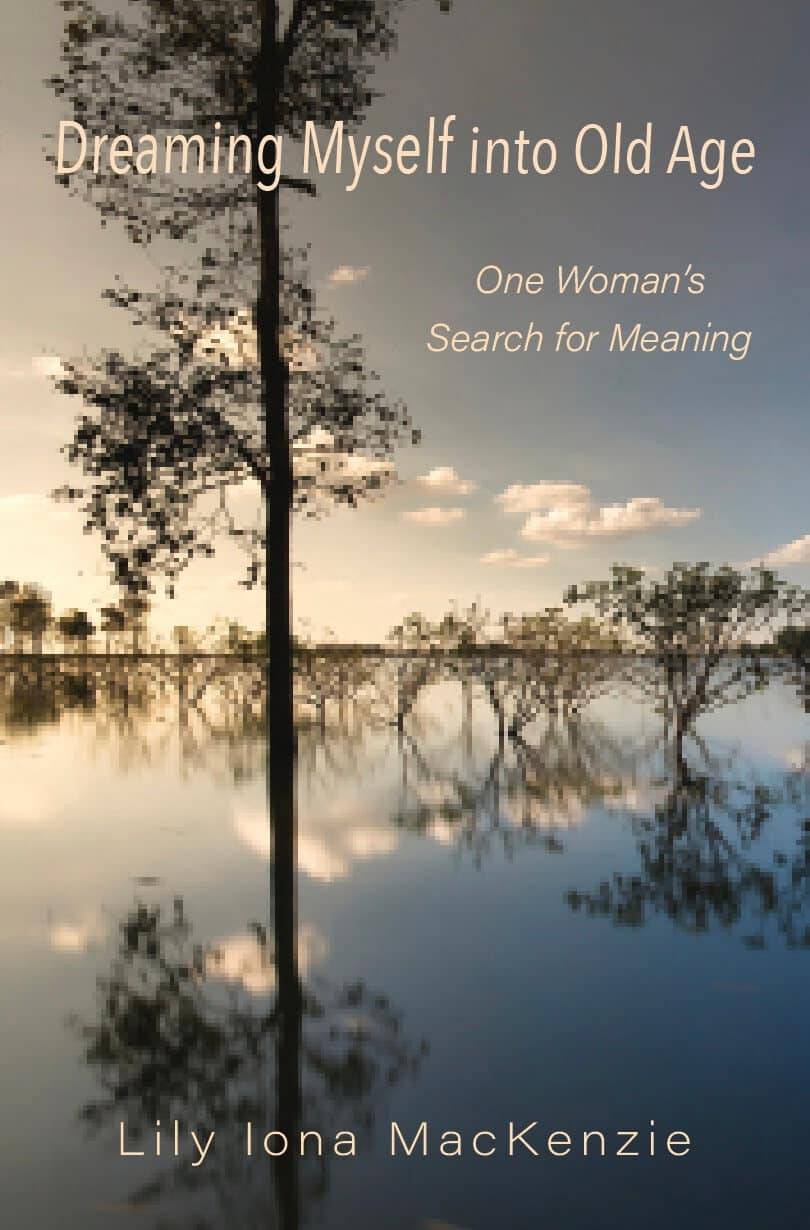


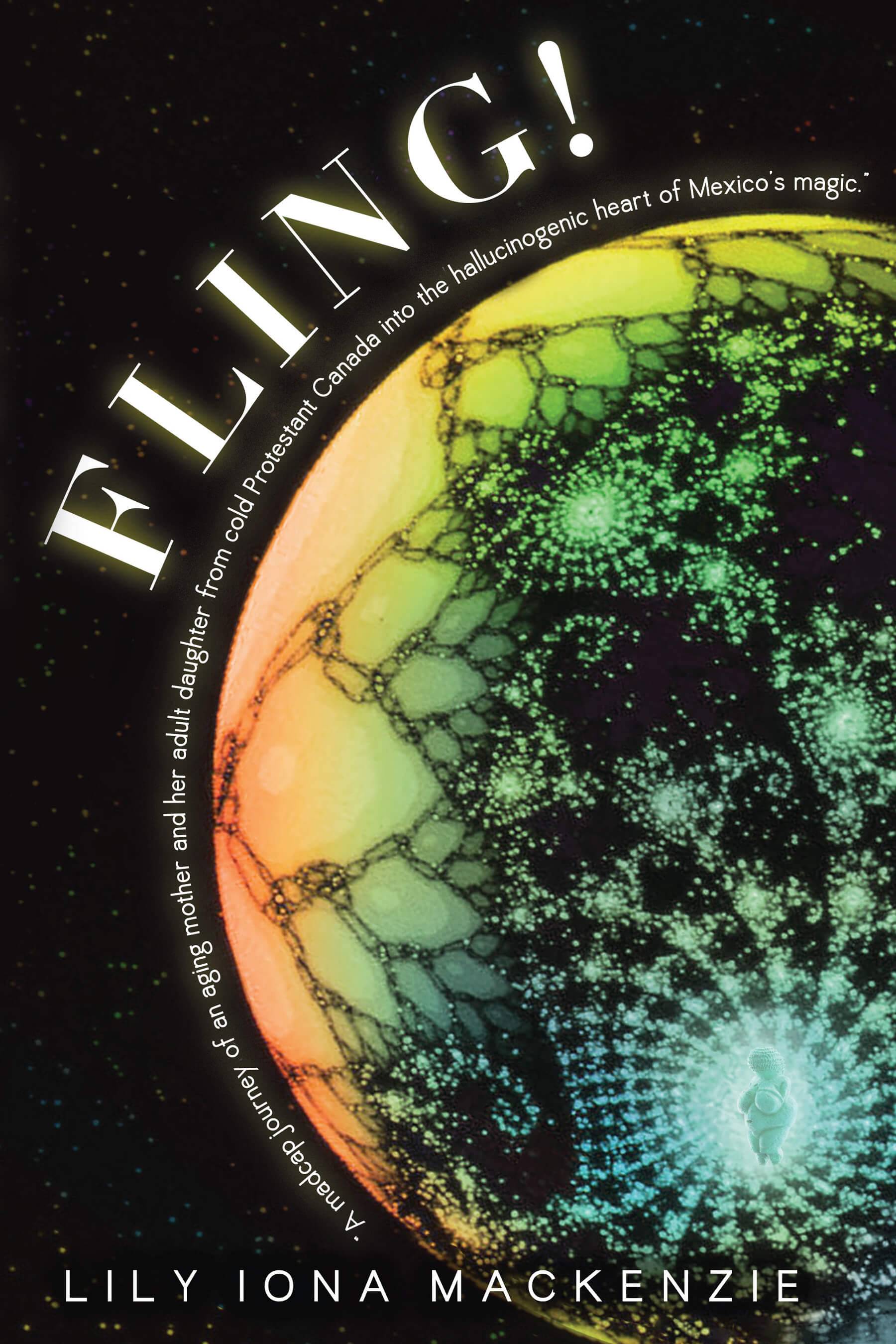
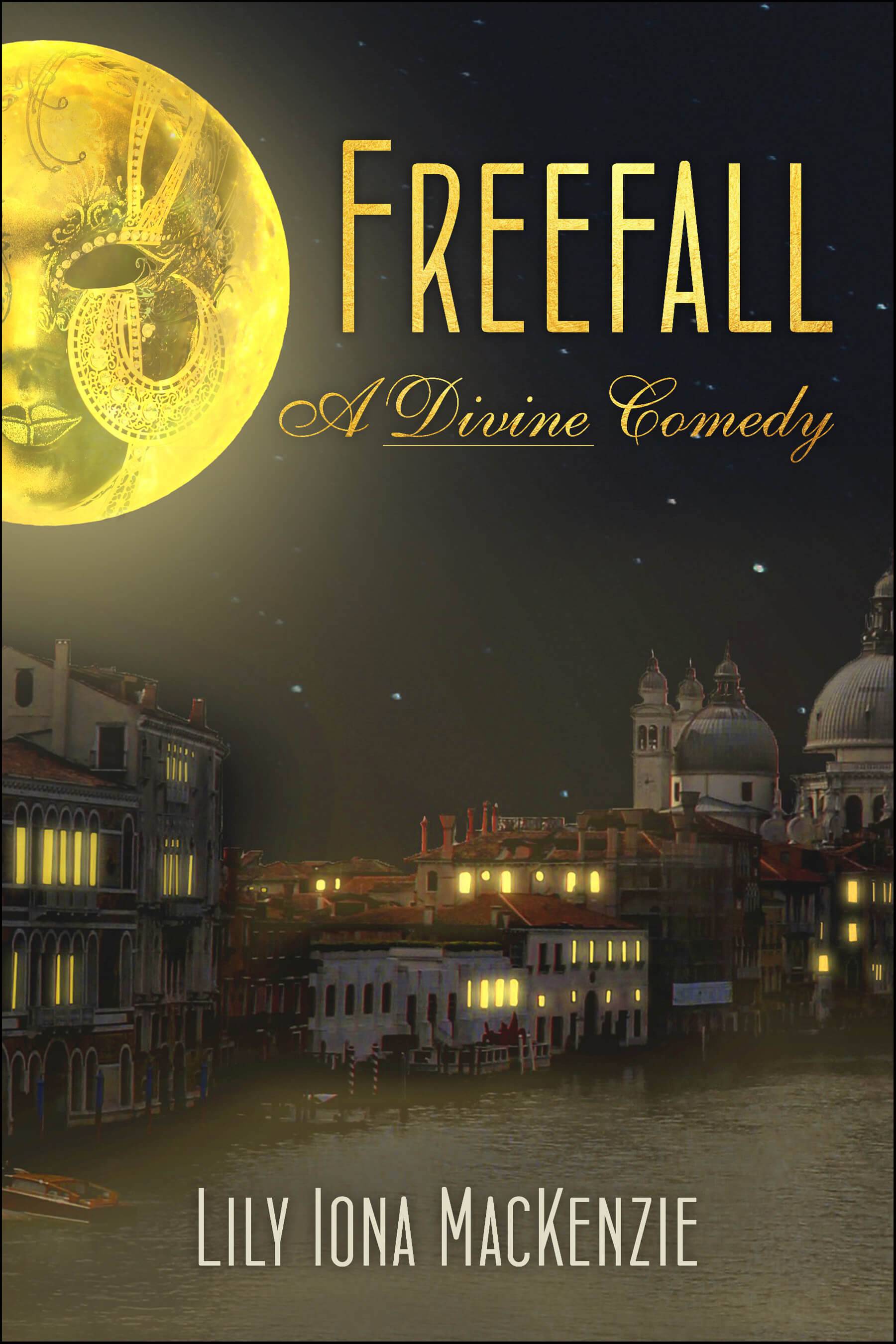

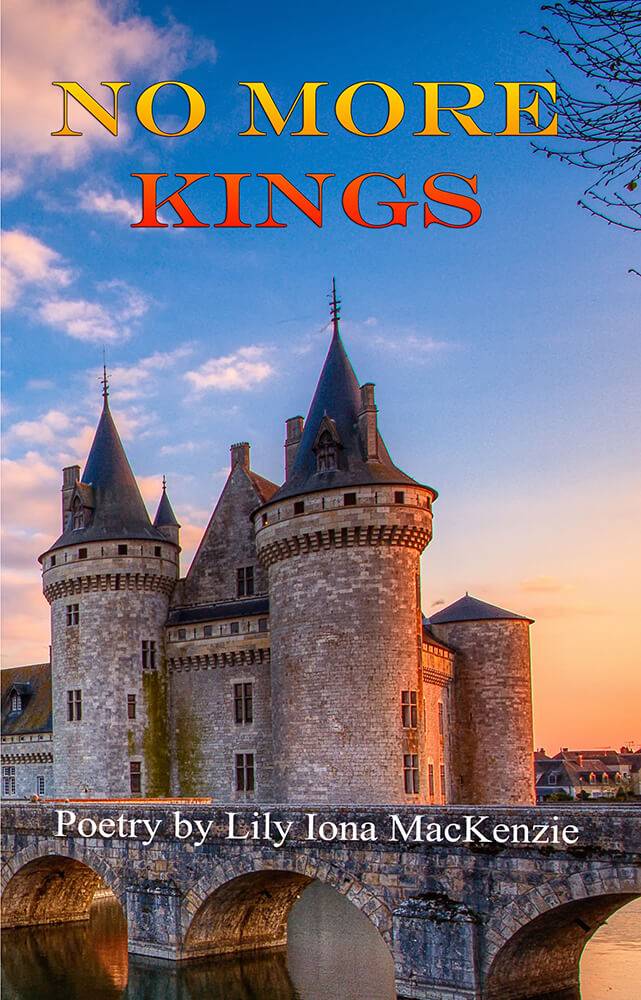




 I’m thinking this morning of when my husband and I returned from a couple of nights in Calistoga, a charming town in California’s Napa Valley. Yes, it has its share of upwardly mobile types who go there to visit the many wineries. But there also are others who need to be replenished by the pastoral setting and many opportunities to take walks in the surrounding hills. I need that uplift today.
  For everybody except those hiding under a rock, it’s impossible to avoid AI these days.
 I’m grateful to Al Sirois, a fellow Regal House author, for sharing with us his writing journey.
 Since my late 20s, I’ve recorded my dreams every morning, curious about the wonderful dramas that unfold each night in the subterranean depths. During a trip we took a while back to Osoyoos, B.C., I got a better understanding of dreams and the role they play in our lives.
 I recall returning home a while back after spending time at a recently built rental home on the Oxnard, California, beach. It had a wonderful view overlooking the harbor and ocean. You might think I would miss the incredible views and location, as well as the house, brimming with technological toys. But I didn’t. It was a relief to return to our simple Richmond abode, built in the 1940s.
  As a young woman in the 50s growing up in Canada, I was intrigued by hockey and football. Baseball didn’t exist for me then. It hadn’t entered Canadian consciousness, and it would take some years before it did. But I didn’t feel deprived. Hockey and football had much to offer at that time, including handsome, vigorous guys.
  Being part of an on-line writing group for several years provided me with many benefits. But the positives also produced a few negatives.
 I didn’t get to sleep till 1 AM this morning after reading a fascinating article about the assemblage artist Joseph Cornell. I’ve felt that in many ways, he’s my spiritual father. A-I describes his work as intricate “signature boxes, glass-fronted shadow boxes that serve as miniature, poetic theaters. Inside, he meticulously arranged collages and three-dimensional ‘found objects’—such as old maps, vintage photographs, watch parts, and marbles—to create dreamlike, nostalgic universes that celebrate memory, astronomy, and romantic cinema.”
  I’ve just finished rereading Henry James’ The Portrait of a Lady and have mixed feelings about the era and the characters. It’s difficult to read about Victorian morés from a 21st Century perspective. Not only do I need lenses that will give me a bi-cultural perspective, but I also feel squashed between a culture clash. Just after I finished with Portrait, I read a review of A. M. Homes’ book May We Be Forgiven in The New York Review of Books. One of her main characters says,
  In the SF Bay area, we’ve recently had unseasonably warm days, totally out of character for us at this time of year in San Francisco and the other nearby coastal regions. Most of us have been delighted to sit out in our yards at night and enjoy this new balmy climate. But then I read in the paper recently that the planet has been recording one of the hottest springs, reminding me that while I’m luxuriating in these above-average temperatures, the weather extremes are killing the planet. It’s a startling and disturbing statistic.