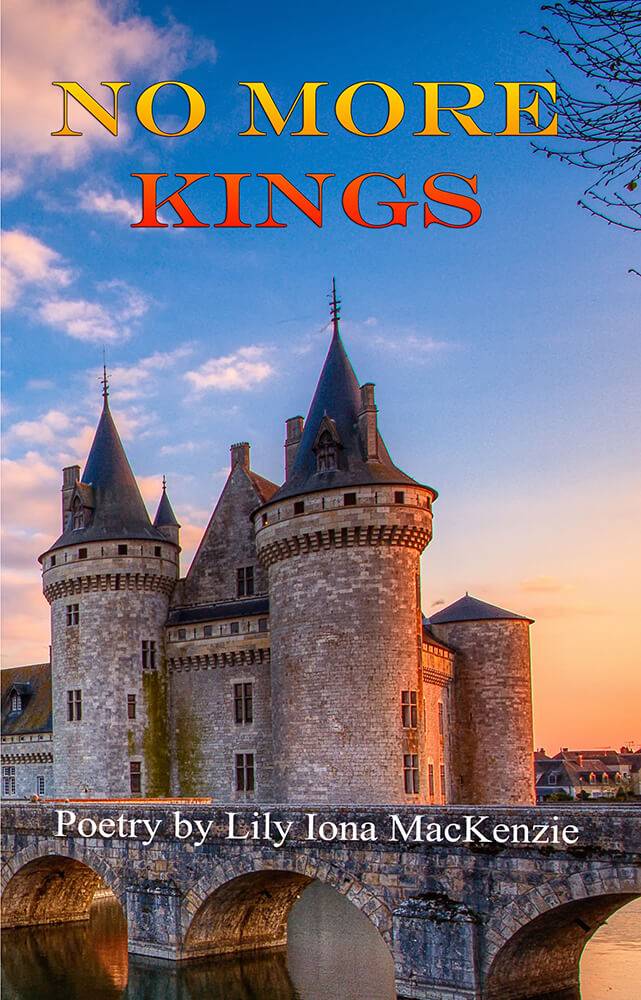
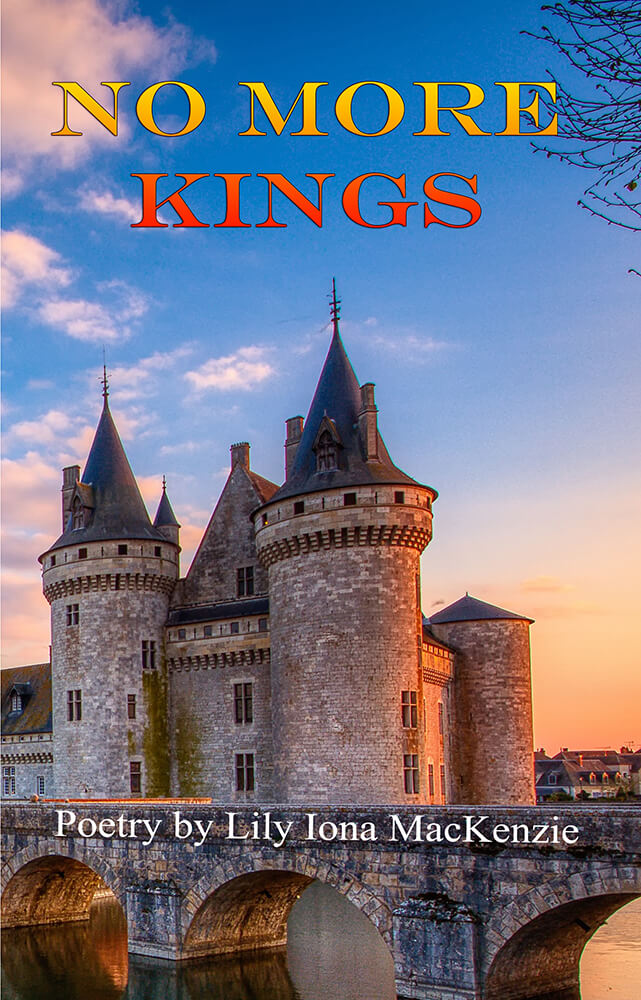
Lily Iona MacKenzie's unbounded zest for life sings through the poems in this collection. A writer in her bones and a dreamer in her heart, she discovers the poetry in everything—travel, art, music, nature, past and present—her words and rhythms touch the soul and leave their treasures behind. “Listen closely to these poems’ quiet but insistent murmur.” (Kathleen McClung)
Lily Iona MacKenzie's unbounded zest for life sings through the poems in this collection. A writer in her bones and a dreamer in her heart, she discovers the poetry in everything—travel, art, music, nature, past and present—her words and rhythms touch the soul and leave their treasures behind. “Listen closely to these poems’ quiet but insistent murmur.” (Kathleen McClung)
Lily Iona MacKenzie's unbounded zest for life sings through the poems in this collection. A writer in her bones and a dreamer in her heart, she discovers the poetry in everything—travel, art, music, nature, past and present—her words and rhythms touch the soul and leave their treasures behind.
“Listen closely to these poems’ quiet but insistent murmur. ” - (Kathleen McClung)
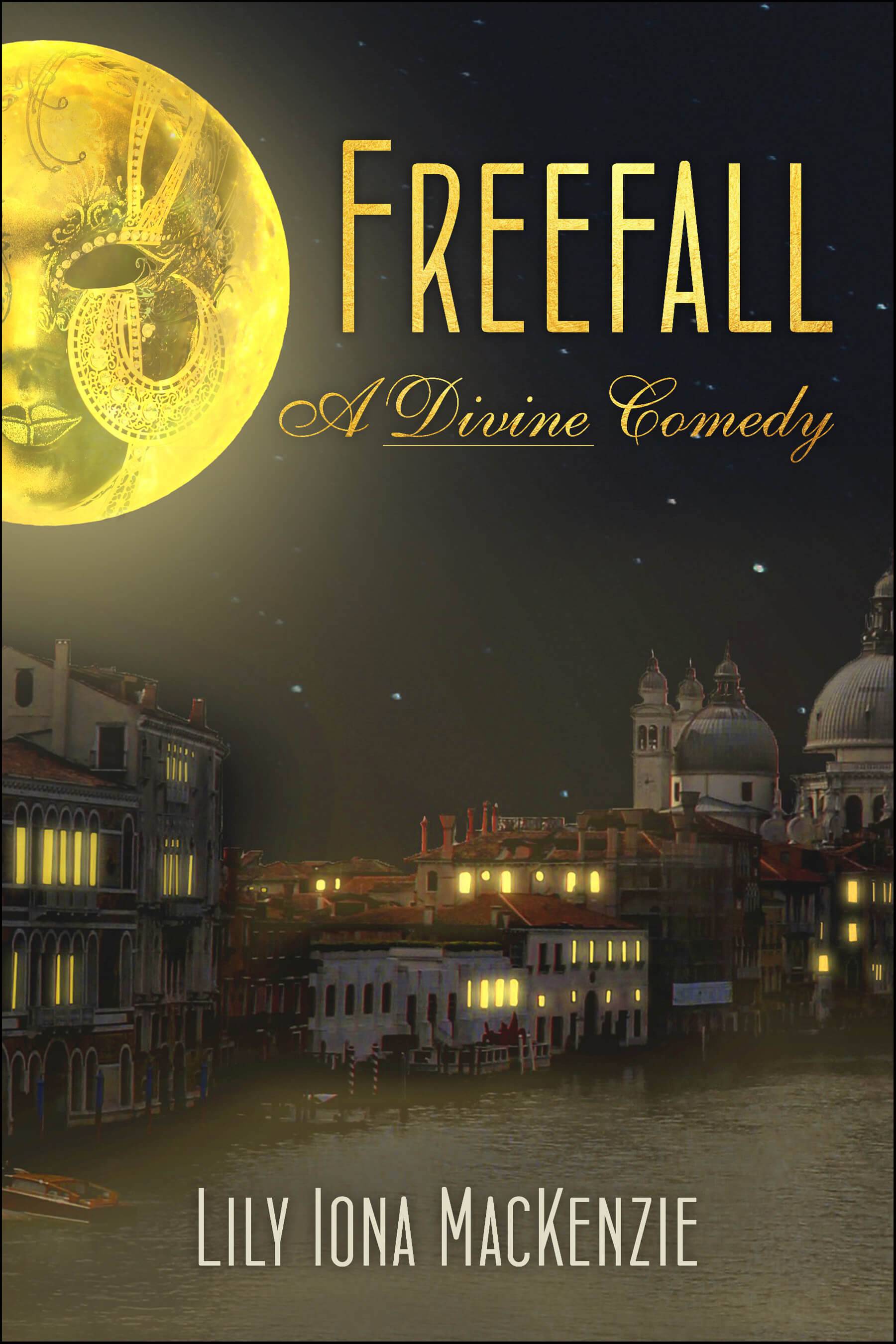
" A wildly inventive, consistently engaging, and amusing comic novel, but under its bright exterior lurk darker undertones and truths.... "
" A wildly inventive, consistently engaging, and amusing comic novel, but under its bright exterior lurk darker undertones and truths.... "
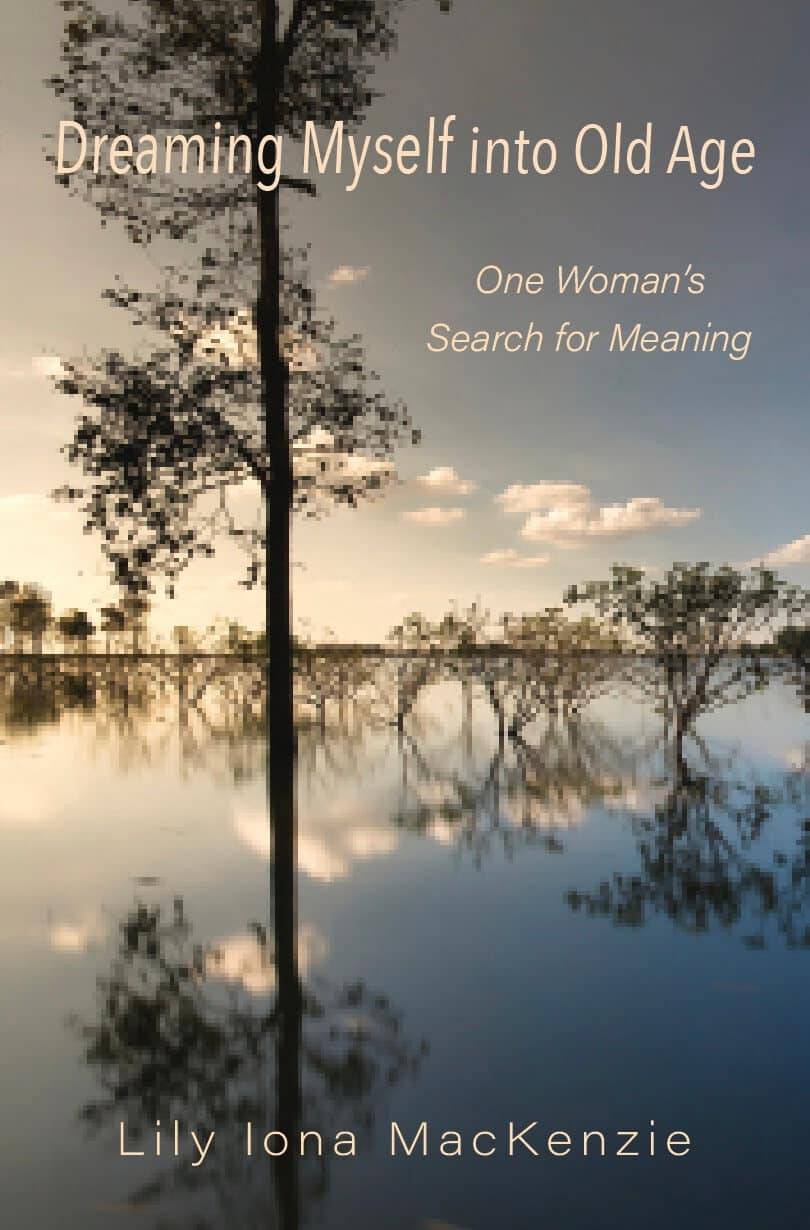
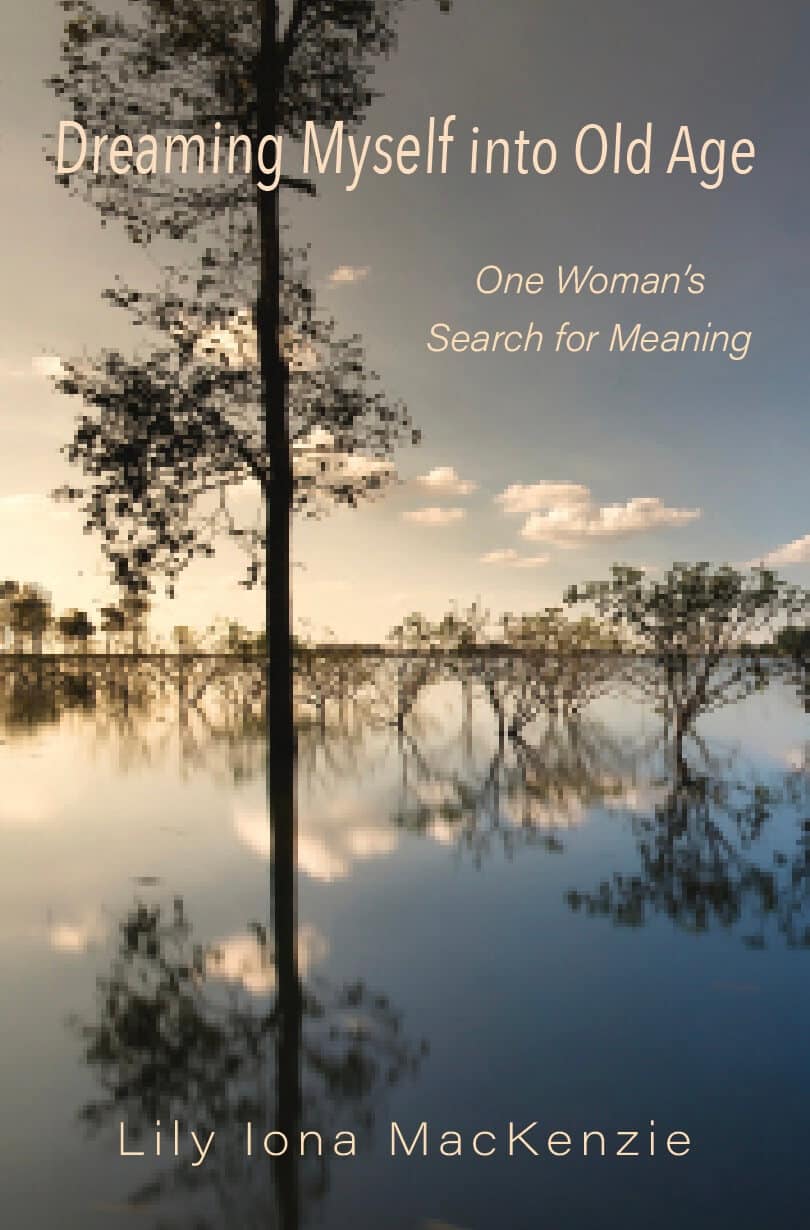
Now in her eighties, Lily Iona MacKenzie is challenged with facing old age and all that comes with it. Determined to age gracefully and thoughtfully, she recognizes that working with one's inner life and one's dreams are keys to understanding the changes that come with aging.
Dreaming Myself into Old Age is a memoir set within the lifelong process of self-discovery and the boundless adventure that is life.
" A wildly inventive, consistently engaging, and amusing comic novel, but under its bright exterior lurk darker undertones and truths.... "
" A wildly inventive, consistently engaging, and amusing comic novel, but under its bright exterior lurk darker undertones and truths.... "
" Tillie’s grit and ability to face life’s challenges are inspiring, the seeds for later discovering her artist self. Tillie takes readers on a wild ride. Join her if you dare! "
" A wildly inventive, consistently engaging, and amusing comic novel, but under its bright exterior lurk darker undertones and truths.... "
" A wildly inventive, consistently engaging, and amusing comic novel, but under its bright exterior lurk darker undertones and truths.... "
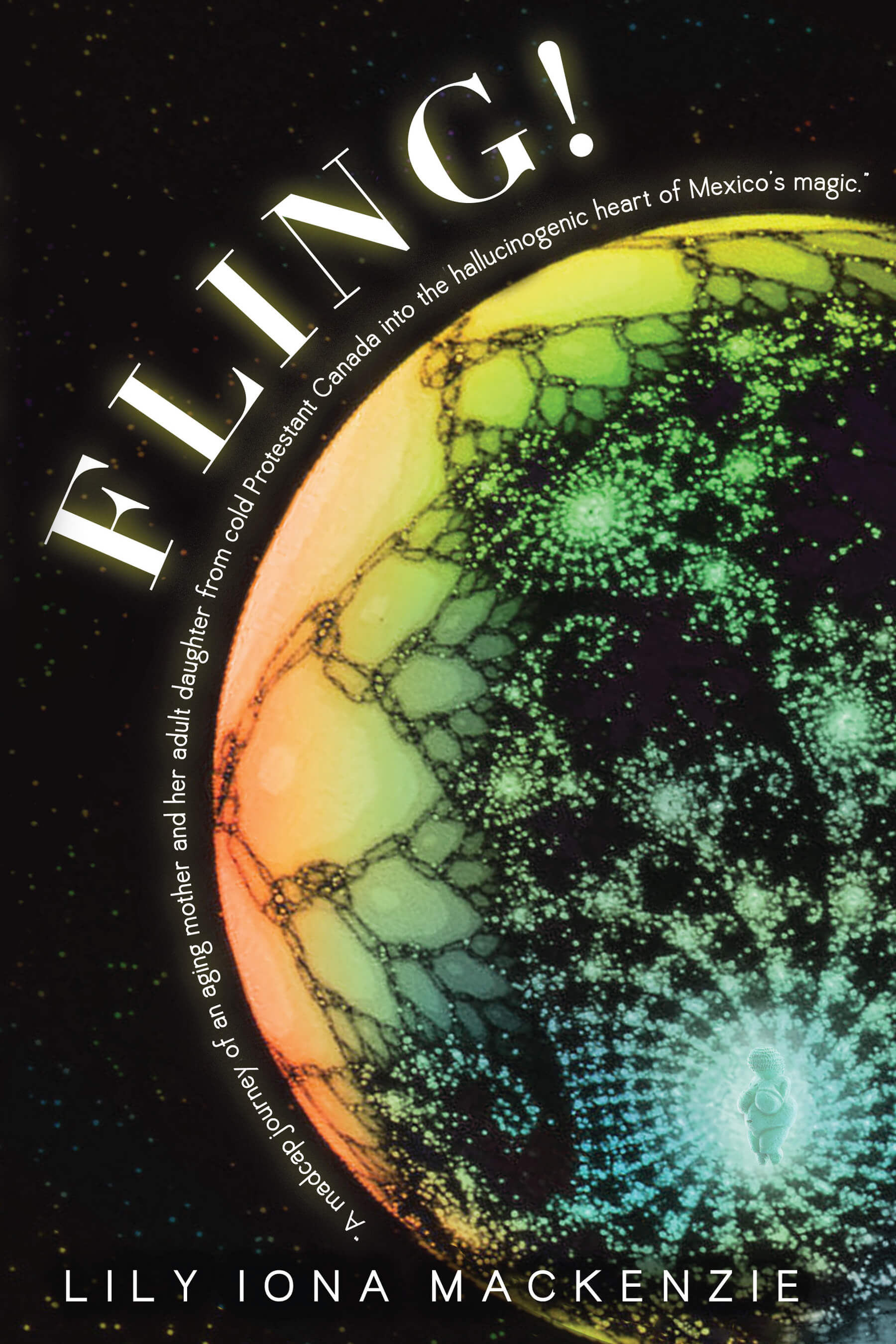
"Fling! is both hilarious and touching. Every page is a surprise, and the characters! I especially loved Bubbles, one of the most endearing mothers in recent fiction. A scintillating read."
" A wildly inventive, consistently engaging, and amusing comic novel, but under its bright exterior lurk darker undertones and truths.... "
" A wildly inventive, consistently engaging, and amusing comic novel, but under its bright exterior lurk darker undertones and truths.... "
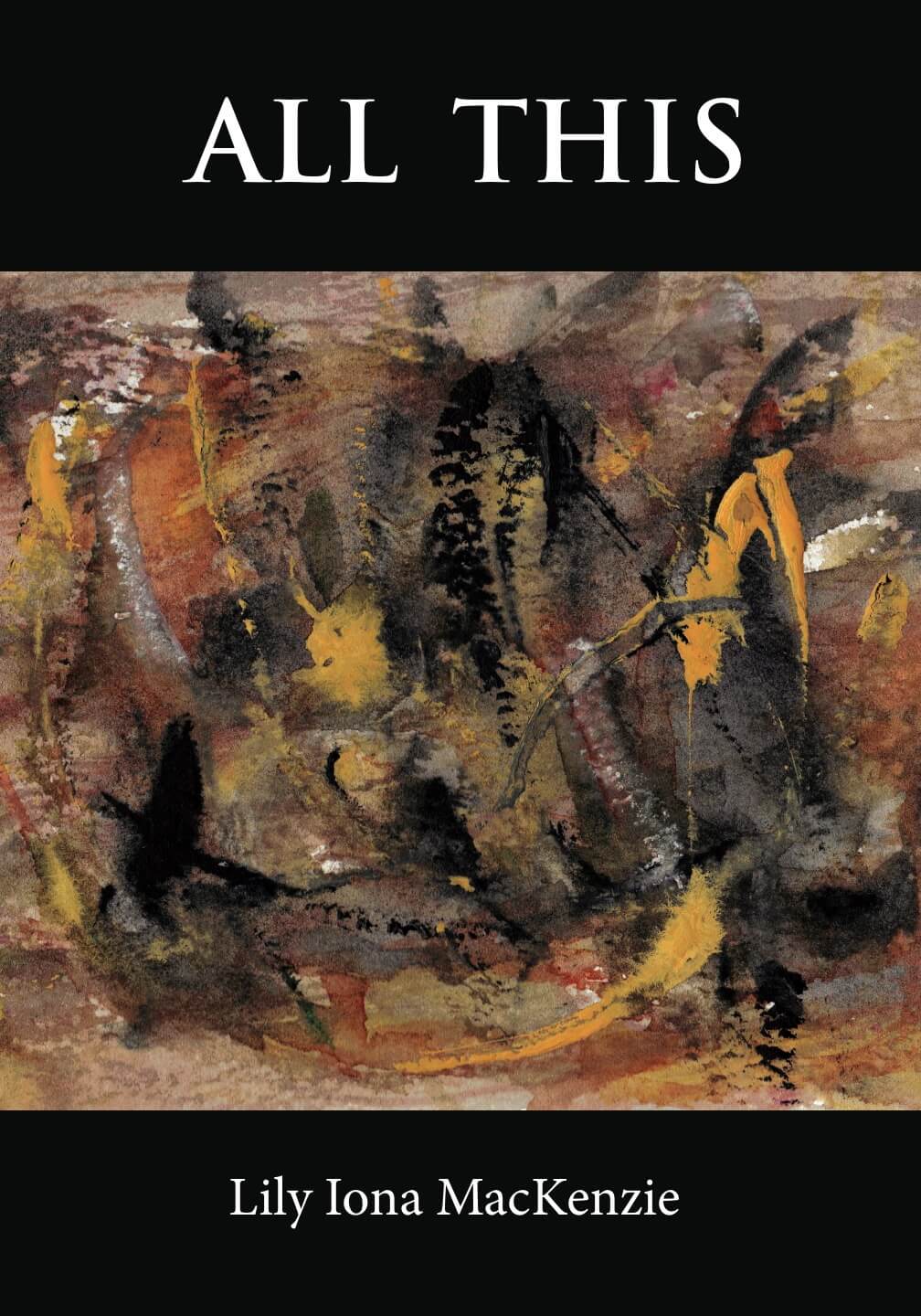
" Indicative of the title, the poems in All This range from the conventional lyric/narrative that captures an intense moment of emotion, an epiphany glimpsed briefly out of the corner of the eye, to the more experimental. "
" A wildly inventive, consistently engaging, and amusing comic novel, but under its bright exterior lurk darker undertones and truths.... "
" A wildly inventive, consistently engaging, and amusing comic novel, but under its bright exterior lurk darker undertones and truths.... "
Each finely crafted poem in this powerful collection comes alive on the page while she traces the days’ journeys with a painter’s eye, a musician’s ear, and the deft pen of a poet.
Meet Karen Garloch, a first-time author and an award-winning journalist. She worked at newspapers in Ohio for fourteen years before moving to the Charlotte Observer in 1987. She spent thirty years at the Observer as the
French Lick portrait
health reporter and was a finalist for the 2013 Pulitzer Prize in Local Reporting. After retirement, she wrote the novel Stray Voltage, which won the 2024 Petrichor Prize for Finely Crafted Fiction from Regal House Publishing. A native of Jackson County, Garloch is a graduate of Brownstown Central High School and Ball State University, where she is a member of the Journalism Hall of Fame. She and her husband, Larry, live in Charlotte, N.C.
I’m thinking this morning of when my husband and I returned from a couple of nights in Calistoga, a charming town in California’s Napa Valley. Yes, it has its share of upwardly mobile types who go there to visit the many wineries. But there also are others who need to be replenished by the pastoral setting and many opportunities to take walks in the surrounding hills. I need that uplift today. (more…)
For everybody except those hiding under a rock, it’s impossible to avoid AI these days. As I wrote recently, my first job in the morning entails clearing my inbox of a number of AI generated “offers” to promote my work, host me on a podcast, connect to me as a fellow writer (imagine Stephen King, Garrison Keillor or Frederik Backman reaching out to little old me), sponsor me at a book festival, feature me on book clubs with names like Boozy Book Club, Books Before Breakast and Women Love Books, etc. etc. All of these are written by AI and sent out to eager writers around the world in an effort to get them to pay for these fake services. Because I’ve published over sixty books for readers of all ages, I get more than my share of them. (more…)
I write historical fiction based on real people, typically people forgotten by history. I’ve discovered these people by mining a variety of sources, including historical societies, genealogy records, biographies, and nonfiction books about interesting times and people. I’m always on the lookout for people who would lend themselves to a good story, and my six published novels showcase a varied cast of characters, including a woman who was a model for Coco Chanel and then became a spy for the Allies during World War II (The Model Spy); a young couple on a headline-grabbing crime spree in 1920s Brooklyn (Gun Girl and the Tall Guy); and a spiritualist who tangled with Harry Houdini (Margery and Me).
On July 4th, 2026, the 250th anniversary of the founding of our country, the Theodore Roosevelt Library will open in Medora, North Dakota. Although I can’t be there in person, I will be there in spirit as it’s the best way I can imagine to celebrate all about my country that I love. (more…)
Michael Loyd Gray is the author of ten published books of fiction and more than sixty published short stories. His story collection, The Space Between Now and Then, was released in May 2026 by Silent Clamor. His novel The Writer in Residence was released in April 2026. Regal House will release his novel Emperor of the Mundane in 2027. Gray is the winner of the 2008 Sol Books Prose Series Prize, the 2005 Alligator Juniper Fiction Prize, the 2005 Writers Place Award for Fiction, and a fiction support grant from the Elizabeth George Foundation. He earned a MFA from Western Michigan University, where he was a Phi Kappa Phi National Honor Society Scholar, and a bachelor’s degree from the University of Illinois. Gray lives in Kalamazoo, Michigan, with three cats and a lot of electric guitars. (more…)
Since my late 20s, I’ve recorded my dreams every morning, curious about the wonderful dramas that unfold each night in the subterranean depths. During a trip we took a while back to Osoyoos, B.C., I got a better understanding of dreams and the role they play in our lives. (more…)
I’ve been thinking recently how writers are like detectives. They constantly need to be observant, picking up clues from what people are wearing, how they gesture, the words they speak, the way they interact with others. They study others’ facial expressions and what they suggest, storing away the data in their memory banks or taking notes in a writer’s journal that they’ll refer to later. (more…)
I recall returning home a while back after spending time at a recently built rental home on the Oxnard, California, beach. It had a wonderful view overlooking the harbor and ocean. You might think I would miss the incredible views and location, as well as the house, brimming with technological toys. But I didn’t. It was a relief to return to our simple Richmond abode, built in the 1940s. (more…)
As a young woman in the 50s growing up in Canada, I was intrigued by hockey and football. Baseball didn’t exist for me then. It hadn’t entered Canadian consciousness, and it would take some years before it did. But I didn’t feel deprived. Hockey and football had much to offer at that time, including handsome, vigorous guys. (more…)
I didn’t get to sleep till 1 AM this morning after reading a fascinating article about the assemblage artist Joseph Cornell. I’ve felt that in many ways, he’s my spiritual father. A-I describes his work as intricate “signature boxes, glass-fronted shadow boxes that serve as miniature, poetic theaters. Inside, he meticulously arranged collages and three-dimensional ‘found objects’—such as old maps, vintage photographs, watch parts, and marbles—to create dreamlike, nostalgic universes that celebrate memory, astronomy, and romantic cinema.” (more…)
I’ve just finished rereading Henry James’ The Portrait of a Lady and have mixed feelings about the era and the characters. It’s difficult to read about Victorian morés from a 21st Century perspective. Not only do I need lenses that will give me a bi-cultural perspective, but I also feel squashed between a culture clash. Just after I finished with Portrait, I read a review of A. M. Homes’ book May We Be Forgiven in The New York Review of Books. One of her main characters says, (more…)
In the SF Bay area, we’ve recently had unseasonably warm days, totally out of character for us at this time of year in San Francisco and the other nearby coastal regions. Most of us have been delighted to sit out in our yards at night and enjoy this new balmy climate. But then I read in the paper recently that the planet has been recording one of the hottest springs, reminding me that while I’m luxuriating in these above-average temperatures, the weather extremes are killing the planet. It’s a startling and disturbing statistic. (more…)
A week ago I typed THE END on page 264 of the manuscript for the fourth and final book in my CASTLE series. I’ve done this before for every one of my fourteen novels. It’s always a strange moment. I’m a slow writer and this book’s characters have been keeping me company for the best part of two years. Sitting down most afternoons to pick up the thread of this story has become the focusing event of my day. And, as has happened to me before, I can feel myself slipping into a form of postpartum or post-novel depression.
Where have they gone, these creatures of my imagination who told me their stories, punished me for long absences by going silent and kept me guessing right up until the end of our journey together? Because I’ve been lucky enough to live a sustained creative life, this feeling at the end of what is a first draft is a familiar one. I know there is more work to do on this book, but I also know that first, I must put it aside so that when I come back, I will have the distance and objectivity to recognize its flaws and be ready to revise.
This journey which is about to come to an end started over forty years ago. I wrote The Castle in the Atticin response to the sadness I felt when my son started kindergarten and a beloved nanny left us to go back to taking care of babies.
Original jacket art by Trina Schart Hyman
As all good books do, it started with my own feeling, in this case one of abandonment which I expect was much stronger than how my son felt. For five years, Mrs. Miller had calmly walked me through the tough and often tumultuous days with two toddlers. She was a gifted and experienced teacher who thought nothing of building the solar system for Andrew with a number of balls, string and toothpicks or of telling me when my kids needed discipline.
Here she is walking Andrew to school on the last day she was with us.
First day of kindergarten.
This is the first novel I didn’t outline ahead of time. Instead, I scribbled some notes and let the characters emerge and find their form and motives in their own time. I listened to them rather than ordering them around. I started a practice I call the “Journal of the book” and have kept it up ever since.
I ask myself questions. What’s Eve doing in that cave and how are you going to get her out? Is Gudrin jealous of the growing friendship between Sonia and William? Without the magic token, how can William defeat this wily villain? And I cheer myself on. You’ve broken the back of the book! Great idea to switch the banquet to a bonfire. Every writer needs encouragement no matter where it comes from.
So this is the fourth book in the series. I have reclaimed the rights to The Castle in the Attic, which means it is only available in paperback here, but still available in audio here. (Also on Audible but I prefer to support independent bookstores through Libro.fm.) The second, The Battle for the Castle,is still in print.
Jacket for 2nd hardcover edition
The prequel, The Cradle in the Castle, which I finished in 2023 is not yet published. And the fourth, still untitled, should be ready by the end of the year.
But William will not be time traveling again. He and I both know that for sure. He defeated the wizard in the first book with his body, the rats in Battlewith his mindand in this one, the arch villain who sent them all, with his spirit. William is ready to return to his 20th Century life and stay there.
I admit that I’ve left many an open door for the series to continue with other characters carrying the story. Perhaps my grandchildren will write those sequels. But for me, this is the end of the series that started with my first time-traveling fantasy novel more than 40 years ago.
No wonder I’m feeling a bit blue.
Elizabeth Winthrop Alsop (www.elizabethwinthropalsop.com) is the author of over 50 works of fiction for adults and children under the pen name Elizabeth Winthrop. These include the award-winning fantasy series, The Castle in the Attic and The Battle for the Castle as well as the short story, The Golden Darters, read on the nationwide radio program, Selected Shorts, and included in Best American Short Story anthology, and Island Justice and In My Mother’s House, two novels now available as eBooks. She is the daughter of the acclaimed journalist, Stewart Alsop. Daughter of Spies: Wartime Secrets, Family Lies, a family history about her parents’ love affair during World War II and their marriage lived in the spotlight of Washington during the 1950s was published by Regal House, October 25, 2022.
A week ago I typed THE END on page 264 of the manuscript for the fourth and final book in my CASTLE series. I’ve done this before for every one of my fourteen novels. It’s always a strange moment. I’m a slow writer and this book’s characters have been keeping me company for the best part of two years. Sitting down most afternoons to pick up the thread of this story has become the focusing event of my day. And, as has happened to me before, I can feel myself slipping into a form of postpartum or post-novel depression.
Where have they gone, these creatures of my imagination who told me their stories, punished me for long absences by going silent and kept me guessing right up until the end of our journey together? Because I’ve been lucky enough to live a sustained creative life, this feeling at the end of what is a first draft is a familiar one. I know there is more work to do on this book, but I also know that first, I must put it aside so that when I come back, I will have the distance and objectivity to recognize its flaws and be ready to revise.
This journey which is about to come to an end started over forty years ago. I wrote The Castle in the Atticin response to the sadness I felt when my son started kindergarten and a beloved nanny left us to go back to taking care of babies.
Original jacket art by Trina Schart Hyman
As all good books do, it started with my own feeling, in this case one of abandonment which I expect was much stronger than how my son felt. For five years, Mrs. Miller had calmly walked me through the tough and often tumultuous days with two toddlers. She was a gifted and experienced teacher who thought nothing of building the solar system for Andrew with a number of balls, string and toothpicks or of telling me when my kids needed discipline.
Here she is walking Andrew to school on the last day she was with us.
First day of kindergarten.
This is the first novel I didn’t outline ahead of time. Instead, I scribbled some notes and let the characters emerge and find their form and motives in their own time. I listened to them rather than ordering them around. I started a practice I call the “Journal of the book” and have kept it up ever since.
I ask myself questions. What’s Eve doing in that cave and how are you going to get her out? Is Gudrin jealous of the growing friendship between Sonia and William? Without the magic token, how can William defeat this wily villain? And I cheer myself on. You’ve broken the back of the book! Great idea to switch the banquet to a bonfire. Every writer needs encouragement no matter where it comes from.
So this is the fourth book in the series. I have reclaimed the rights to The Castle in the Attic, which means it is only available in paperback here, but still available in audio here. (Also on Audible but I prefer to support independent bookstores through Libro.fm.) The second, The Battle for the Castle,is still in print.
Jacket for 2nd hardcover edition
The prequel, The Cradle in the Castle, which I finished in 2023 is not yet published. And the fourth, still untitled, should be ready by the end of the year.
But William will not be time traveling again. He and I both know that for sure. He defeated the wizard in the first book with his body, the rats in Battlewith his mindand in this one, the arch villain who sent them all, with his spirit. William is ready to return to his 20th Century life and stay there.
I admit that I’ve left many an open door for the series to continue with other characters carrying the story. Perhaps my grandchildren will write those sequels. But for me, this is the end of the series that started with my first time-traveling fantasy novel more than 40 years ago.
No wonder I’m feeling a bit blue.
Elizabeth Winthrop Alsop (www.elizabethwinthropalsop.com) is the author of over 50 works of fiction for adults and children under the pen name Elizabeth Winthrop. These include the award-winning fantasy series, The Castle in the Attic and The Battle for the Castle as well as the short story, The Golden Darters, read on the nationwide radio program, Selected Shorts, and included in Best American Short Story anthology, and Island Justice and In My Mother’s House, two novels now available as eBooks. She is the daughter of the acclaimed journalist, Stewart Alsop. Daughter of Spies: Wartime Secrets, Family Lies, a family history about her parents’ love affair during World War II and their marriage lived in the spotlight of Washington during the 1950s was published by Regal House, October 25, 2022.









 I’m thinking this morning of when my husband and I returned from a couple of nights in Calistoga, a charming town in California’s Napa Valley. Yes, it has its share of upwardly mobile types who go there to visit the many wineries. But there also are others who need to be replenished by the pastoral setting and many opportunities to take walks in the surrounding hills. I need that uplift today.
  For everybody except those hiding under a rock, it’s impossible to avoid AI these days.
 I’m grateful to Al Sirois, a fellow Regal House author, for sharing with us his writing journey.
 Since my late 20s, I’ve recorded my dreams every morning, curious about the wonderful dramas that unfold each night in the subterranean depths. During a trip we took a while back to Osoyoos, B.C., I got a better understanding of dreams and the role they play in our lives.
 I recall returning home a while back after spending time at a recently built rental home on the Oxnard, California, beach. It had a wonderful view overlooking the harbor and ocean. You might think I would miss the incredible views and location, as well as the house, brimming with technological toys. But I didn’t. It was a relief to return to our simple Richmond abode, built in the 1940s.
  As a young woman in the 50s growing up in Canada, I was intrigued by hockey and football. Baseball didn’t exist for me then. It hadn’t entered Canadian consciousness, and it would take some years before it did. But I didn’t feel deprived. Hockey and football had much to offer at that time, including handsome, vigorous guys.
  Being part of an on-line writing group for several years provided me with many benefits. But the positives also produced a few negatives.
 I didn’t get to sleep till 1 AM this morning after reading a fascinating article about the assemblage artist Joseph Cornell. I’ve felt that in many ways, he’s my spiritual father. A-I describes his work as intricate “signature boxes, glass-fronted shadow boxes that serve as miniature, poetic theaters. Inside, he meticulously arranged collages and three-dimensional ‘found objects’—such as old maps, vintage photographs, watch parts, and marbles—to create dreamlike, nostalgic universes that celebrate memory, astronomy, and romantic cinema.”
  I’ve just finished rereading Henry James’ The Portrait of a Lady and have mixed feelings about the era and the characters. It’s difficult to read about Victorian morés from a 21st Century perspective. Not only do I need lenses that will give me a bi-cultural perspective, but I also feel squashed between a culture clash. Just after I finished with Portrait, I read a review of A. M. Homes’ book May We Be Forgiven in The New York Review of Books. One of her main characters says,
  In the SF Bay area, we’ve recently had unseasonably warm days, totally out of character for us at this time of year in San Francisco and the other nearby coastal regions. Most of us have been delighted to sit out in our yards at night and enjoy this new balmy climate. But then I read in the paper recently that the planet has been recording one of the hottest springs, reminding me that while I’m luxuriating in these above-average temperatures, the weather extremes are killing the planet. It’s a startling and disturbing statistic.


