| I’ve written before about how difficult it is these days to make a living as a writer. Besides the proliferation of ways to be published (traditional, hybrid, self-publishing), entire industries now exist to convince writers that this publication or that award or this marketing company will “spread the word” far and wide about their work. I was pretty sure that after decades in this business and a recent deep dive into the bogus contests one is encouraged to enter, I had insulated myself against any of these “pay to play” schemes.
I was wrong.
This time the request for an interview came from an outfit describing itself as “a literary magazine based in London.” The first third of my memoir Daughter of Spies is set in England so this seemed like a perfect fit and one that would help increase British sales. I spent three precious writing hours fashioning thoughtful answers to their interview questions which were impressively detailed, another reason I thought this was a legitimate outfit. Someone had really researched the depth and breadth of my published work. And they included my favorite photo with the credit line.
photo by Christiane Alsop
Once I submitted the answers, I received a letter from someone calling herself the Editorial Director of this “magazine.” She should have used AI to write the letter if, as I suspect, English is not her first language. All typos are hers, not mine.
This is A, Editor In Chief of the magazine. I’d like to thank you for participating the inteview. We found insightfull to your inteview and decided to include print editotion.
And the punch line. Authors are expected to order copies of the print magazine at $35 each although Readers House can offer a 60% discount. And although they talk about distribution in 190 countries and you can buy one online from Barnes and Noble for $32.99 (!), it’s not clear, as I should have read first in an article on this excellent website, Writers Beware, that this print magazine is widely available in retail outlets in the UK or anywhere else. Two independent bookstores they list on their site had never heard of the magazine.
As Victoria Strauss of Writers Beware points out, “Reader’s House basically admits, in one of its followup emails, that acquiring readers is not its main goal: ‘Unlike other magazines, our print edition is designed for authors rather than readers.’ In other words, author, you are our customer.”
So this is not exactly a scam but it’s what we’ve come to call a pay to play scheme. As I wrote in an earlier post, “the one thing that has stopped me in my tracks is the number of “come-ons”, scams, and false promises that land in my inbox daily. Every one of these involve me spending money and, in the end, they will cost me far more than I ever expect to make in royalties. And all of them prey on a writer’s desperate desire to be lifted above others in the great cacophony of modern life where people more and more choose visuals on devices over reading the printed word.”
I’ve informed Readers House that I won’t be buying any print copies although I appreciate the online exposure.
However, I hope to include excerpts from the interview in a future Substack newsletter because, as a writer always pressed for time, I can’t stand the thought that one minute of mine was wasted.
Elizabeth Winthrop Alsop (www.elizabethwinthropalsop.com) is the author of over 50 works of fiction for adults and children under the pen name Elizabeth Winthrop. These include the award-winning fantasy series, The Castle in the Attic and The Battle for the Castle as well as the short story, The Golden Darters, read on the nationwide radio program, Selected Shorts, and included in Best American Short Story anthology, and Island Justice and In My Mother’s House, two novels now available as eBooks. She is the daughter of the acclaimed journalist, Stewart Alsop. Daughter of Spies: Wartime Secrets, Family Lies, a family history about her parents’ love affair during World War II and their marriage lived in the spotlight of Washington during the 1950s was published by Regal House, October 25, 2022.
Follow her newsletters on Substack. |





 It occurred to me today, during a tine when many people are taking vacations, that preparing for a trip—all the many months of planning and making reservations and thinking that the departure day will never arrive—resembles what happens when our death day arrives. Okay, I realize this may sound gloomy and will probably chase away a few readers, but the parallels are there. (more…)
 I woke in the night thinking about fairy tales and an email I’d received years ago from Stephen Fraser, a literary agent with the Jennifer De Chiara Literary Agency in New York. I’d sent him my novel
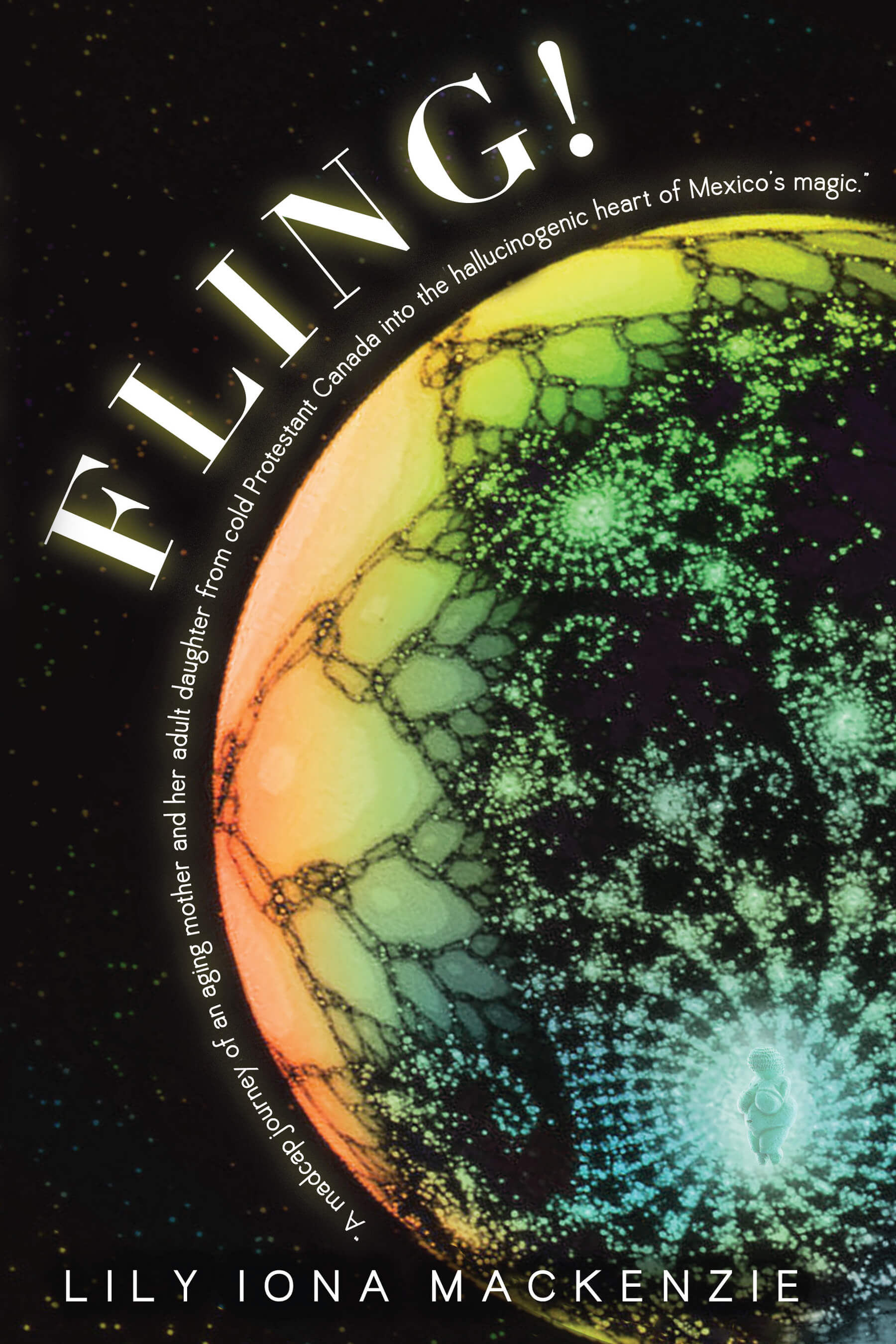
  A wildly comic romp on mothers, daughters, art, travel and death, the book should appeal to a broad range of readers. While the main characters are middle-aged and older, their zest for life would draw readers of all ages, male or female, attracting the youthful adventurer in most people.
 It began innocently enough, my relationship with ChatGpt (CGPT). I didn’t intend for it to get intimate. I didn’t expect anything at all. I just was curious about what might happen if I submitted some text and asked for a response.
  August was our vacation month for some time. We took off for most or all of the month and traveled, usually out of the country. Then we spent the rest of the year swimming in memories of where we had visited, anticipating our next trip.
  From the window seat in our master bedroom, looking through the French doors into my study, I can see the white bookcases, lining one wall. They remind me of honeycombs we kept on the farm, books now the honey that my bees/mind goes after. They also are why I write, so I may add my own work to that collection.
  Recently, I tried revising a children’s story of a girl sleeping in an elegant dollhouse, an image I had in a dream awhile back that has stayed with me. But I felt extremely critical of what I wrote. I had to stop. For now. Let it breathe. Let the criticalness soften. Fall away.
  I’ve been rereading Paul Bowles’ The Spider’s Web, hoping to renew our nine-day visit to Morocco that we did some time ago. The book has added to my understanding of Moroccan life, its pluses and minuses. Reading it was similar to visiting another country. The novel offers its own Morocco, the country of Bowles’ imagination. But did it give me insight into Morocco I wouldn’t have had otherwise?
  It’s 3:05 on a Thursday (many years ago now, but whenever I sit down to write, I’m reminded of these sessions). I’m sitting in my classroom, asking students to join me in putting their thoughts on the page. This is old stuff to me. On my own, I do it constantly, dribbling out lines that seem to come magically from the pen (computer keys) and form themselves into what we call sentences, made up of words, phonemes, syllables, letters.
  I opened the I Ching at random this morning and came up with #38, K’uei / Opposition. The commentary says it is common for two opposites to exist together, needing to find relationship. I realize an opposition is being set up just in the act of writing my memoir Drop Out: my inner writer will be observing everything I do closely and recording what she finds valuable. I’m reminded of a review of Journey into the Dark: The Tunnel by William Gass that appeared in The New York Times Book Review:
 Over the years, I’ve spent considerable time in therapy, analysis, and self-reflection, examining dreams, my relationships with people in the external world and with the “little people of the psyche.” I’ve also practiced meditation, participated in worship at churches and synagogues, and had an active interest in the spiritual life. In short, I’ve tried to become more aware, hoping that in the process I might become a better, more “whole” person.
  In medieval times, the labyrinth was considered the geographical and spiritual center of the world. Curious to experience what it’s like to walk one with other people, I enter San Francisco’s Grace Cathedral, remove my shoes, and begin my trek. The canvas surface feels rough against my bare feet, awakening the soles from their usual sleep.
  Recently I dreamed I was writing furiously on a piece entitled Thirteen Hills. This happened around the time I also was exploring the idea of a thirteen-month year by using the lunar calendar.
 Is it possible to come of age at 60 or 90? Is it ever too late to fulfill your dreams?
 I just finished reading Crowley’s The Solitudes with great relief. I haven’t hated a book so much in a long time, but I felt obligated to read it for the reading group I belong to. From the first page, I struggled to get interested in the work, rereading the first 30 pages or so two or three times and still not able to enter it emotionally or intellectually. The clumsy ungrammatical sentences (lots of comma splices) and clunky phrasings made him lose credibility with me from the start. Here are some examples of bad sentence structures:
  As I wrote in a recent post, I was approached by a media company in the UK asking for an interview. This was the first of what has become a flood of AI generated emails from all over the web enticing writers to participate in what we’ve come to call a “pay to play” scheme. It goes like this. The writer (or rather AI) compliments you on your amazing book/writing career/ insights, etc. Here’s an example.
 Years ago, when I was first foraying into finding an agent, I was involved for several months with a small Canadian literary agency with one principal, a former practicing contract attorney (I’ll call her Virginia, though that isn’t her real name), and her associate Sandra, a woman who claimed to have years of experience in the New York publishing scene as an agent and editor. Before email became ubiquitous, ours was largely a relationship by mail—post cards, letters, faxes, and, occasionally, phone.
  When I sit in my classroom, I ask students to join me in putting their thoughts on the page. This is old stuff to me. I do it constantly, dribbling out lines that seem to come magically from the pen. They form themselves on the page into what we call sentences, made up of words, phonemes, syllables, letters. And the letters themselves were once ideograms—images, as in Chinese writing—that depicted the thing itself. Now we need a more elaborate process to discover the meaning in the letters. We must attend schools for years where teachers encourage us to spill out our minds and give the contents structure on the page. It’s not unlike what a brain surgeon does when s/he cleans up the mess after a head-on collision.