Writing a novel is like riding an emotional roller coaster. So many ups and downs. In the beginning, you’re simply trying to create a world that a reader can enter. That means you need to develop believable characters, be they heros or villains, you need to set them in place and time so securely that your reader knows where she stands, and then you need to let those imagined creatures lead you forward. At least, as I’ve written before, that’s the way I do it. In the beginning, as I’ve told students, it’s as if you’re making a snowball that will eventually become the base of a snowman.
Once it begins to form and hold together, you start to push that frozen ball up a snowy hill where every turn of the packed base makes it larger, heavier and more unwieldy, but it’s growing. At some point, you reach the top of the hill. Stop there and take a breath because, if all is going as it should, that’s where the story takes on a life of its own and soon you’ll be chasing it down the other side, writing as fast as you can to keep up with your fully developed characters and all they have to tell you.
One day, you realize you’re done. You’ve written, you’ve revised and if you’re like me, nobody’s read it but yourself.
Here I take another pause. I’ve spent lots of time in this world I’ve created. These characters have kept me company over weeks, months, years so this is my first stage of mourning. I miss my characters and the daily structure they’ve given me. I wander about aimlessly, pretending that the sweater I’m knitting or the photos I’m taking are fulfilling my creative urges. And then when what I call my “creative anxiety” builds to an unsustainable pitch, I send the manuscript out to my editors/readers.
No matter how many books I’ve written, I always imagine and hope that the one I’ve just finished is finally the perfect one, the book that doesn’t need one word changed. Despite having published dozens of novels that hasn’t happened yet, and in my saner moments, I know it never will. My smart readers let me know that there is still work to be done, so I plunge back in, dropping a scene here, adding another one there, changing the direction a character takes and the ensuing consequences. In one book, I had to change the entire manuscript from present to past tense which is the way it should have been written in the first place. I needed a smart editorial assistant to point that out to me and I’m grateful for her honesty.
When the revisions are done and the book has been copyedited, printed and put between two covers, I have another moment of sadness. This stage reminds me of leaving my child wailing at the door on his first day in preschool as I hurry off, trying not to look back.
Now there’s no way to protect this creation from the reviewers. She must make her own way. I’ve done all I can. However, I’ve proven to be a fickle creative parent. By the time that book is out in the world, I usually find I’m getting distracted by another idea, an island setting, an overheard tale or a wily trickster whispering in my creative ear.
If I’m lucky and the publisher has done its job, the book finds its readers and fans, it lands on bookstore shelves and in library nooks, and sometimes all the way into classrooms.
Often my book is translated, published in other countries, excerpted in anthologies. The sales are robust in the first years but usually dwindle slowly over time and one day in two years or ten or even twenty, I get the inevitable letter from the publisher informing me they are putting the book out of print.
Another moment of mourning. The little one I sent out has returned to me somewhat tattered and torn, but having lived a full life in the hands of readers who for a while entered the world I created. I order some last copies, revert the rights so that I hold them should another publisher show interest in reissuing the book, and I move on.
This is an especially poignant week for me because for the first time, I am the one reclaiming the rights of a book still in print. For now, The Castle in the Attic, my fantasy novel for middle grade readers will only be available in an audio version or in used bookstores, and libraries.
I wrote more about the reasons for my decision in my last post, A Big Announcement. Even though it is the right decision for the future of the franchise (a prequel is finished, the first sequel, The Battle for the Castle, is still in print, I’m working on the final sequel and a movie deal is in the works), I am sad at this pause in the 40-year publishing track record of my novel.
But a writer is never not writing. So I’m back on the roller coaster, one third of the way into the final sequel to The Castle in the Attic. The snowball is packed, heavy, unwieldy and I’m teetering on the crest of the hill. Wish me luck on the way down.
P.S. I’m always happy to hear from my readers in any form, but I’m especially grateful if you can write your comments in the Substack app, so that others can read them and respond.
Thanks for reading Table of Contents: 1. Writing 2. Publishing 3. Notes. Subscribe to receive new posts and support my work.




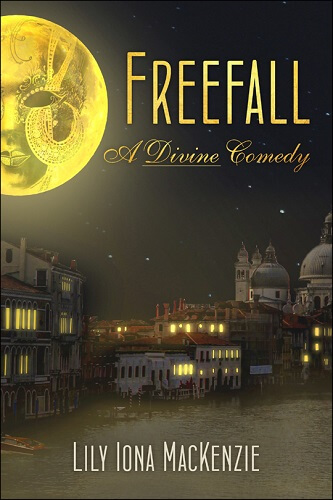
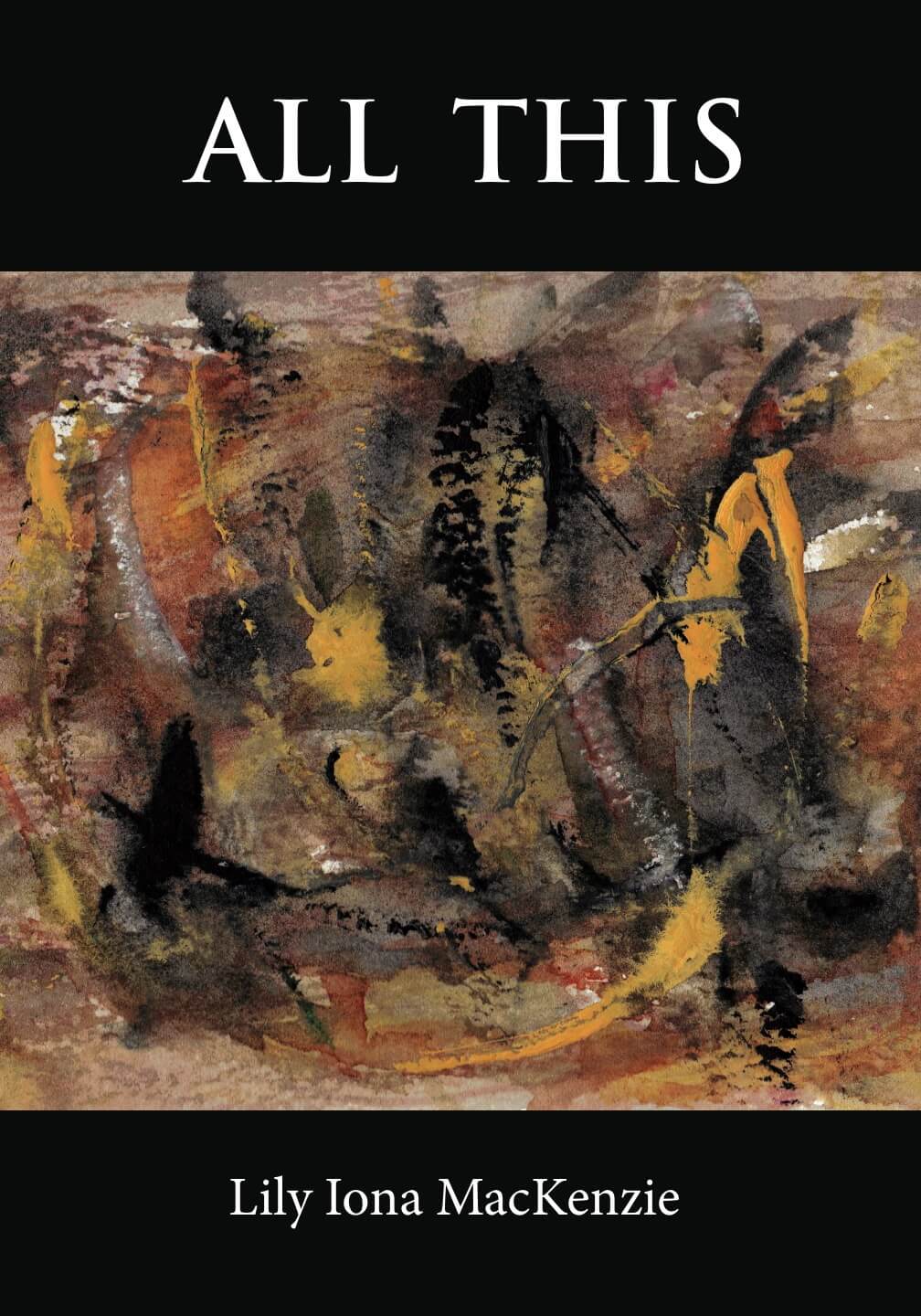
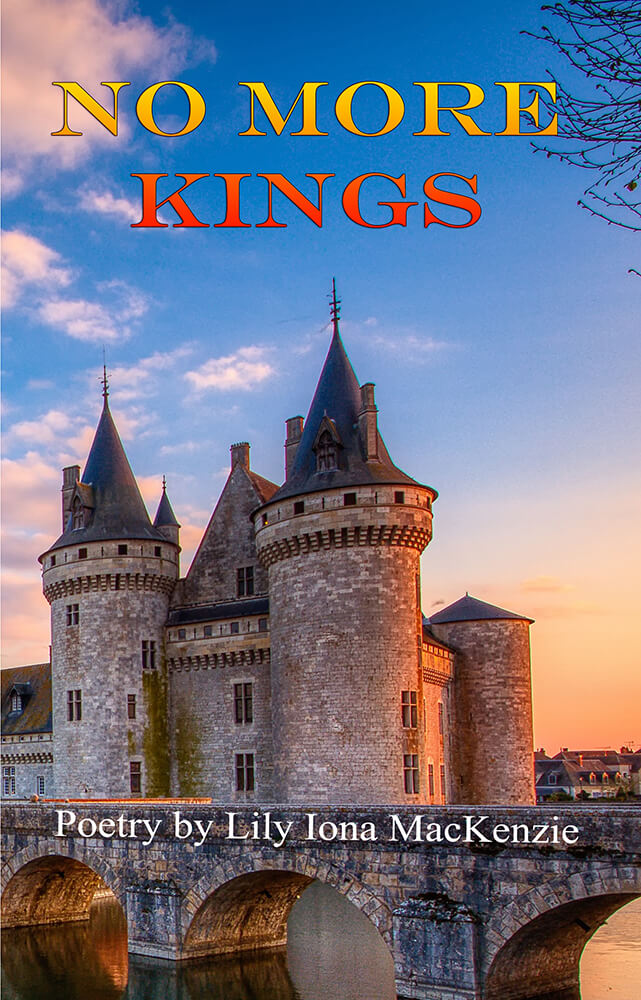


 Why do I write? Because if I don’t, I feel as if part of myself has checked out. It’s as important to me as food. Okay, it is food, the word like a communion wafer that melts on my tongue, nourishing body and soul. It’s also like having a lover that never loses his attractiveness, beckoning on the fringes of my days, waiting to embrace me.
  For thirty years now one of my favorite teaching topics in memoir classes is showing characters.
 I’m not your garden variety Canadian. I don’t own a Hudson’s Bay blanket. I don’t go to hockey games anymore. I’ve stopped being nice. I’m no longer so polite. And I gave up my citizenship when I became an American many years ago. But I can’t seem to shake my country of origins, especially now that Trump has become so enamoured with making Canada the 51st state. It makes me want to give up my American citizenship and leave this country that he’s destroying. But at my age, such a move would be extremely difficult. I’ve lived in the America three times longer than I have in Canada.
  I wish I could get excited about graphic novels. I looked at Maus many years ago and tried to get into it. I couldn’t. I didn’t like having prefab images put my own imagination on hold. I didn’t like the lack of complexity I enjoy so much in a literary novel (no graphics). It was like watching tv in print. Everything is oversimplified. Reduced to its lowest common denominator.


 American films tend to follow a three-act story structure with a key turning point at the end of the first and second acts. Memoir has no single formula like that for its structure, though it’s not a free-for-all. There are options to choose from.
 During my life, I’ve spent considerable time in therapy, psychoanalysis, and self-reflection, examining dreams, my relationships with people in the external world and with the “little people of the psyche.”
  A writing friend of mine has papered her bathroom with rejection slips. Viewed in that context, they become less weighty and are put into perspective. As writers, we tend to think of rejections from publishers as negative. But rejections also can be gifts in disguise, offering us a way to make lemonade out of lemons.
 After I recently published a guest post by Suzanne Sherman on my blog, I responded to her challenge to write nonstop for 10 minutes about why I write. What happened for me confirmed her discovery that “writing lets us dig deeper and find out what we really think about something.”
  California, even in January, still has spring-like qualities, though April always makes me a little nervous. All that new green showing itself. Flowers. Plants. Reveling in an ecstasy of self-indulgence. For a Canadian, such excess seems suspect. But California, northern California that is, doesn’t care. It just keeps making these spring-like gestures, warming up one day. Cooling the next.
 At a New Year’s Eve party, someone asked if I’m writing lately. I said yes, I’m always writing. The next day, I decided to sit down for 10 minutes to explore the reason for my answer. Writing nonstop for 10 minutes on the topic turned out to be another good example of how writing lets us dig deeper and find out what we really think about something.
 Bruno Schulz, the Polish writer, has become my new muse. I’ve been reading his first book, The Street of Crocodiles, and I’m fully captivated. His words and images have such energy that they practically levitate above the page: “A tidy thicket of grasses, weeds, and thistles crackled in the fire of the afternoon. The sleeping garden was resonant with flies. The golden field of stubble shouted in the sun like a tawny cloud of locusts; in the thick rain of fire the crickets screamed; seedpods exploded softly like grasshoppers.”


 Full disclosure: I started this blog some time ago so I could create a “writer’s platform” to show agents and potential publishers. But it doesn’t come without a cost, and that is one’s privacy, even though my postings mainly focus on some aspect of reading and writing.
  Okay, I’ve been writing for longer than I care to remember, but I still can convince myself (arrogant? yes!) that I don’t need feedback from other writers. This attitude tends to take over when I’ve spent considerable time working on something, as I had with a memoir I’ve written. After all, it’s my story I’m telling! How could someone else help me to improve it? I don’t usually take this approach to fiction. I assume it can be made better. But I’d persuaded myself that this material was ready to be published.
  In medieval times, the labyrinth was considered the geographical and spiritual center of the world. Curious to experience what it’s like to walk one with other people, I enter San Francisco’s Grace Cathedral, remove my shoes, and begin my trek. The canvas surface feels rough against my bare feet, awakening the soles from their usual sleep.
  Recently I dreamed I was writing furiously on a piece entitled Thirteen Hills. This happened around the time I also was exploring the idea of a thirteen-month year by using the lunar calendar.
 Is it possible to come of age at 60 or 90? Is it ever too late to fulfill your dreams?
 I just finished reading Crowley’s The Solitudes with great relief. I haven’t hated a book so much in a long time, but I felt obligated to read it for the reading group I belong to. From the first page, I struggled to get interested in the work, rereading the first 30 pages or so two or three times and still not able to enter it emotionally or intellectually. The clumsy ungrammatical sentences (lots of comma splices) and clunky phrasings made him lose credibility with me from the start. Here are some examples of bad sentence structures: