Lily Iona MacKenzie's Blog for Writers & Readers

MY BLOG POSTS COMMENT ON SOME ASPECTS OF WRITING & READING.

Guest Authors

Curva Peligrosa, who entered this world in September 2017, has just turned seven. Who, you may ask, is Curva, and why should I care about her? If you’re also a Regal House Publishing author, you’ll want to give tribute to Curva Peligrosa as one of the first novels released by Regal House, now a well-established and renowned press. (more…)

I’m grateful that I live in a big city where I am forced to rub up against people who are not like me.

On the subway, I sit next to human beings of all ages and skin colors and shapes. In the streets, I see people in wheelchairs, joyful children, panhandlers down on their luck, women in heels I couldn’t wear for half a block, and helmeted, gray-haired women on bikes weaving their way in and out of traffic. I say hello and introduce myself to the homeless man even though I don’t always drop money into his paper cup. I offer my subway seat to a father with a baby strapped to his front, and he declines with a grin. With my foot, I hold the elevator door for an older woman using a cane and in return, with an eye on my arms full of packages, she pushes the button for my floor.

While I wear a wide-brimmed straw hat in summer and earmuffs in the winter, they sport yarmulkes and fezzes and bike helmets and hijabs and their hair might be dyed all colors of the rainbow or they may have shaved it all or just half of it off. When I am wearing four layers against the cold, I can admire the younger generation’s bare tattooed skin or their muscular legs protruding from baggy shorts or swathed in tight leggings.

Do I know these people personally? No. Do they make me angry? Yes…when I’m groped in the subway or someone cuts in front of me in a line or steals my wallet when I’m not watching my purse. Do they scare me? Sometimes…when a person breaks into an angry harangue against the world in the middle of the sidewalk or rattles me with her disconnected stare in my subway car. Do they make me smile? Often…when they are dressed in wild costumes or carry a parrot on their shoulder or play their bagpipes on a street, ignored by most busy passersby.


Do they make me curious? Yes, when I can’t see what book they’re reading or when they are speaking a foreign language I don’t recognize or when they stop me on the street to ask me to contribute to a cause.

But, like these people or not, I can’t separate myself from them by getting in a car or hiding out in my apartment. Every time, I step on the bus or stride down the sidewalk to do an errand, I am in community with a slice of the world, and for that experience, I continue to be deeply grateful most especially because I’m a working writer.

In the city, I am constantly inspired by the whirl of humanity around me. A detail I note in my daily travels may make it into my novel and months later, not even I will remember the connection. It might be the green eyes of the barista who serves me a dirty chai in my favorite coffee shop or the close cropped beard of my neighbor which fits perfectly my description of the sly bailiff in my 14th Century castle. Just as artists usually have a sketchbook at hand, I carry a journal where I can scribble a quick description of people, places, weather, sounds, emotions. As Gustave Flaubert said, “the good God is in the detail” which has always meant to me, be as specific as you can, especially in fiction where the reader needs to feel welcomed and grounded from page one.

Day after day, I thank the city which enriches my writing because, to paraphrase Mary Oliver, it offers itself so completely to my imagination.

Elizabeth Winthrop Alsop (www.elizabethwinthropalsop.com) is the author of over 50 works of fiction for adults and children under the pen name Elizabeth Winthrop.  These include the award-winning fantasy series, The Castle in the Attic and The Battle for the Castle as well as the short story, The Golden Darters, read on the nationwide radio program, Selected Shorts,and included in Best American Short Story anthology, and Island Justice and In My Mother’s House, two novels now available as eBooks.  She is the daughter of the acclaimed journalist, Stewart Alsop. Daughter of Spies: Wartime Secrets, Family Lies, a family history about her parents’ love affair during World War II and their marriage lived in the spotlight of Washington during the 1950s was published by Regal House, October 25, 2022.

Follow her newsletters on Substack.

Valerie Nieman’s historical novel, Upon the Corner of the Moon, is now available for pre-order with the release set for March 2025. This is the story of the Macbeths you never knew, rightful rulers who united Scotland in the tumultuous 11th century. The second of the two ALBA books, The Last Highland King, will appear in 2027. In the Lonely Backwater, winner of the 2022 Sir Walter Raleigh Award, has been called “not only a page-turning thriller but also a complex psychological portrait of a young woman dealing with guilt, betrayal, and secrecy.” To the Bones, a horror/Appalachian/ ecojustice novel, was a finalist for the 2020 Manly Wade Wellman Award, and now has a sequel, Dead Hand. She is the author of three other novels, a short fiction collection, and three poetry books. A graduate of West Virginia University and Queens University of Charlotte, she has held state and NEA fellowships and is professor emerita of creative writing at NC A&T State University. (more…)

Whenever I give a talk or reading, someone in the audience asks where my stories come from. I find the answer more complex that what it would appear to be on the surface. What are my narrative seeds? What starts me on these explorations of others’ lives? (more…)

Winner of The Writer’s Union of Canada’s Prose Contest in 2016, Susan Waddswork has appeared in carteblancheThe Blood Pudding, Room, Waterwheel Review, and many more. The first two chapters of her debut novel, What The Living Do, (Regal House Publishing, 2024), won the Lazuli Group’s Prose Contest, and were published in Azure Magazine. What the Living Do was a finalist for the 2024 Canadian Book Club Award. A graduate of the Humber School for Writers and a proud member of The Writers Union of Canada, Susan is a certified Amherst Writers and Artists (AWA) workshop facilitator. She lives on a quiet river on Williams Treaty land in traditional Anishinaabe territory with an odd assortment of humans and cats.

(more…)

correcting-1351629_1920Okay, I’ve been writing for longer than I care to remember, but I still can convince myself (arrogant? yes!) that I don’t need feedback from other writers.  This attitude tends to take over when I’ve spent considerable time working on something, as I had with a memoir I’ve written.  After all, it’s my story I’m telling.  How could someone else help me to improve it?  I don’t usually take this approach to fiction I’ve created; I assume it can be made better.  But I’d persuaded myself that my memoir was ready to be published. (more…)

Okay, so you’ve accomplished the impossible. An agent has expressed interest in your work and you’ve signed a contract.  All those months (maybe years) of sending out your novel have paid off.  Not only do you have an agent, but she’s in New York, on Park Avenue.  A respectable established firm.

Now what?

You wait.

First, give up the notion that the agent will want to see everything you’ve ever written.  Maybe she’ll politely glance at some of your things, but she has to keep building her list.  Taking time to read your backlog of writing keeps her from reading promising manuscripts from other writers.

Forget the idea that she’ll want to discuss your career with you. After you’ve sold something, she may want to work out a plan for future projects, encourage you to try out certain directions.  But first you have to be financially viable and make money.

I know, you’ve thought agents shared your idealized opinions about art’s supremacy—that we’re all in it for the sake of art, that art comes first, money second.

Not on your life. This is strictly business.

Look at it from her point of view.   Articles don’t make her money.  Anything that has a regional audience won’t make her money. Most small presses won’t make her money. Agents are only interested in what can make them money.  This is their livelihood.

Also don’t expect her to send out your manuscript indefinitely. She’s losing money if she does—and time. And don’t assume she’ll stay on top of submissions without an occasional reminder from you, showing you’re interested in knowing what publishers have received the book and where it’s going next.

You’ll find it’s a fine line.  You don’t want to bug her every week or so, but you also don’t want your novel to grow cobwebs when it could be out working for you.  A call or email every couple of months sounds about right.

Trust is a nice word and an honorable one.  However, people usually have to earn our trust. Agents are no different. Assume the worst but expect the best—demand the best.  After all, it’s your future; you’re the one who has put uncountable hours into this project

So initially, at least, put away your great expectations.  The publishing world is raw, rough, and unpredictable.  If you’re used to being the only child or in sharing your parents with only one or two siblings, you’re in for a shock. The agent will have many clients, all of them like you, hungry for attention, for feedback, for a sale.  You’ll have to be happy with the crumbs that come your way.

There are some payoffs.  While an editor might not buy your book, she may say you’re a very talented writer.  Those three words can give you much-needed inspiration to keep writing.

And maybe one day, one of your books will sell.  Maybe it will even hit the best seller list and you’ll graduate to your agent’s inner circle, become one of the writers whose career the agent does want to direct.  But until then, don’t waste your energy wishing for what can’t be.

At least now you can tell people you have an agent.  It’s almost as good as selling a book. 

(My thanks to whoever wrote this blurb about agents, origins unknown.)

The Royal(ty) Lesson

I’m reposting this newsletter that I sent out over a year ago in case some of my newer readers missed it. I continue to get questions on the royalty system, both in traditional publishing, and in the newer forms from independent presses to hybrid to self-publishing. I hope this math lesson helps a little to clarify matters.

I’ve learned over the years that many readers, fans and beginning writers think that published authors get rich really fast especially if they produce a number of books. I thought this might be a perfect opportunity for a little reality check in the form of a math lesson. Now that I’ve looked closely at these numbers, I admit to feeling some sympathy for publishers.

Most traditional office workers are paid twice a month and if they’re lucky, they have benefits like health insurance. Writers publishing with traditional publishers are paid twice a year, April 1st and October 1st. (Amazon pays you monthly if you self-publish or if you publish with one of their book divisions.) Needless to say, you have no obvious job benefits although working for yourself from home has advantages (and challenges) as many workers discovered during the pandemic.

My memoir DAUGHTER OF SPIES, Wartime Secrets, Family Lies was published by a small award-winning, women-owned independent press. Always before, I have published with one of what we call in the “biz,” the big 5.  Names you’d recognize like Random House, Viking, Henry Holt, Macmillan and so on. Those publishers give you an advance and then pay you a royalty based on the list price. If the book costs $20 and you’re getting 10%, you’re receiving $2.00 per copy sold. In the end with high discounts to booksellers and freight pass through clauses (don’t ask!) and various other tweaks, many of the copies don’t deliver that kind of royalty to the author but we’ll leave that aside for now. One more note. The advance is an interest free loan that doesn’t need to be returned if you don’t “earn out.” (See this link for a post by Lincoln Michel on calculating when your book will earn out.) Every time you sell a book, that royalty is deducted from the advance. If you negotiated a $5000 advance and you’re getting $2.00 a copy, you’ll first need to sell 2500 copies in order to earn out and see any more income from the book.

An independent press rarely pays you an advance which means you start earning money from the first book sold although you still get your royalty checks twice a year. In addition, independent presses usually pay you based on the net price of the book, not the price listed on the jacket. Therein lies a tale. And here comes the math lesson.

It costs the publisher $3.48 to print the $17.95 trade paperback book. If the customer is ordering the book through Amazon or at an independent bookseller, those outlets get their copies through a distributor. The distributor passes the book on to the bookseller at a 51% discount ($9.17) because the bookseller needs to buy it at a discount in order to sell it for a profit. The distributor charges a distribution fee of $2.29 a book so the net to the publisher when shipping through the distributor is $3.40 ($9.17 -3.48 -2.29 = $3.40) of which the author receives a percentage, anywhere from 10 to 25% or $.34 to $.85 a book.

I always encourage my readers to order directly from the publishing house website because this is how the numbers work then. It still costs the publisher $3.48 to print the book, but without the distribution fee, shipping and handling per copy comes to $.82 per unit. So, the net to the publisher in this case is $13.65 (17.95 – 3.48 -.82 = $13.65 net.) Royalty to the author depending on the rate she negotiated in her contract runs from $1.63 to $3.41.  Big difference!  But we are all impatient these days and are hooked on Amazon’s swift delivery times so many more readers go that route rather than directly to the publisher’s website. And I’m always happy when readers order through an independent bookseller because I certainly want to keep them in business. Independent bookstores, run by people who really know and love books, represent a vital resource for any community. However unfortunately, buying a book from them doesn’t necessarily result in a better payment to the author.

There are other ways to go these days from self-publishing to hybrid publishing where the author puts up most of the front money and gets paid back when the book sells. I’ve never signed with a hybrid publisher and I’ve only self-published two of my out-of-print novels and one short “kindle” single. Unless you publish regularly (by that I mean at least once a year if not more) and in a niche like self-help or genre fiction as two examples, it’s very hard to get yourself heard above the noise. To put it baldly, it is estimated based on the ISBN numbers sold by Bowker, that 2000 books are published EVERY DAY in the United States. As this article details, the sales of most books are shockingly small and still shrinking. The marketplace is saturated. Consumers are turning to media for their entertainment.

This comment by Courtney Maum, the author and educator, really struck home for me. “Publishers print books. Authors publish them.” How successfully books move in the marketplace now depends almost entirely on the author as publishers have cut their profit margins by reducing their marketing and publicity departments in order to focus their resources on the best-selling authors who bring in the most guaranteed sales.

As E.B. White said, “I admire anybody who has the guts to write anything at all.”

But if you’re a writer, you’re never not writing. You have a place you can go which nobody can take away from you, a world you’re creating that only you can visit. I wouldn’t give that up for anything. Whether you publish or not, whether you make any money from the words you throw down on the page is beside the point when you’re lost in the story. And every six months, that envelope arrives and if you’re lucky, a check falls out.

I’ll give E.B. White the final word.

“The whole duty of a writer is to please himself, and the true writer always plays to an audience of one. Let him start sniffing the air, or glancing at the Trend Machine, and he is as good as dead, although he may make a nice living.”

Elizabeth Winthrop Alsop (www.elizabethwinthropalsop.com) is the author of over 50 works of fiction for adults and children under the pen name Elizabeth Winthrop.  These include the award-winning fantasy series, The Castle in the Attic and The Battle for the Castle as well as the short story, The Golden Darters, read on the nationwide radio program, Selected Shorts,and included in Best American Short Story anthology, and Island Justice and In My Mother’s House, two novels now available as eBooks.  She is the daughter of the acclaimed journalist, Stewart Alsop. Daughter of Spies: Wartime Secrets, Family Lies, a family history about her parents’ love affair during World War II and their marriage lived in the spotlight of Washington during the 1950s was published by Regal House, October 25, 2022.

Follow her newsletters on Substack.

(more…)

supernova-1183663_1920In addition to writing adult fiction and non-fiction, I also create pieces for children. Recently, I tried to start a children’s story of a girl sleeping in an elegant dollhouse based on a dream image that has stayed with me.  But after a few sentences, I felt extremely critical of what I’d written.  I had to stop. Let it breathe, I said to myself. Let the criticalness soften—fall away. (more…)

A high-school dropout and a single parent at sixteen, my options were severely limited. I had a son to raise on my own, and I received no child support from his father. A quick learner, I parlayed the typing skills I had learned in my high school commercial course (it was assumed then that most women would end up as clerk typists or some version of that role) into a variety of office jobs after starting out as an office girl. Consequently, when I began writing my novel Curva Peligrosa, the title character, I wanted to create a fully feminine female who wasn’t as restricted as I had been either by self-imposed limits or by society’s boundaries. (more…)

HOW ONE BOOK CAN LEAD TO ANOTHER

From Genealogy to Memoir

In 2007, I published Counting on Grace, a work of historical fiction that told the story of a 12-year-old mill worker, a girl who “doffed” the bobbins in a textile mill in North Pownal, Vermont. My character was inspired by this photograph of a textile worker, taken by Lewis Hine, the photographer who traveled all over America documenting the lives of children who worked long days in dangerous industries like coal mining, oyster shucking, glass blowing and textile factories to name a few. When I first saw the photograph in a Vermont museum, I didn’t want to know anything about the actual child in the picture. I simply used her weary face, her filthy smock and her dirty bare feet as an inspiration for my story.

But once the novel had moved to the copyediting stage, I began to wonder about the actual child, the one who inspired my story. Hine had listed her as Annie Laird, but when we couldn’t find an entry for a child by that name in the 1900 census, I realized that Hine probably couldn’t hear what she told him over the noise of the spinning frames. So with a bit of imagination, the help of a local genealogist/researcher and some deeper digging, we found Addie Card  and her older sister, Annie in that census.

In the end, with the help of her descendants, we pieced together Addie’s story. She married a fellow mill worker, had a child, divorced and ended up living across the border in New York State. She died at the age of 93, never knowing that her face appeared in a Reebok ad decrying child labor or on a 1998 postage stamp.

I made sure that the billboard on the former site of the mill in North Pownal listed her correct name as did the entry in the Library of Congress Hine collection.

A writer coming off a book can get distracted by the marketing and publicity work, but I’ve always maintained that even then, a writer is never not writing. So, when I found myself at the end of the story of Grace, I suddenly realized that I knew more about Addie Card than I did about my own mother. Without knowing where my research would lead me, I turned my attention to my Gibraltar-born mother, her childhood by the Mediterranean and in England, her life in London during the war and her marriage to my father, a Yank who enlisted in the British Army.

Books start long before the writer knows what she’s doing or where she’s going. I thought I was simply filling in the gaps in my mother’s story. She’d always kept her counsel and had seemed content to let my father’s big noisy American family garner all the attention. But as I began to learn more about her, I could feel a book taking shape, this time a memoir that would start with my mother’s peculiar childhood in Gibraltar and my parents’ wartime romance and go on to tell the story of my childhood in cold war Washington, where we were surrounded by famous politicians, diplomats and CIA operatives.

The problem was I’d never written a memoir before, so I had to learn a new way of using the tools of fiction. It took me longer than usual to find my voice in this book, to discover the difference between autobiography and memoir and to find a way to tell my mother’s story without letting hers overshadow mine. In Daughter of Spies: Wartime Secrets, Family Lies I learned to use a braided narrative, one that moves back and forth from the past to the present. Memoir requires structure but like most projects, including novels, the book teaches the writer what it’s about while she’s writing it.

And it’s only in looking back that I realize the exploration of my mother’s story began with a search for a little girl in Vermont whose photograph had become iconic but whose story had been tossed into the dustbin of history.

Elizabeth Winthrop Alsop (www.elizabethwinthropalsop.com) is the author of over 50 works of fiction for adults and children under the pen name Elizabeth Winthrop.  These include the award-winning fantasy series, The Castle in the Attic and The Battle for the Castle as well as the short story, The Golden Darters, read on the nationwide radio program, Selected Shorts, and included in Best American Short Story anthology, and Island Justice and In My Mother’s House, two novels now available as eBooks.  She is the daughter of the acclaimed journalist, Stewart Alsop. Daughter of Spies: Wartime Secrets, Family Lies, a family history about her parents’ love affair during World War II and their marriage lived in the spotlight of Washington during the 1950s was published by Regal House, October 25, 2022.

Follow her newsletters on Substack.


emoticon-1421124_1280Fiction writers have been called many things, but magician seems to me the best description.  They dip into the black hat of their imagination and produce an endless variety of characters, situations, images, genres, events, and styles.  The effect on readers is nothing less than magical, the reader also becoming a magician, assisting in making visible what wasn’t there before. (more…)

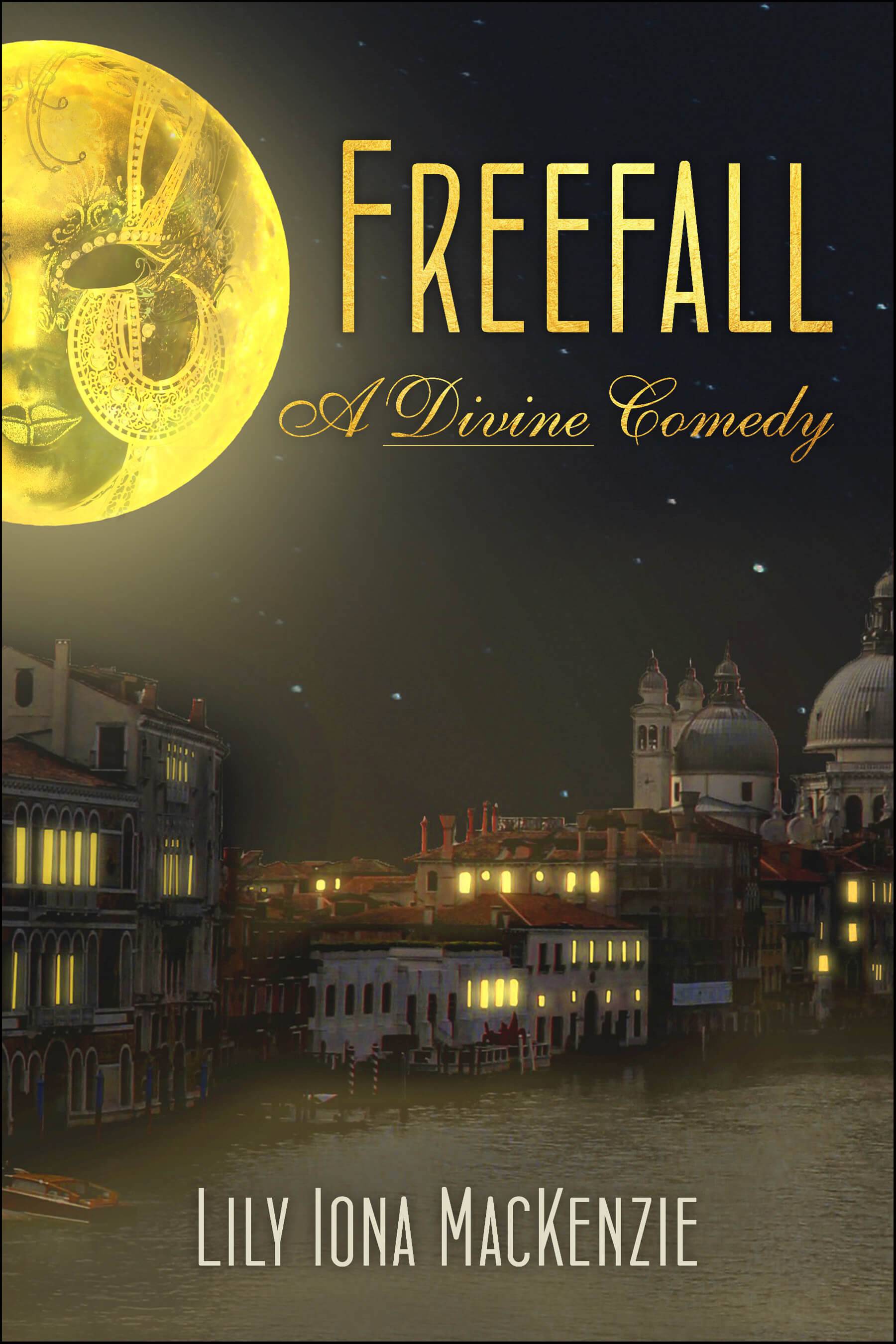
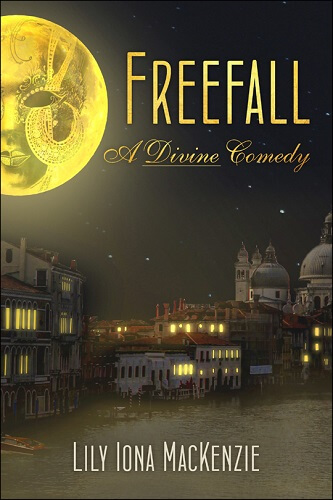
FreefallPen-l Publishing released my second novel, Freefall: A Divine Comedy in 2019. Recently, I’ve been thinking about its evolution, a reminder of the kind of journey we undertake when we start writing a novel. The road to the moment of publishing Freefall was a long one.

When I reviewed my notes for Freefall (I keep a working journal for each novel I write), I was amazed to discover I began it in September of 2000. I had been inspired by a visit to see an old friend, Ev, someone I’d hung out with in the late 1950s. Barb, another old friend from that time joined me at one of Ev’s homes, this one in Whistler, B.C.. (more…)

lovers-1676972_640

When I picked up Marguerite Duras’ The Lover, I wasn’t sure what to expect. I knew she was considered one of France’s most important literary figures, but The Lover was the first work of hers that I had read. (more…)

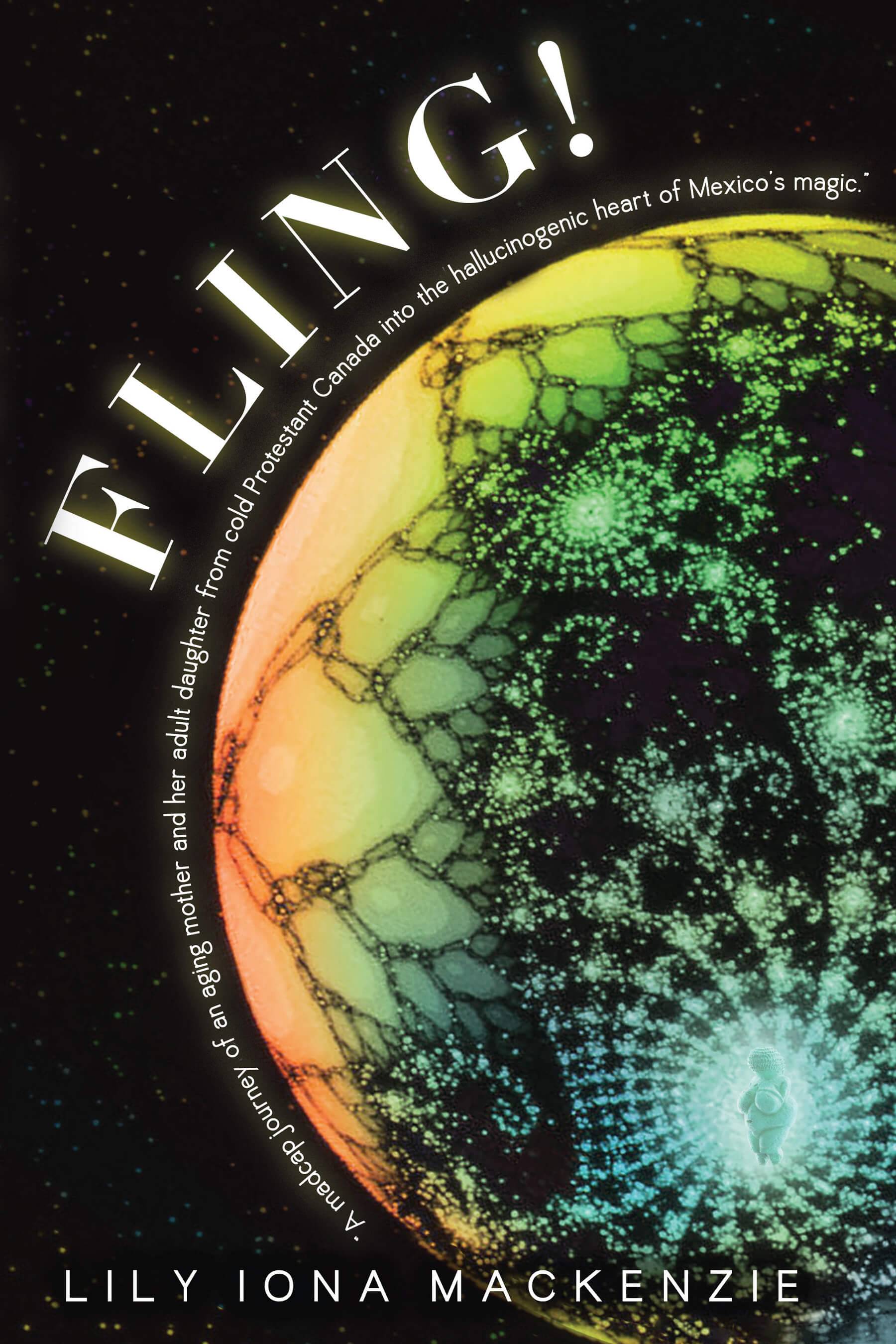
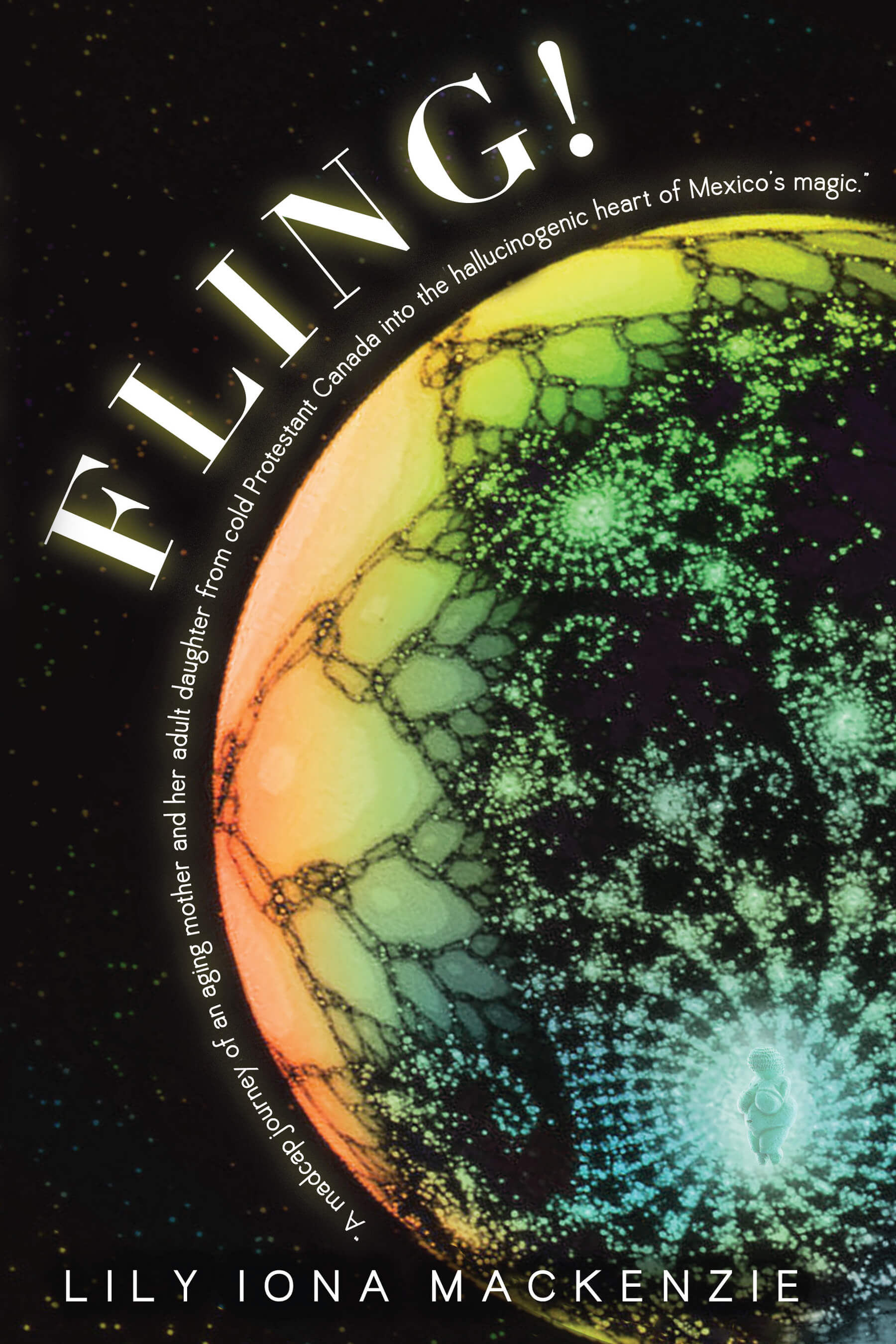
My novel Fling, a wildly comic romp on mothers, daughters, art, and travel, was published in July 2015.

What happens in Fling? Feather, an aging hippie, returns to her Calgary home to help her mother, Bubbles, celebrate her 90th birthday. Bubbles has received mail from the dead letter office in Mexico City, asking her to pick up her mother’s ashes, left there seventy years earlier and only now surfacing. (more…)

I’ve been on hiatus from my writing because of travel and family business. When I look back at the last date I entered in my writing journal, the one I keep along
side whatever work of fiction is occupying me these days, I’m not surprised to see it reads May 12th. I’ve been on the other side of the world and the other side of history from my characters who live half the time on the northeast coast of England in the 1940s and the other half in the same place in the 1400s.
No wonder, I’m finding it hard to get them talking to me again. So how do I jumpstart the process?

(more…)

Russia is much in the news these days and a Russian was the first governor of Alaska: Learn more in MASTER OF ALASKA!

master of alaska blog tour.pngAbout Master of Alaska

The detail and research that author Roger Seiler used—from biographies to actual letters and reports by the Governor Baranov himself—creates a riveting story.

Master of Alaska – a compelling Historical Fiction about the first governor of Alaska sent to the colony by Russia in 1790 – George Washington was President at the time. Master of Alaska starts in October 1790 when Aleksandr Baranov left his family in Russia and sails across the North Pacific to Kodiak to become the chief manager for Tsarina Catherine the Great’s colony in the far Northwest of North America. Baranov is shipwrecked, saved and adopted by the Aleut natives. Later he is forced to marry Anooka the daughter of the tribal chief, despite still having a wife back in Russia to save his men from starvation. Only slated to serve five years, Baranov spends the next 28 years in Alaska, surviving natural disasters, a massacre of his people at Sitka, meddling competing Russian authorities, a British attempt to undermine his colony and an assassination attempt. Interestingly, Baranov’s native wife and teenage daughter play an intricate role and contribute much to his success and survival in Alaska. Baranov built an empire and sought peace with the warring Tlingit, and thanks largely to his efforts Alaska is part of the U.S. today.

Excerpt:

Baranov Meets Anooka (p. 82)

INTRO: After Aleksandr Baranov had reached the Russian settlement at Three Saints Bay on Kodiak Island, he took command of the colony. The Aleut village chief, named Grigor by the Russians, had learned to speak Russian and invited Baranov into his longhouse to confer. As they sat in front of the central fire, Baranov took from his pocket a bright copper plate engraved with Tsarina Catherine’s coat of arms and gave it to Chief Grigor as a gift.

Chief Grigor’s eyes widened in amazement as he examined the copper plate closely. “This is important,” he said.

It was exactly the reaction Baranov wanted. He continued, “I look for a long future of friendship between us. We can help each other in many ways. I must explore Montague Island, over here, and need some of your men as guides.”

“Great Nanuq, do you have a woman?”

Baranov was taken aback. “I have a wife in Russia.”

“In Russia? What good is that? Take my daughter for wife. Then I be your father, and we work together as one. This way we make powerful alliance.”

Before Baranov could react, Chief Grigor turned and called out to his daughter in his Native tongue, “Anooka, come here!”

From a dim recess of the lodge, a slender seventeen-year-old in deerskins approached with unusual youthful dignity. She had glistening long, black hair flowing over her shoulders, and set in an oval face were the high cheek bones common to many Natives. Her big, warm, brown eyes looked out from under lovely arched eyebrows. Clear, tan skin, a straight, pretty nose, and a mouth with soft lips completed her. To Baranov, Anooka was strikingly beautiful. Though reserved, the self-confidence of her rank allowed her to glance at the strange Russian in front of her, and then she faced her father.

In the Kenaitze dialect of the Alutiiq language, the chief told her, “Turn around and face the great Russian Nanuq.” She did so. With no hint of shyness, she looked Baranov right in his eyes. Her intelligent dark eyes held his stare as an equal for a long moment, until she yielded a slight smile, revealing perfect white teeth, and looked down.FrontCover0823Bmasterofalaska

Nanuq quickly collected himself and, wanting to get back to the negotiations for guides, replied, “Chief Grigor, your offer is most generous. But as I said, I already have a wife in Russia.”

Grigor insisted, “But not here. How long has it been, great Nanuq, since you’ve had a wife at your side?”

Baranov stared at him in silence. He didn’t want to offend the man, but the proposal was absurd.

The chief tried once more. Certainly an alliance with this Russian Nanuq would greatly benefit his own stature in the eyes of his people—and especially their southern enemies, the hated Tlingit.

“I see. Well, you need a wife here! And we need a strong alliance.”

“A Russian can only have one wife.”

“Poor man! Poor man!” said Grigor in mild disappointment. He knew that making such alliances, especially with one as strong as Nanuq, could take time and much negotiation. But just how strong was Nanuq, anyway? Maybe he should be tested. There was more than one way to impress the Tlingit with Kenaitze power. Grigor motioned to Anooka to return to her work.

“Well, then, the least I can do for you is give you the guides you need.”

Anooka sat on a blanket in the back of the longhouse, where she had been making a bear claw necklace for her father. Why did Father want to give her to this man? Though short, he looked strong and intelligent, but strange. Could she ever want him? She knew what she wanted would count for nothing. Her father would decide, and she had to trust him to choose well for her. She would ask one thing: that her father wait until he really knew a man before he made his choice. As his daughter, she deserved at least that, and the chief had only just met this Nanuq.

Baranov looked into the shadows for Anooka, straining for another glimpse of her youthful beauty. Grigor noticed.

About the Author Roger Seiler

Award-winning filmmaker and author Roger Seiler grew up in Alaska from age three.  His love of adventure comes from both his parents. His father Edwin was a civil engineer eventually becoming an Alaskan bush pilot. His mother Josefina was born in Puerto Rico and was a writer and Alaskan sport-fishing lodge manager with the hobby of Flamenco dancing.  In his late teens, Roger was a king salmon sport fishing guide on Alaska’s Naknek River, and also a commercial salmon fisherman in Bristol Bay.

He attended Deep Springs College and graduated With Honors from UCLA with a BA in Theater Arts – Film. His first film work was for UCLA’s Automotive Collision Research project, including a film for TV, “Safety on the Road,” which he wrote, produced and directed. While attending UCLA, Roger also worked with actor Karl Malden and famed director Francis Ford Coppola.

Roger worked for IBM for several years as an in-house filmmaker involved largely in producing and directing motivational films for employee conventions. He has made over 30 documentary films. His IBM film, The Inner Eye of Alexander Rutsch had a special screening at New York’s Museum of Modern Art and won the CINE Golden Eagle Award, as did three of his other films, Frontiers, Challenge Over the Atlantic, and Strategy of the Achiever.

Roger currently lives in South Nyack, NY with his wife Sally. Roger is a devoted reader and supporter of libraries. In 1977 he was elected to the Board of Trustees of the Nyack Library (Carnegie funded in 1879) and has continued to serve for 40 years, 16 as Board President. Master of Alaska, a historical novel, is his second book and whose publisher North Face Publishing is a subsidiary of Motivational Press Publishing.

Interview with Roger Seiler 

How do you come up with book titles?

 A title must grab attention and be easy to remember. The subtitle should suggest what the book is about, with a bit of a hook – intriguing but not giving away too much.

What have people most liked or found most meaningful/funny/creative/ challenging about your book?

They love the dialog and the way they hear what is going on inside the characters’ heads. Then they say they were gripped by the adventure, the conflicts, and how the confilcts are resolved.

Why do you write?

 I love making characters come to life on paper. Seeing them, hearing them, thinking how they think, feeling what they feel, and putting it all down on paper in words that make it all seem real gives me a thrill.

Where do your characters come from?

I focus on the historical novel genre, so my characters come from history. Mostly they are people who     actually existed or could have existed at the time of my story. My fictional people help to draw out and support the character exposition of the true-to-life protagonist and antagonist. The protagonist has to be someone we can identify with and admire in some way – maybe not all the time, but most of the time. The antagonist and bad people are bad because they have no empathy for anyone. I try to show that the greatest conflicts between people can be negotiated with empathy.

At what moment did you decide you were a writer?

When I won an American Legion writing contest in the 8th grade. I still have the silver medal I won, but the essay I wrote on some patriotic subject is misplaced somewhere. It led me to historical fiction, usually focused on some time of conflict in American history. I love telling stories about real people who were unique, fascinating, conflicted, and who tell us something about the human condition that is useful in our own lives. My first story came in 1987 — a sci-fi story about a scientist who discovered the origin of Dark Energy and the ordinary composition of Dark Matter.

How do you start a novel/story?

I do historical research about a subject that interests me, first online and then in books and letters. Then I sketch the story by hand on paper as scenes based on history in a rough outline, using the guidelines of the three act structure, the inciting incident, and the ups and downs within the story arc. I leave a lot of space between scene headings for me to add notes later. I look over the sketch and then start filling in details, though not in any particular order – just as ideas and visions of characters, events, and things come to me. Once the sketch is fairly fleshed out, I key it into my laptop. Then I start writing – a little bit here, a little bit there, as ideas come to me. At first, writing is like putting together a jigsaw puzzle. As for the start of the story, I come back to do that last after I really know my characters and what the heart of the story is about. I can almost never know this at the beginning of my process. I’ll typically do at least 100 rewrites of the first page to get it right – which I could never do at the beginning of the process because I don’t really know enough then about my characters and story which have had to evolve throughout my writing process. Sometimes a rewrite of the first page can involve a change of just one word or a punctuation mark, which can make a remarkably significant difference. Just like panning for gold – a constant flushing out of the sand to reveal what has value.

What feeds your process? Can you listen to music and write or not… can you write late at night or are you a morning person… when the spark happens, do you run for the pen or the screen or do you just hope it is still there tomorrow?

I rarely listen to music as I write because its mood can distract me from the mood of my story, as I concentrate on thinking, imagining, and writing. I start writing right after breakfast and just keep going until I run out of steam that day – sometimes that’s not until 11 at night. But I do have other things to do, so sometimes I’ll stop writing after 2 or 3 hours in the morning, then come back to it in the evening. Mostly, once I have an idea about how some characters are going to interact in a scene, I write continuously until it feels like I’ve got something meaningful happening between them, or a particular character has been more fully revealed.

What writing mistakes do you find yourself making most often?

 I tend to overwrite, especially in “showing” the story. I’ve learned that it’s often best to “show” just the high points and low points of the story, but to “tell” what happens in between so as not to bog down the reader in unnecessary minutia, and to move the story along in a way that keeps the reader engaged. Too much “showing” can be boring. “Telling” has its place, like stepping on the accelerator to get in the fast lane. There needs to be a rhythm between show and tell, and once you find the right rhythm, you keep up its proper tempo.

Who is your favorite character from your book(s)?

In Master of Alaska, my favorite character is Baranov’s wife Anna with their daughter Irina a close second, because of their success in showing empathy for others. Baranov is fascinating, but he has had to learn from Anna how to succeed in dealing with adversaries. She showed him how to develop a different kind of inner strength than ever had before. Without her he would have failed.

If a movie was made of your book, who would the stars be?

Daniel Craig or Jeremy Renner would be Baranov; Ariel Tweto (1/2 Alaskan Native) as Irina, Baranov’s part Native daughter, unknown Alaskan Native as Anooka/Anna; James Franko as Kuskov. The film director should be Ali Selim.

Important Links:

Roger reading from his book: https://www.youtube.com/watch?v=qBgh3nraTrY&feature=youtu.be

On Twitter: https://twitter.com/MasterAlaska

On Facebook: https://www.facebook.com/search/top/?q=master%20of%20alaska

Website http://MasterofAlaska.com

On Amazon: http://amzn.to/2qrLNQQ

On B&N: http://www.barnesandnoble.com/s/Master+of+Alaska?_requestid=312472

On Goodreads: https://www.goodreads.com/book/show/31921257-master-of-alaska?from_search=true


For magical realism lovers, be sure to check out the novel Kasper Mützenmacher’s Cursed Hat!

TourBanner_KasperMutzenmacherKeith R. Fentonmiller will be awarding a $50 Amazon or Barnes and Noble GC to a randomly drawn winner via rafflecopter during the tour. Please click here to enter to win $50 Amazon/BN GC: “http://www.rafflecopter.com/rafl/display/28e4345f2276.

You can follow the tour and comment by clicking on this URL: http://goddessfishpromotions.blogspot.com/2017/04/blurb-blitz-kasper-mutzenmachers-cursed.html. The more you comment, the better your chances are of winning.

Kasper Mützenmacher’s Cursed Hat, by Keith R. Fentonmiller

Berlin hatmakers threatened by a veil-wearing Nazi known as the “stealer of faces” must use the god Hermes’ “wishing hat” to teleport out of Germany during Kristallnacht. They won’t be safer in America, however, unless they break the curse that has trapped them in the hat business for sixteen centuries. Set in the Jazz Age, Nazi Germany, and World War II Detroit, Book One of the Life Indigo series is a family saga about the fluidity of tradition, faith, and identity. It will appeal to fans of Everything is Illuminated and The Amazing Adventures of Kavalier & Clay. 

Excerpt:MediaKit_BookCover_KasperMutzenmacher

Kasper plunged his hand into the safe’s darkness and retrieved the hat. When he put it on, the warm scaly leather conformed to his skull like a blanket of heated wax. He closed his eyes and recalled his father’s instructions: First, think of the place. Then make the wish. Not the other way around. Kasper breathed deeply and then exhaled as much air as he could, a precaution to stave off the overwhelming nausea that surely would follow. Before the next inhalation, he thought, Take me there. In an instant, he was compressed to a point, drained of all material substance. The world went dark and silent. He felt only a sensation of impossible acceleration and then nothing at all.

Kasper wished himself from cabarets to booze cellars, concert halls, and boxing venues all over Europe and North America. Although hat travel made him queasy and headachy, whiskey took the edge off. Then, after a week of around-the-clock hat travel, the nausea and head pain receded, and he began to enjoy the rush of compression, expansion, and acceleration.

Well, labeling the experience “enjoyable” would’ve been a vast understatement. The nascent drug addict doesn’t merely “enjoy” a shot of heroin or a puff of opium; he relishes it, embraces it, becomes one with it. Using feels like an act of self-creation—conception, gestation, and birth wrapped into a singular, lightning-strike moment.

AUTHOR Bio and Links:

Version 2Keith is a consumer protection attorney for the Federal Trade Commission in Washington, D.C. Before graduating from the University of Michigan Law School, he toured with a professional comedy troupe, writing and performing sketch comedy at colleges in the Mid-Atlantic States. His short story, Non Compos Mentis, was recently published in The Stonecoast Review and nominated for a Pushcart Prize. His short story Exodus was just published in the Running Wild Anthology of Stories.


Find Keith Online:

Website | Facebook | Twitter | Goodreads

Purchase At:

Amazon US | Amazon UK | Barnes & Noble


I’m honored to host the award winning writers of BEHIND THE MASK, an anthology of superhero stories.

Behind the Mask  TourBanner_BehindTheMask

Behind the Mask is a multi-author collection with stories by award-winning authors Kelly Link, Cat Rambo, Carrie Vaughn, Seanan McGuire, Lavie Tidhar, Sarah Pinsker, Keith Rosson, Kate Marshall, Chris Large and others. It is partially, a prose nod to the comic world—the bombast, the larger-than-life, the save-the-worlds and the calls-to-adventure. But it’s also a spotlight on the more intimate side of the genre. The hopes and dreams of our cape-clad heroes. The regrets and longings of our cowled villains. That poignant, solitary view of the world that can only be experienced from behind the mask.

Excerpt from Over an Embattled City by Adam R. Shannon

They say that every time you remember something, you open up the memory and repack it again, like viewing a painting and making a perfect copy of it, over and over. With time, the details smear and change, until the picture is something entirely different, not a transcription of the way the world was, but your own creation.

But my memory of the Outsider feels perfect, untouched.

Dust blew around me. Not like a sandstorm, but an unspeakable darkness, the pulverized remains of people, buildings, and dreams. Blocks of debris impacted nearby, like the footsteps of an approaching giant.

My mother, somewhere in the dust, was screaming my name.

Then he was there.

He never bothered with an extravagant costume, never indulged in theatrical capes or high collars. He wore the same simple shirt and pants he had on when he came back to our time. When his feet settled on the cracked sidewalk beside me, I felt the solid, reassuring thump through the bottoms of my shoes.

“And what are you doing here?” he asked. There was a faint accent, an endearing lilt he never quite shed when he learned our language.

I knew him by sight. Everyone did. I’d watched him in videos, on the news, and listened to my parents debate whether he was a hero or something else.

I stared.

“Do you have a name?” he asked.

I nodded. “Emma.”

A man ran out of the swirling dust, his face contorted in panic, and vanished back into the storm.

Outsider smiled. Caked dust cracked at the corners of his eyes. “Emma the Brave,” he said.

Adam R Shannon-mediumAdam R. Shannon is a career firefighter/paramedic, as well as a fiction writer, hiker, and cook. His work has been shortlisted for an Aeon award and appeared in Morpheus Tales and the SFFWorld anthology You Are Here: Tales of Cryptographic Wonders. He and his wife live in Virginia, where they care for an affable German Shepherd, occasional foster dogs, a free-range toad, and a colony of snails who live in an old apothecary jar. His website and blog are at AdamRShannon.com.

Adam’s Behind the Mask blog tour GUEST POST:

I’m going to talk about superheroes, but first I’m going to talk about that time you thought you were going to die.

They say that what doesn’t kill you makes you stronger. I’m not sure how that inane sentiment gained a foothold in our culture. Things that try to kill you also tend to leave you injured or traumatized. There’s a reason that this is the kind of platitude that coaches say to kids running wind sprints, and not something doctors routinely tell people starting chemo.

So believe me when I say that when I talk about telling near-death stories, I’m not trying to minimize the trauma many people carry within them. This isn’t easy stuff to talk about, and no one is under an obligation to do so. But sometimes you reach a point when you want to talk, and hear others talk about those moments they felt their mortality most acutely.

I have a few stories like that from my own life – the time I nearly died of Botulism in a hotel in Senegal, or someone put a gun to my head in a traffic stop gone wrong, or the first time I crawled into a burning apartment while fighting a high-rise fire. Usually by the time we’re swapping our tales over a dinner table, the terror of those moments has long since faded, and what was once a trauma has evolved – mostly – into something different.

Surviving trauma is the essence of many superhero backstories. We don’t just love heroes because they embody the part of us that wants to be special; we love them because they enrich our hope that suffering will be transformative. We want to believe that it really will make us into stronger, better people. I like hearing real examples of how an awful narrative transforms over time, how it’s digested and assimilated into the self, like food repurposed to heal living tissue.

Confronting death may temporarily grant us the power to act out, violate rules and conventions, and live as if every day is the last. It may make us feel like outsiders, marked by our experiences – different. But weren’t we always different? Weren’t we always waiting for the monster with our name on it, the lurking truth we know will destroy what we are and make us new again?

By the time we’re swapping those stories over a beer, the crisis is over. Normal life has reasserted itself, and the raw power of fear has been subdued. But there’s always the promise of disaster, the creature we sense slithering around the margin of our days, and the eager dread with which we anticipate its return.

All other author bios:  

Kelly Link is the author of four short story collections: Get in Trouble, a finalist for the 2016 Pulitzer Prize in Fiction, Pretty Monsters, Magic for Beginners, and Stranger Things Happen. She lives with her husband and daughter in Northampton, Massachusetts.

Seanan McGuire lives and writes in the Pacific Northwest, in a large, creaky house with a questionable past. She shares her home with two enormous blue cats, a querulous calico, the world’s most hostile iguana, and an assortment of other oddities, including more horror movies than any one person has any business owning. It is her life goal to write for the X-Men, and she gets a little closer every day.

Seanan is the author of the October Daye and InCryptid urban fantasy series, both from DAW Books, and the Newsflesh and Parasitology trilogies, both from Orbit (published under the name “Mira Grant”). She writes a distressing aMediaKit_BookCover_BehindTheMaskmount of short fiction, and has released three collections set in her superhero universe, starring Velma “Velveteen” Martinez and her allies. Seanan usually needs a nap. Keep up with her at http://www.seananmcguire.com, or on Twitter at @seananmcguire.

Carrie Vaughn is best known for her New York Times bestselling series of novels about a werewolf named Kitty, who hosts a talk radio show for the supernaturally disadvantaged, the fourteenth installment of which is Kitty Saves the World. She’s written several other contemporary fantasy and young adult novels, as well as upwards of 80 short stories. She’s a contributor to the Wild Cards series of shared world superhero books edited by George R. Martin and a graduate of the Odyssey Fantasy Writing Workshop. An Air Force brat, she survived her nomadic childhood and managed to put down roots in Boulder, Colorado. Visit her at www.carrievaughn.com.

Cat Rambo lives, writes, and teaches atop a hill in the Pacific Northwest. Her 200+ fiction publications include stories in Asimov’s, Clarkesworld Magazine, and The Magazine of Fantasy and Science Fiction. She is an Endeavour, Nebula, and World Fantasy Award nominee. Her second novel, Hearts of Tabat, appears in early 2017 from Wordfire Press. She is the current President of the Fantasy and Science Fiction Writers of America. For more about her, as well as links to her fiction, see http://www.kittywumpus.net

Lavie Tidhar is the author of the Jerwood Fiction Uncovered Prize winning and Premio Roma nominee A Man Lies Dreaming (2014), the World Fantasy Award winning Osama (2011) and of the critically-acclaimed The Violent Century (2013). His latest novel is Central Station (2016). He is the author of many other novels, novellas and short stories

Kate Marshall lives in the Pacific Northwest with her husband and several small agents of chaos disguised as a dog, cat, and child. She works as a cover designer and video game writer. Her fiction has appeared in Beneath Ceaseless Skies, Crossed Genres, and other venues, and her YA survival thriller I Am Still Alive is forthcoming from Viking. You can find her online at katemarshallwrites.com.

Chris Large writes regularly for Aurealis Magazine and has had fiction published in Australian speculative fiction magazines and anthologies. He’s a single parent who enjoys writing stories for middle-graders and young adults, and about family life in all its forms. He lives in Tasmania, a small island at the bottom of Australia, where everyone rides Kangaroos and says ‘G’day mate!’ to utter strangers.

Stuart Suffel’s body of work includes stories published by Jurassic London, Evil Girlfriend Media, Enchanted Conversation: A Fairy Tale Magazine, Kraxon Magazine, and Aurora Wolf among others.  He exists in Ireland, lives in the Twilight Zone, and will work for Chocolate Sambuca Ice cream. Twitter: @suffelstuart

Michael Milne is a writer and teacher originally from Canada, who lived in Korea and China, and is now in Switzerland. Not being from anywhere anymore really helps when writing science fiction. His work has been published in The Sockdolager, Imminent Quarterly, and anthologies on Meerkat Press and Gray Whisper.

Jennifer Pullen received her doctorate from Ohio University and her MFA from Eastern Washington University. She originally hails from Washington State. Her fiction and poetry have appeared or are upcoming in journals including: Going Down Swinging (AU), Cleaver, Off the Coast, Phantom Drift Limited, and Clockhouse.

Stephanie Lai is a Chinese-Australian writer and occasional translator. She has published long meandering thinkpieces in Peril Magazine, the Toast, the Lifted Brow and Overland. Of recent, her short fiction has appeared in the Review of Australian Fiction, Cranky Ladies of History, and the In Your Face Anthology. Despite loathing time travel, her defense of Dr Who companion Perpugilliam Brown can be found in Companion Piece (2015). She is an amateur infrastructure nerd and a professional climate change adaptation educator (she’s helping you survive our oncoming climate change dystopia). You can find her on twitter @yiduiqie, at stephanielai.net, or talking about pop culture and drop bears at no-award.net.

Aimee Ogden is a former biologist, science teacher, and software tester. Now she writes stories about sad astronauts and angry princesses. Her poems and short stories have appeared in Asimov’s, Fantasy & Science Fiction, Daily Science Fiction, Baen.com, Persistent Visions, and The Sockdolager.

Nathan Crowder is a Seattle-based fan of little known musicians, unpopular candy, and just happens to write fantasy, horror, and superheroes. His other works include the fantasy novel Ink Calls to Ink, short fiction in anthologies such as Selfies from the End of the World, and Cthulhurotica, and his numerous Cobalt City superhero stories and novels. He is still processing the death of David Bowie.

Sarah Pinsker is the author of the 2015 Nebula Award winning novelette “Our Lady of the Open Road.” Her novelette “In Joy, Knowing the Abyss Behind” was the 2014 Sturgeon Award winner and a 2013 Nebula finalist. Her fiction has been published in magazines including Asimov’s, Strange Horizons, Lightspeed, Fantasy & Science Fiction, and Uncanny, among others, and numerous anthologies. Her stories have been translated into Chinese, French, Spanish, Italian, and Galician. She is also a singer/songwriter with three albums on various independent labels and a fourth forthcoming. She lives in Baltimore, Maryland with her wife and dog. She can be found online at sarahpinsker.com and twitter.com/sarahpinsker.

Keith Frady writes weird short stories in a cluttered apartment in Atlanta. His work has appeared in Love Hurts: A Speculative Fiction Anthology, Literally Stories, The Yellow Chair Review, and The Breakroom Stories.

Ziggy Schutz is a young queer writer living on the west coast of Canada. She’s been a fan of superheroes almost as long as she’s been writing, so she’s very excited this is the form her first published work took. When not writing, she can often be found stage managing local musicals and mouthing the words to all the songs. Ziggy can be found at @ziggytschutz, where she’s probably ranting about representation in fiction.

Matt Mikalatos is the author of four novels, the most recent of which is Capeville: Death of the Black Vulture, a YA superhero novel. You can connect with him online at Capeville.net or Facebook.com/mikalatosbooks.

Patrick Flanagan – For security reasons, Patrick Flanagan writes from one of several undisclosed locations; either—

1) A Top Secret-classified government laboratory which studies genetic aberrations and unexplained phenomena;

2) A sophisticated compound hidden in plain sight behind an electromagnetic cloaking shield;

3) A decaying Victorian mansion, long plagued by reports of terrifying paranormal activity; or

4) The subterranean ruins of a once-proud empire which ruled the Earth before recorded history, and whose inbred descendants linger on in clans of cannibalistic rabble—all of which are conveniently accessible from exits 106 or 108 of the Garden State Parkway. Our intelligence reports that his paranoid ravings have been previously documented by Grand Mal Press, Evil Jester Press, and Sam’s Dot Publishing. In our assessment he should be taken seriously, but not literally. (Note: Do NOT make any sudden movements within a 50′ radius.)

Keith Rosson is the author of the novels THE MERCY OF THE TIDE (2017, Meerkat) and SMOKE CITY (2018, Meerkat). His short fiction has appeared in Cream City Review, PANK, Redivider, December, and more. An advocate of both public libraries and non-ironic adulation of the cassette tape, he can be found at keithrosson.com.

LINKS:

Book Page: http://meerkatpress.com/books/behind-the-mask-a-superhero-anthology/#mbt-book-purchase-anchor

Publisher: http://www.meerkatpress.com

BUY LINKS:

Amazon – https://www.amazon.com/dp/0996626263?tag=meerkatpress-20

Barnes & Noble – http://www.barnesandnoble.com/w/behind-the-mask-kelly-link/1125156179?ean=9780996626262&st=PLA&sid=BNB_DRS_Core+Shopping+Books_00000000&2sid=Google_&sourceId=PLGoP62465

Powell’s – http://www.powells.com/book/behind-the-mask-9780996626262/68-627

NOTE: THE PUBLISHER IS OFFERING A SPECIAL CONTEST – ONE COPY OF THE BOOK (CHOICE OF Epub or Mobi) WILL BE GIVEN AWAY TO A RANDOMLY DRAWN COMMENTER AT EVERY STOP (Drawing will be held 5 days after the stop’s date and is separate from the rafflecopter drawing – to enter, the entrant must leave a comment at the stop). Thanks!

GIVEAWAY INFORMATION and RAFFLECOPTER CODE:

The authors will be awarding a $20 Amazon or Barnes and Noble GC to a randomly drawn winner via rafflecopter during the tour. http://www.rafflecopter.com/rafl/display/28e4345f2278“>


I’m excited to host Michael McLellan, author of In the Shadow of the Hanging Tree—a strong reminder of our past!

tree bannerSynopsis of In the Shadow of the Hanging Tree by Michael McLellan:

Henry was born into slavery; his young life spent working in tobacco drying sheds on Missouri plantations. Freed at the onset of the Civil War, he’s alone, hanging tree cvr for epubsstarving, and on the run from Confederate militiamen.

Five years later, Clara Hanfield, the daughter of a powerful New York shipping magnate, escapes her tyrannical father and travels west in pursuit of John Elliot, the man she loves. John, a U.S. Army lieutenant, was sent to the Dakota Territory
where he discovers a government conspiracy to incite an all-out war with the Indians; a war meant to finally eliminate them as an obstacle to the westward expansion.

Henry finds himself caught in the middle.

Aided by Clara, John, and his native ally, Standing Elk, Henry must battle hatred, greed, and the ghosts of his past during this turbulent and troubling time in American history.

Genre: Historical Fiction

About the Author

Michael’s love of books began with Beverly Cleary’s The Mouse and the Motorcycle when he was seven-years-old. Later influenced by the works of John Steinbeck, Harper Lee, Stephen King, and Cormac McCarthy, Michael developed his style of Mike new webstorytelling. A self-proclaimed blue-collar writer, he draws on his experiences and observations to bring relevant and compelling topics to life.

Michael lives in Northern California, and when he’s not writing, he can usually be found wandering around the Sierra Nevada and Cascade mountain ranges.

His body of work includes the 2014 novel After and Again, the 2015 novel American Flowers, and the shorts Joe Price and Anywhere But Here.

Author’s Website: http://michaelamclellan.com/

Facebook: https://www.facebook.com/MichaelAMcLellanOfficial

Goodreads: https://www.goodreads.com/author/show/9802085.Michael_A_McLellan

Amazon: http://amzn.to/2qbjDYa

Publisher: Sweet Candy Press http://www.sweetcandydistro.com/sweet-candy-press-books.html

The author is giving away a $25 Amazon Gift Card! Enter below:

http://www.rafflecopter.com/rafl/display/70954c79155

https://widget-prime.rafflecopter.com/launch.js

Excerpt from In the Shadow of the Hanging Tree:

Of course it’s murder, you pampered little pup,” Picton hissed, his face only inches from John’s. “You’re even more naive than I first thought you to be. Did you really believe the seventy of us were going to roam the countryside engaging Indian war parties? Frank Picton’s seventy defeats five thousand bloodthirsty braves! How poetic. You are right about one thing: we’re not fighting a war, we are inciting one. Tell me something; do you have the slightest notion of how many Washington fortunes are invested in the western expansion?
In railroads and gold mines, and telegraphs, and cattle, and other ventures beyond counting?…No? Of course you don’t. We are going to finish what Colonel Chivington so ungracefully began. After we resupply we’re riding north into Sioux country to inflame the filthy savages even further. Then, soon, perhaps by this fall, when the heathens have lashed out sufficiently against more innocents, the public outrage will be such that they will be unable to decry the army for finally crushing the red vermin once and for all.”

He sighed and released John’s arm.

“The Indian and the white man will never be able to coexist. It’s been proven, time and again. Treaties fail and only delay the inevitable outcome. This land is ours now. It was ordained by God. Mark my words, John, ten years from now the Indian warrior will be nothing more than a fireside story told to frighten disobedient children.”

Praise for In the Shadow of the Hanging Tree

“The book uniquely conveys a story about the time in history; and at the same time, it feels like it is of the time in history. Imbued with plain, straightforward language, the writing cuts to the bones of the plot. It is a pleasure to read clean prose such as McLellan’s.” – Sarah Margolis Pearce, author of The Promise of Fate

The author sends out a strong reminder of our past. “ – Chitra Iyer

Interview with Michael:

1) Who are your literary influences or inspiration?

I feel I’ve been influenced in one way or another by every book I’ve ever read. As far as individual authors go, I’d have to lead off with Beverly Cleary because her books are wholly responsible for my love of reading. John Steinbeck and Harper Lee would be up there for both writing books I’ve read so many times that I’ve worn several copies out. Stephen King has an incredible knack for writing characters with amazing depth. Cormac McCarthy, Shirley Jackson, Dee Brown, Daniel Woodrell, and Larry McMurtry are a few more.

2) What does your writing space look like?… like do you have a crazy mess of a desk full of notes and post its? Or is it a quaint chair at a coffee shop?

(Laugh) my writing space looks like an HP laptop and whatever chair I decide to sit in. My favorite spot is a well-broken-in armchair in my front room that looks out at our fruit trees.

3) Where do your ideas come from for stories/books?

Mostly from whatever is in the forefront of my mind at the time. Writing fiction has become my way of examining and understanding (and sometimes coping or escaping) events in my life or the world around me. My mom suffered Alzheimer’s the last few years of her life. It was an extremely difficult time for our family. I wrote the short, Of Things Forgotten during that period. My new novel, In the Shadow of the Hanging Tree, although technically historical fiction, is inspired by the very current issues of racial and gender inequality and man’s seemingly insatiable penchant for greed, control, and violence.

This can seem like a lot of negative subject matter, but light so often comes from the darkness, and people’s strength through great adversity can be truly uplifting.

4) What’s the hardest part of writing or publishing?

Definitely everything that comes after the book is written. The actual writing part is easy compared to what comes next. The whole publishing process from the editing to the marketing and promo is a great deal of work, and it requires a completely different skill-set than writing. I’m lucky enough to have a really great publisher in Sweet Candy Press, so my current novel’s release has been worlds easier than my previously self-published releases.

5) What writing mistakes do you find yourself making most often?

I habitually forget to close quotations and spend hours looking for all the missed ones once a story is complete.

6) How would you like your books to change the world?

I’ve written contemporary adult fiction, young adult, post-apocalyptic, and historical fiction, There has been one common underlying theme in nearly all of my stories: how human beings treat each other. Hopefully, somewhere along the line I’ve inspired someone to give the matter some consideration.

7) If a movie was made of your book, who would the stars be?

I love film. Always have. It would be a dream come true to have one of my books adapted for the big screen. If In the Shadow of the Hanging Tree was made into a movie, this would be an awesome cast:

Henry: John Boyega

Clara: Hailee Steinfeld

Standing Elk: Steve Reevis, or maybe Rodney A. Grant

Picton: Gary Oldman

Ben Campbell: Domhall Gleeson

Eliza: Amandla Stenberg

Emmet Dawson: Hugo Weaving


Meet Steve Schmale, author of On the Beach!

bch banner

On the Beach by Steve Schmale

Genre: Literary Fiction

otbcoverLenny Decker is fleeing the American Dream while trying to comprehend its reasons and rules after being rattled from an exposure to its possibilities. Set in the mid-1990’s in a quiet California beach town, populated with a cast of unforgettable characters, and replete with examples of some of life’s crueler—yet hilarious—ironies, ‘On the Beach’ is story of what happens when one young man’s dreams bump up against reality.

About the Author

Steve Schmale is the author of the book of stories ‘Nobody Bats a Thousand’ and the novel ‘On the Beach’. He is a native of California where he still resides.

On Facebook: https://www.facebook.com/onthebeachanovel/

Interview with Steve Schmale:

Why do you write ?

I think most people to some degree have a need or desire to express themselves. Art is a devoted commitment to expression. I was drawn to it, almost as a duty, I suppose because I was impressed that people are impressed by artists and what they do, but since I can’t draw, am a lousy musician, and the anxiety of performing on stage always exceeded the joy for me, I somehow ended up on the path to learn to become a literary artist. I don’t remember it being a conscious decision or a well-thought-out plan.

Where do your characters come from?

The world is full of great characters, one sees them every day, almost all my characters are composites as the medium of fiction allows one to use different traits from different people to create beings to use for whatever purpose you need.

How much time do you spend writing each day?

When I’m on a good writing schedule I’ll do 2-4 hours first thing in the morning before I can be distracted, but when I’m in the middle of a project some part of my brain is thinking about it all the time no matter what I’m doing, ideas can suddenly come out of nowhere, and some can be put to use so it’s always smart to write them down because whether you use them or not those thoughts may never come to you again.

What’s the hardest part of writing or publishing?

Finding the discipline to sit alone and focus, knowing you must go through the pain of creation to eventually find the joy from it.

Who is your favorite character from your book?

Jack Pierce, surfer, Vietnam Vet, middle-aged going on 18, he seems to truly enjoy life without worrying too much about it, just rolling with it, the essence of what today would be called Mindfullness.

When did you first write a story? What was it about?

When I was a teenager. No matter what took place in them, my first stories were about all I knew, which was youthful angst.

Tell an anecdote about an interaction between you and one of your more articulate fans?

When I first put OTB out as a Kindle book, the first review I got on Amazon was glowing, she really got it and said it should be on everyone’s bucket list. She contacted me through Facebook and, because of all the references in the book to sports and old TV shows, I was shocked to find out she was a woman from New Zealand. I’ve found that people from other parts of the world seem to understand and like the book’s view of America better than most Americans do

Who are your literary influences or inspirations?

I’m old school, so my first teachers were Hemingway, Fitzgerald, and the usual gang of suspects from that school. I hadn’t thought about Kerouac in years but recently someone asked me about him and it dawned on me I’d read all his books, many more than once. I love Bukowski, and am always offended that academics don’t take him seriously because he doesn’t fit their mold and wouldn’t do well at their cocktail parties, but the guy who came to me at the right time was Thomas McGuane. His book ‘Bushwhacked Piano’ comforted me in the realization that you could be a little off-the-wall and still be looked at as a serious writer if the quality of the writing was good enough.

What genres do you work in?

Literary Fiction, the school of realism, what Hemingway called “the recreation of life”. If someone offered me a fat check to write Sci-Fi, Romance, or a book about zombies or vampires I could probably pull it off, but since that’s not the case I do what I consider the most demanding type of fiction to do properly, something, if done correctly, is more than just a story, it’s something that hits people at more than one level, where the reader brings their life experiences into play to help create something that should be a different experience for the reader every time they go back to it after some passage of time. A type of writing that seems easy to do, until you give it try and realize it’s quite challenging.

How would you like to be similar to your protagonist?

Other than hitting a golf ball very well, I’ll pass, he’s quite a mess. He’s in his mid-20’s, I might like to be that again, but even that is debatable.


Welcome to my guest Kate Brandes, author of THE PROMISE OF PIERSON ORCHARD


goddess 3

Kate goddessBrandes lives in the small river town of Riegelsville, Pennsylvania, with her husband and two sons.  She’s worked as a geologist and environmental scientist for twenty years.  Currently, she’s focused on improving local ecology using native plants in small public and residential gardens. Kate is also a fiction writer and artist and has recently published her debut novel The Promise of Pierson Orchard. Kate is visiting my blog today as part of an extended blog tour. If you’re interested in following Kate, you can find dates of future stops here: http://goddessfishpromotions.blogspot.com/2017/02/vbt-promise-of-pierson-orchard-by-kate.html

Kate has taken time out of her busy schedule to answer some questions about writing and the writing life:

Who are your literary influences or inspiration?

I tend to prefer spare writing and I love stories about small towns. I also like nature themes. Kent Haruf, Richard Russo and Barbara Kingsolver are all writers I admire and hope to learn from by reading their work.

Why do you write?

I write primarily as a way to figure things out. Whenever I’ve been faced with a problem, I’ve journaled all my life. So writing is a way for me to naturally sort through things. Writing fiction has proved to be very interesting in that regard. With journaling, I know what I’m wrestling with—it’s a conscious effort to resolve a problem. But with fiction, it’s a more subconscious process. My conscious intention is to tell a story that seems completely independent of any anything personal, but I was surprised to find after years of writing my first novel that I was also trying to work things out in the story subconsciously.

As a result of publishing your book, what have you learned about yourself and/or the writing process?

Writing is a great big spiraling process, at least for me. I start out with one thing and after more drafts than I can count, I get to the final version, but only by wrapping back to the beginning and traveling to the end many, many times over. goddess 2

Tell an anecdote about an interaction between you and one of your more articulate fans.

I’ve spent my career, not as a writer, but as an environmental scientist. Sometime in my mid-thirties I decided to try writing fiction. I’ve always loved reading and felt I had stories I wanted to tell, but I had a lot to learn. I wrote my first short story and had it published in a tiny literary journal. The whole process took two years. I have a friend from high school that I haven’t seen since in more than twenty years who read that first story and wrote me and said she wanted to read more. I wrote her back and mentioned that I was thinking about writing a novel, but it would probably take a long time since I didn’t know what I was doing. She said she couldn’t wait to read it when it was finished. Another seven years went by as I wrote that novel and then went through the process of getting it published. My friend kept cheering me along the whole time, believing in me for whatever reason. And that really meant a lot to me. Her enthusiasm and belief in my abilities surpassed my own for a long time. I’m truly grateful to her.

At what moment did you decide you were a writer?

It took a long time. Probably longer than it should have. I think because I’ve had this long-held identity as an environmental scientist, it was hard for me to start calling myself a writer too. It really wasn’t until I signed a publishing contract a year ago that I started to believe that I could call myself a writer.

What does your writing space look like? Like do you have a crazy mess of a desk full of notes and post-its? Or is it a quaint chair at a coffee shop?

My writing space serves multiple roles. It functions as my office for my environmental science work, my writing space, and also an art space (I like to dabble in painting and textile arts). It’s a relatively small room so I keep it pretty organized, so I can function. I love lists and have many post its.

What’s the hardest part of writing or publishing?

Learning to tell a story. Many people can write beautiful sentences, but learning to tell a story as a novel is an art form unto itself.

Who is your favorite character from your book(s)?

I’m drawn to my protagonist, Jack Pierson. He’s a broken person who has to face his greatest fears in order to find love and happiness.

Do you neglect personal hygiene or housekeeping to write? Or vice versa?

Um…yes. Life is very full. So priorities are a must. The time I have for writing is much less than I would like. So sometimes I do put off a shower or the dishes until after I have words on the page.

What writing mistakes do you find yourself making most often?

I use passive language too much in my first drafts. I’m forever editing that out.

If a movie was made of your book, who would the stars be?

This is a fun question!
Jack – Patrick Dempsey, Wade – James Norton, LeeAnn – Angelina Jolie, and Stella – Meryl Streep

Check out this inspirational interview with Linda Strader, author of Summers of Fire, a memoir

  • lindaMs. Strader is a landscape architect in southern Arizona, the very same area where she became one of the first women on a Forest Service fire crew in 1976.

Summers of Fire is a memoir based on her experiences not only working on fire crews, but how she had to find inner strength and courage to reinvent her life not just once, but several times. 

Her publishing history includes many web articles on her expertise of landscaping with desert plants. A local newspaper, the Green Valley News, printed an article about her firefighting adventures, which led the magazine, Wildfire Today, to publish an excerpt. The article generated interest in her speaking on this topic to several clubs, including the American Association of University Women. Summers of Fire is her first book, which is scheduled for publication in 2018. She also does fabulous water colors and blogs at https://summersoffirebook.blogspot.com/

  • Who are your literary influences or inspiration?
  • Cheryl Strayed. If it hadn’t been for her memoir, Wild: From Lost to Found on the Pacific Crest Trail, I’d probably still be floundering for direction!
  • Why do you write?
  • It helps me cope with day to day life, which has been challenging after many losses over the past 8 years.
  • As a result of publishing your book, what have you learned about yourself and/or the writing process?
  • I’m not published yet, but will be in 2018. This just flat-out amazes me. When I wrote my memoir, I never dreamed I would publish some day. At the time, it was a way to cope with depression over losing my job, my mom, and my marriage.
  • What genres do you work in?
  • So far, I’ve only written nonfiction/memoir. I just finished a prequel to my book Summers of Fire.
  • How do you start a novel/story?
  • I just jump in and start writing.
  • What feeds your process? Can you listen to music and write or not… can you write late at night or are you a morning person… when the spark happens, do you run for the pen or the screen or do you just hope it is still there tomorrow?
  • I need silence. I write a number of times throughout the day, whenever I can squeeze it in between my real work (landscape design). I’d say my most creative time is about 90 minutes in late afternoon with a glass of wine at hand. Morning is my best time to edit.
  • How much time do you spend writing each day?
  • I write anywhere from 2 to 3 hours per day.
  • What’s the hardest part of writing or publishing?
  • The hardest part about writing is thinking you’ve written something quite witty and special, only to look at the next day and realize it’s garbage! Publishing…for me it was the longest and most challenging thing I’ve ever done because I chose the traditional route. Despite all those who say I should have self-published, I am glad I stuck with what I wanted, the traditional route, and so glad it all worked out.
  • Who is your favorite character from your book(s)?
  • One of my coworkers. He was a chauvinist, egotist, and obnoxious, but I found him fun to write about because he was so colorful.
  • Why should people want to read your books?
  • Summers of Fire is an adventure story, a love story, a story of strong friendships, a story of heartbreak—and a story of loss, inner strength, courage and rebuilding. I think just about anyone would relate to my story in some significant way.
  • If a movie was made of your book, who would the stars be?
  • I would love to have Reece Witherspoon play me!


Sally Whitney gives valuable insights into her writing process in this interview!

Meet Sally Whitney, who has spent most of her adult life in Pennsylvania, Ohio, Kansas, and New Jersey, thought her imagination lives in the South, the homeland of her childhood. The stories Sally writes have been published in literary magazines and anthologies, including Grow Old Along With Me—The Best Is Yet To Be, the audio version of which was a Grammy Award finalist in the Spoken Word or Nonmusical Album category. Her stories have also been recognized by the Syndicated Fiction Project, the Salem College National Literary Awards competition, the Black Lawrence Press Black River Chapbook Competition, The Ledge Fiction Awards Competition, and the Shenango River Books Prose Chapbook Contest.

She currently lives in Maryland with her cat, Ivy Rowe, and is delighted to be once again residing below the Mason-Dixon Line. When she isn’t writing, reading, watching movies, or attending plays, she likes to poke around in antique shops looking for treasures. “The best things in life are the ones that have been loved, whether by you or somebody else,” she says.

Surface and Shadow is her first novel.

http://sallywhitney.com/

How do you start a novel/story?

My stories usually start as an idea, an observation, or a question. Surface and Shadow started with observations of small mill towns and an idea about an outsider who wants to learn a mill town’s secrets. Like most of my story beginnings, those elements gestated in my imagination for months while I finished other works in progress. By the time my schedule was clear, the story had grown to include more characters, a particular setting, and a few plot points. I’m a planner by nature, so the next thing I had to do was figure out more plot points and put them into a rough outline of how the story would proceed. The outline changed many times as I wrote the novel, but it gave me a guiding light when I started.

sally-whitney-color-photo-for-webWhere do your characters come from?

Most of my characters are mixtures of different people I’ve known, but I also like to throw in quirks and personality traits to create people I wish I’d known.

What feeds your process? Can you listen to music and write or not… can you write late at night or are you a morning person… when the spark happens, do you run for the pen or the screen or do you just hope it is still there tomorrow?

Writing is an occupation (obsession, maybe) you never get away from. Ideas strike all the time, especially in the shower, and then I start composing in my head. I’ve found that if I don’t write down at least a few sentences as soon as possible, the ideas can flitter away into nothingness. Mid-morning to mid-afternoon is my favorite time to write, but I’m getting better at writing later in the afternoon. When I write I need silence so that I’m totally absorbed by the world I’m creating. Almost any sound is distracting.

Do you neglect personal hygiene or housekeeping to write? Or vice versa?

I neglect housework to do anything, especially writing. It’s like the poem about babies: “Quiet down cobwebs/Dust go to sleep/I’m rocking my baby/And babies don’t keep.” Writing doesn’t keep either. You have to strike when the muse is with you and sometimes when it’s not.

How do you come up with book titles?

Titles are really hard to write. A good title should capture the spirit of the noss-final-cover-for-webvel and intrigue a prospective reader, all in a maximum of about five words. It’s a tall order. My favorite titles come from the text of the novel. For example, To Kill a Mockingbird is a perfect title. It comes from the text; it conveys one of the main themes of the book, but you don’t know that until you read the book, so it’s intriguing, and it’s only four words. Surface and Shadow isn’t lifted directly from the text, but the words are mentioned in the context that the title is meant to convey. I’ve been pleased to see from some of the Amazon reviews that readers picked up on that context.

As people learned about your book, what unexpected things happened along the way?

Largely through Facebook, I received nice notes from people I hadn’t talked to in decades. It was a real blessing because now I’ve reconnected with some of those people.

Tell an anecdote about an interaction between you and one of your more articulate fans.

The most surprising question I’ve gotten at a reading or book signing for Surface and Shadow came from a woman who’s originally from Argentina. She wanted to know why the character Stella talks the way she does. I explained that Stella speaks in a dialect common among some black people in the southern United States at the time. The woman understood, but the question made me realize that I can’t assume readers come to my novels with the same knowledge and experiences.

How would you like to be similar to your protagonist(s)?

My favorite characters in stories I read or write are strong women who, despite adversaries or obstacles, are able to make a difference in their lives or the life of someone else. When readers ask if Lydia in Surface and Shadow is based on me, I tell them I’m not sure I could ever be that brave. When I create a character, I can make her as brave or strong or compassionate as I want to. In real life, developing those characteristics is harder.

If you didn’t write, what would you do with that time? Do you feel compelled to write or choose to?

I often ask myself that question, especially when I get frustrated with the writing process. Having given the subject so much consideration, I can tell you that at this point in my life I would volunteer with a children’s literacy organization. But it never happens because I can’t stay away from the keyboard for very long.

How would you like your books to change the world?

I think a novel has succeeded if it makes readers think about the world in ways they haven’t before. If my novels can encourage readers to see people they know and situations they experience in a more open-minded way, then I’ll be happy. I hope readers of Surface and Shadow will think more carefully about the roles society often forces on people because of their gender, race, occupation, or economic status. I want readers not to be afraid to question the status quo. Surface and Shadow takes place more than 40 years ago, but often it’s easier to talk about harmful attitudes if we view them from a safe distance. I always thought that was the case of To Kill a Mockingbird. The novel was released in 1960, but the events take place in the early 1930s.


Novelist Lisa Brunette gives fun facts about her writing world in the following interview

Meet Lisa Brunette, a novelist, game writer, and journalist. Her non-fiction has appeared in the Seattle Post-Intelligencer, Seattle Woman, Crosscut.com, and many others. She’s the awa2-landscaperd-winning author of the Dreamslippers mystery series and other works and has hundreds of story design credits in digital games. She blogs weekly at www.lisa-brunette.com.

  • Where do your characters come from?

One of my protagonists in the Dreamslippers Series was inspired in part by my late mother-in-law, who died five years ago. She was a trailblazing woman who developed programs to help women transition into independence, and she followed a self-directed spiritual path. She had legally changed her name to A. Grace, using the A only because officials told her she couldn’t go by just ‘Grace,’ like Cher. When asked, she’d tell people the A stood for ‘Amazing.’ I had less than a year of knowing her before she died, and I think I created a character in her likeness as a way to sort of keep her with me. But the character isn’t her, of course; they are very different. I like to think they would’ve been friends.

  • Who is your favorite character from your book(s)?

Grace is everyone’s favorite, mine included. It’s hard to compete with a 77-year-old yogi who’s mastered a psychic gift for slipping into others’ dreams and uses it to solve crimes. She’s fashionably flamboyant, drives a convertible in rainy Seattle, takes new lovers at whim, and in her own dreams, has visions of the Buddha.

  • How do you come up with book titles?

Titling the book is one of the last pieces of the puzzle for me. I believe it’s best to wait till all the revising is done, when the book is in solid shape. In the game-writing work that I do, I’ve titled hundreds of games, coming up with series titles as well as each game title in the series. Though I know it’s common especially in the mystery genre to use familiar phrases as titles, I prefer titles that are unique, that haven’t been used before, and that aren’t sayings or cliches, unless it’s playing on those.

Choosing a title is a real art, and especially now that we’re in the Age of the Algorithm, it’s tough to anticipate what can happen in a live onlinbound-to-the-truth-thumbe environment. For example, we had some confusion when we released my first book, Cat in the Flock, as Amazon’s bots assumed the book fit into a category known as ‘pet noir.’ But ‘Cat’ came from the protagonist’s nickname, Cat, short for Cathedral.

  • As people learned about your books, what unexpected things happened along the way?

When I gave a reading in DC last year, I got a huge surprise when a limo picked me up for the event. It turned out my old friend Brewster, who’d sponsored the event and counted amongst his eclectic car collection a 90s-era limousine. It had actually been used by the Bill Clinton White House, and since Brewster and I had met when we were both political interns in DC in the 90s, it was hugely appropriate. I was really touched, as he had his driver wear a cap and the whole bit.

  • What have people most liked or found most meaningful/funny/creative/ challenging about your books?

The word most often used to describe my characters is ‘quirky.’ I love a good oddball in real life and in fiction, and writing about them is incredibly fun. Readers often comment on how much they love my strong, lively characters. But the books are frequently described as page-turners in terms of the plots as well.

  • What does your writing space look like? Do you have a crazy mess of a desk full of notes and post its? Or is it a quaint chair at a coffee shop?writing-wall

I write at a desk that I can lever upward for a standing desk at times. The wall behind me is painted in whiteboard paint so that I can outline, draft, and make notes in marker directly on the wall.

  • What genres do you work in?

My novels are romantic suspense. There’s always some romantic element, but that’s secondary to the suspense, the mystery.

  • Where would your dream book signing occur?

That’s an easy one. I’d love to do a St. Louis book tour, with especially signings at Left Bank Books in the Central West End and at St. Louis University, my alma mater. St. Louis is primarily where the first book in the Dreamslippers Series is set, it’s where I spent my formative years, and it’s where my family still lives. I know most writers would say ‘Paris,’ or someplace equally dreamy, but there you have it!

  • As a result of publishing your book, what have you learned about yourself and/or the writing process?

I learned that I can write pretty quickly, finishing a novel draft in two months, and that I get so immersed in the project at these times that I can keep working to the point where all that sitting at a computer takes its toll on my body.

  • If you didn’t write, what would you do with that time? Do you feel compelled to write or choose to?

“That time” makes me laugh, as there is never enough time. I’ve never been in a position of needing to “fill time” and can’t imagine what that would feel like. But during the hardest periods for me as a writer, I’ve wished the compulsion to write weren’t such a part of me. I sometimes think I’d have been happier—and healthier—as a yoga teacher. But instead, it seems my calling is to write about yogis!

Follow Lisa at the following links:                                                                                              https://www.facebook.com/LisaBrunettePage1/

https://twitter.com/lisa_brunette

https://www.instagram.com/Lisa_Brunette_Author/

https://www.pinterest.com/lisaannbrunette/


PHOTO CREDITS

Author Photo: Regan House Photo

Writing Wall: Lisa Brunette


In this interview, Karen Hulene Bartell highlights the features of her new novel, Sacred Gift, Volume II of the Sacred Journey Series

NEWSacredGift_Front_4-8-15[4] copyWhat kind of recurring themes tie your first and second book of the series together?

The supernatural is a recurring theme. Angela, the uncanny baby of Sacred Choices comes of age in Sacred Gift. Kissed by the divine and grazed by the ungodly, Angela’s proof there’s “more in heaven and earth than is dreamt of” when she opens herself to communication with the afterlife. She uses her sacred gift to resolve the deep-rooted pain of those around her and spur them to recognize their potential.

The divine ties together Sacred Choices and Sacred Gift. The main characters are each on a sacred journey, and the divine subtly intervenes to guide them along their paths.

In Sacred Gift, many of the characters complete the journeys they began in Sacred Choices. Now grown, Angela Maria becomes the catalyst, the mediator. Because of her, Judith tears off her defensive ‘Band-Aid’ of busyness to forgive herself, come to terms with her aborted child, and reconcile with the child’s father. The timely topics of abortion and adoption infuse Sacred Gift.

Ceren comes ‘full circle’ with her past, ties in with Develyn’s future, and releases Esteban’s earthbound spirit. Sister Pastora recognizes her concealed gift and its potential. Jarek meets his daughter and his ‘karma.’

What do you think your readers will like or respond to the most about this story?

The sequel to Sacred Choices, Sacred Gift blends the Tex-Mex nationalities. It crosses the generations and includes multiple ethnic and cultural groups. In Sacred Gift, north meets south, and the ‘twain’ do meet. Many of the characters of the first book complete their stories in Sacred Gift, yet new characters steep the sequel with unique trials, novel missions, and fresh approaches to life’s challenges.

Though the main characters range in age from eighteen to ninety-two, from early reviews, twenty-something Develyn seems to resonate with readers. A botched-abortion survivor, whose mother died trying to abort her, she hears God’s call and slowly transitions from Goth girl to Religious.

What would a story be without romance, both for the young and young-at-heart? Astronomy-student Kio introduces Angela to moonlit river cruises, horse-drawn carriage rides, and puppy love. After eighteen years of marriage, Ceren and Justin rekindle their passion with a paranormal nudge.

Most of all, I believe readers will respond to the astro-archaeological secrets at Missions Concepción and Espada in San Antonio. Apparently, the Franciscan friars knew quite a bit about sacred geometry in the seventeen hundreds. You might say their knowledge is ‘illuminating.’

How do you incorporate the central TX area into your story? What will be familiar to people from the area?

San Antonio and the Texas Hill Country make up ninety percent of Sacred Gift’s setting. Primarily Angela travels San Antonio’s Riverwalk and Mission Trail, where she encounters the eerie apparitions and wraiths. Readers will recognize local restaurants and other venues, but Hill Country areas, such as the Devil’s Backbone, Purgatory Road, Wimberley, San Marcos, New Braunfels, and Austin should also be familiar ‘haunts’ to readers in central Texas.

Roughly ten percent of Sacred Gift’s action occurs in Mexico at Mexico City’s Our Lady of Guadalupe Basilica, Puebla, and the pyramids of Cholula and Teotihuacan. I dovetail Mexican locations into the central Texan story using flashbacks and recollections.

Were there any particular challenges writing this novel? And if so, how did you overcome them?

Over forty years ago, I terminated my only pregnancy in abortion. That still weighs on my mind. Writing Sacred Gift, the sequel to Sacred Choices has not only been personally cathartic, it’s been the key to helping others who’ve traveled similar paths. Everyone has a different story, rationale, and history, but there are so many walking wounded. It’s my privilege to address these women who’ve been scarred by abortion or adoption and offer help.

How did I overcome my challenges in writing this novel? I presented both sides of the pro-life/pro-choice decision – and let each reader make their own choice. Sacred Gift explores the series of decisions that ultimately leads to that choice.

How do I continue to overcome these challenges? I make myself available to speak to women’s groups. After I give a presentation, it’s rare that one or two women don’t approach me to share their stories. I want these women to know there are ways to release their pent-up grief and move on. I want to encourage them to open their ‘gift.’ Everyone’s gifted, but some never open their package.

Karen1[2]


Karen Hulene Bartell is available for speaking engagements and can be contacted via email: info@KarenHuleneBartell.com. Check online: www.KarenHuleneBartell.com

Sacred Gift is available at Amazon (http://www.amazon.com/Sacred-Gift-Journey-2/dp/1942428146/ref) and Pen-L Publishing (http://www.Pen-L.com/SacredGift.html), as well as all major bookstore.


Interview with guest author Andrea Cumbo-Floyd

AndiAndrea Cumbo-Floyd is a writer, editor, and writing teacher who has written The Slaves Have Names: Ancestors of my Home about the people who were enslaved on the plantation where she was raised and about her journey to get to know them. She and her husband live and thrive at God’s Whisper Farm at the edge of Virginia’s Blue Ridge. You can read more of her work at her website—http://www.andilit.com.

·      Who are your literary influences or inspiration? 

I could go on and on here, but I’ll just list a few—Marilynne Robinson, Kathleen Norris, Tracy Kidder, Octavia Butler, A.S. Byatt, JoAnn Beard, and so many more.

·      What have people most liked or found most meaningful/funny/creative/ challenging about your book?

In The Slaves Have Names, readers have taken hope, I think, in finding the stories of enslaved people because those stories are so rare.  We have a few slave narratives, which everyone who REALLY wants to know about the experience and history of slavery should read, but we really don’t have much beyond that. So several readers have told me they appreciated hearing what I could find about the people enslaved at the plantation where I was raised and also my attempts to imagine their lives when the facts gave out.

·      Why do you write?

It’s something that many writers have said, of course, but I write to know what I think, to understand why I feel the way I do, to clarify my own experiences.  I also write because I don’t know how not to.
·      As a result of publishing your book, what have you learned about yourself and/or the writing process?
Oh goodness, I’ve learned lots of things.  I realize I was impatient with getting The Slaves Have Names out. I could have taken more time to edit, to get the cover just right (although I love the cover my husband designed), to get the marketing plan in place a bit more.  But I’m usually one to act fast and then deal with the consequences—good or—so this is no different.
I’ve also learned that despite the fact that I KNOW that my book cannot appeal to all people, I am still quite disheartened by bad reviews.  So I”m learning to not read those unless I’m in a good head and heart space.  the slaves have names
·      Where do your characters come from? Since I write largely about the history and legacy of slavery, my characters often are historical people whom I am trying to uncover.  Or in the case of the YA novel I’m editing now, most of the characters are loosely based on people I know or have researched. But for one—Moses—he walked into my imagination a fully-formed person; still, though, he is much like I imagine my 3x great-grandfather James Henry Cumbo being.
·      What does your writing space look like?… like do you have a crazy mess of a desk full of notes and post its? Or is it a quaint chair at a coffee shop? 
I have just moved into my new office, which was the summer kitchen here at our 210-year-old Virginia farm.  I sit where the cookstove was, and my desk is placed where I imagine the enslaved woman who cooked in this kitchen stood.  I have three windows and the original door still hands directly across from my chair.  It’s made up of five vertical boards and three wide boards to hold it together.  The original latch is still there.  It’s a peaceful, rich space, and I treasure it and all the stories it carries in itself.
·      What’s the hardest part of writing or publishing?

For me, getting to the page is the hardest.  I will exude a tremendous amount of energy to avoid getting started. I haven’t quite figured out why that is yet, but I find that when I actually start, the writing is not that hard.  Editing is hard but drafting comes pretty easy for me . . . if I can just get myself to start.
·      What writing mistakes do you find yourself making most often?

Well, I keep forgetting that starting is hard, so there’s that.  I also tend to rush the editing, and that’s never good.  I’m trying to rectify those habits of mine.  In terms of mistakes in the writing, I still can’t get “its” and “it’s” right as I draft, and the right uses of “lie,” “lay,” “laid,” etc still baffle me.  That’s why I hire an editor. 🙂 
·      How would you like your books to change the world?
What a great question!  I would like for my books to help people see that they can look at the history and legacy of slavery with open eyes and open hearts and find healing and magic there.  We are so afraid of this history, so ashamed, too.  But until we will see it, we cannot heal from it.  So I hope my books help people see.
·      Where would your dream book signing occur?

I want to say that I’d love to sign books at Powell’s or the Strand bookstores, and of course, I would be so honored. But what comes to mind now is a dock overlooking some body of water—maybe a lake here in Virginia—with people sipping something delightful, eating locally-grown and rich snacks, and enjoying an evening together while I signed.  

Interview with guest author Janet K. Brown

janet (3)Thanks to Janet Brown for being my guest. Following is an interview I recently had with Janet.

How do you come up with book titles?

With Victoria and the Ghost, I named it for my granddaughter. It was never changed. With my devotion book, Divine Dining, my publisher changed it. I had titled it My Way or God’s Way. He thought it was too long & needed to be catchier.

With the new book, Worth Her Weight, I started with two other working titles. The first one was Higher Power. The second was Liberty for Lacey. My critique group suggested using a title with something about self worth. With their approval, I came up with Worth Her Weight since it involved a food addiction with my heroine overweight to begin with. Pen-L Publishing did not change that one.

As people learned about your book, what unexpected things happened along the way?

Most readers, so far, identify with Lacey’s food addiction. Since I’ve lived with the problem all my adult life, I was surprised to find a couple who said, “That’s not realistic. No one can eat that much food.” Boy, do I have news for them!

Why do you write?

Because I must. That’s the simplest, most straightforward answer. If you can give up writing, you weren’t meant to write. I can’t give it up.

Why do I write what I do? I consider my writing as a ministry. I type while God dictates.

As a result of publishing your book, what have you learned about yourself and/or the writing process?

Many years ago, I published my first short stories. Publishing a book, now three books, is like a dream come true. If I never do anything else with my writing, I feel so blessed to have lived my dream.

Since publishing, I have learned that the process is much harder and takes more patience than I ever thought possible.

At what moment did you decide you were a writer?

In ninth grade, my English teacher gave me a rough time. My essays and book reports had more red marks than a child with measles. Near the end of the year, I asked her why she picked on me more than anyone.

She said, “Because, Janet, I see promise in you that I don’t see in others. I want you to work harder.”

I was hooked.

What does your writing space look like? 

I converted our formal living room into my study. We put French doors on it to close it off because it stays messy. I have my old piano and my mother’s love seat in the room. I have a curio cabinet, a book shelf loaded with books, and two file cabinets. One desk holds papers and my printer. The computer desk has the monitor and lots of papers. Above my desk is a picture of Texas bluebonnets, and the other side has a plaque that reads, “Lo, I am with you alway. —Jesus.”

How do you start a novel/story?

  1. I have an idea.
  2. I start writing until I’ve finished a rough draft of about 3 chapters.
  3. Then, I draw an amoeba-shaped picture to plan the big things that I want to happen including the ending. (As far as I know at that point.) This website shows you what I mean by an amoeba-shaped picture and how it evolves: http://4rvreading-writingnewsletter.blogspot.com/2013/10/plotting-101.html
  4. I interview thoroughly my main characters and do a brief interview of secondary characters.
  5. Then, I go back to writing. I write without editing the whole rough draft until I add “The End.”
  6. Then, it’s reread and edit about 4-5 times over.

What feeds your process? Can you listen to music and write or not… can you write late at night or are you a morning person… when the spark happens, do you run for the pen or the screen or do you just hope it is still there tomorrow?

I write best in the morning when everything is quiet. I have been known to jot down notes, or even dreams, when I come across things to include in a story.

Where do your ideas come from for stories/books

Everywhere- from what happens to me, from what happens to others, to what I read in the paper or see on TV. A story is around every corner.

How much time do you spend writing each day?

It varies. When I’m in heavy promotion time, I do well to get in an hour a day. When a book is coming together and that spark you were talking about is alive, I might write four-five hours a day. I do try to write something every day to keep my head in the story.

Here is Janet’s bio and her book information:

Janet K. Brown lives in Wichita Falls, Texas with her husband, Charles. Writing became her second career after retirement from medical coding.

Worth Her Weight will be the author’s debut inspirational women’s fiction, but it makes a perfect companion to her recently released Divine Dining: 365 Devotions to Guide You to Healthier Weight and Abundant Wellness. Both books encompass her passion for diet, fitness, and God’s Word.

Worth Her Weight marks Brown’s third book. Who knew she had a penchant for teens and ghosts? She released her debut novel, an inspirational young adult, Victoria and the Ghost, in July, 2012.

Janet and her husband love to travel with their RV, visit their three daughters, two sons-in-law and three perfect grandchildren, and work in their church. Find her at http:/ /www.janetkbrown.com, on Twitter at https://twitter.com/janetkbrowntx, on Facebook  http://www.facebook.com/#!/pages/Janet-K-Brown-Author/143915285641707, and by e-mail: Janet.hope@att.net.

WHW_cover_11-26-14 (2)[1] copy

How can a woman who gives to everyone but herself accept God’s love and healing when she believes she’s fat, unworthy, and unfixable? Can she be Worth Her Weight?

LACEY CHANDLER helps her mother, her sister, her friend, and then she binges on food and wonders is there really a God?

BETTY CHANDLER hates being handicapped and useless, so she lashes out at the daughter that helps, and the God who doesn’t seem to care.

TOBY WHEELER loves being police chief in Wharton Rock, but when the devil invades the small town, he can’t release control.

Book Trailer: https://www.youtube.com/watch?v=qTotxQGtGn0

This inspirational women’s fiction is available now at http://www.pen-l.com/WorthHerWeight.html

And on Amazon: http://tinyurl.com/kkw94b6

Barnes & Nobel http://tinyurl.com/lk7cn4f


I’m delighted to introduce author Karen Hulene Bartell, PhD:

Please introduce yourself and tell us something about your books.

My name is Karen Hulene Bartell. I’m the author of Sacred Choices, Belize Navidad, Sacred Gift, Karen1[2]Sovereignty of the Dragons, and Untimely Partners, as well as a motivational keynote speaker, IT technical editor, wife, professor emeritus of Soochow University, Taipei, Taiwan, and the University of Texas at Austin, and all-around pilgrim of life.

I write the kind of books I want to read: spooky, but not gory; romantic, but not graphic.

What genres do you write in?

That’s a quirky question for me. I’ve tried writing in numerous genres. My bread-and-butter job is an IT technical writer, so I’ve written every kind of whitepaper, manual, and press release there is. I started out writing cookbooks, but, when I lectured at the universities, I wrote college textbooks. I’ve written children’s books and time-travel books, but finally I’ve found my ‘voice.’

My favorite genre is multicultural, offbeat love stories steeped in the supernatural that lift the spirit.

How did you come to write your first book and how long ago was it?

My first cookbook was The Best of Polish Cooking. I wrote it thirty years ago, and, according to my publisher and Publisher’s Weekly, it’s still a ‘best seller.’ I wrote it for three reasons. I knew I wanted to be an author. Someone had advised me that cookbooks were an easy way to break into the market – at that time, before recipes on the web took over. I loved cooking (then), and enjoyed experimenting with ethnic dishes. Plus, I had a Polish boyfriend at the time, who I wanted to impress 😉

When you sit down to write a new story, do you know what the ending will be before you start or does it evolve as you write?

I’ve never yet known what the ending will be. I start out with a vague idea of the plot. Then, as the characters develop, the story evolves. Many times, characters write their own scenes. They just ‘happen.’ Once, a character’s wife came to me me in a dream, advising what to write.

Are you a self-published author?

No, my publisher is Pen-L Publishing, but how they became my publisher is a funny story. After trying to get Sacred Spaces published for several months, I decided to self-publish it. I uploaded it to the web on Sunday afternoon. On Tuesday morning, it occurred to me that I’d sent the manuscript to a publisher several weeks before. Thinking it was the polite thing, I emailed them saying not to bother reading it, that it was published. After many back-and-forth emails, later that same day, they suggested that I divide into two books, Sacred Choices and Sacred Gift, and they offered me a five-year contract for as many books as I could write. (Follow-up note: Sacred Gift, the sequel to Sacred Choices, is being released in April.)

Which is the hardest part about being an author – the writing, the editing or the marketing?

The hardest part of writing is the marketing. IMHO, 95% of ‘writing’ is marketing. I write because I’m called. I love it. It simply flows. Editing’s second nature to me, but marketing is something I’ve had to develop. Scratch that. It’s something I’m learning as I go.

If you could vacation anywhere in the world, where would you choose and why?

If I could vacation anywhere, I’d go to Spain. It’s ironic that you ask! For our upcoming twenty-fourth anniversary, my husband surprised me with a trip to Spain next month. (Inside information: Spain will be the setting for my next novel. Working title: Christmas in Barcelona.)

Do you have your own website?

I do:

Web site: http://www.karenhulenebartell.com

Facebook: https://www.facebook.com/KarenHuleneBartell

Twitter: https://twitter.com/KarenHuleneBart

Amazon Reviews: http://www.amazon.com/Sacred-Choices-Karen-Hulene-Bartell/dp/1940222311/ref=sr_1_1?s=books&ie=UTF8&qid=1395776381&sr=1-1&keywords=sacred+choices+bartell

Amazon Author’s Page: http://www.amazon.com/Karen-Hulene-Bartell/e/B000APG0Q8/ref=dp_byline_cont_book_1

Sacred Choices on Goodreads: https://www.goodreads.com/book/show/21814556-sacred-choices?from_search=true

Goodreads Author Page: https://www.goodreads.com/author/show/611950.Karen_Hulene_Bartell

My Goodreads Blog: https://www.goodreads.com/author/show/611950.Karen_Hulene_Bartell/blog

Are you working on a new book at the moment?

I’m putting the finishing touches on Sacred Gift, the sequel to Sacred Choices.

Everyone’s gifted, but some people never open their package.

Synopsis:

Angela Maria Brannon, the adopted baby from Sacred Choices has come of age. Because of her Sacred Choicesconnection with the Aztec goddess Tonantzin and Our Lady of Guadalupe, she has a special gift. Able to communicate with the afterlife, she helps souls both in this world and the next to forgive and progress.

Because of Angela, her birth-mother Ceren comes full circle with her past, tying in with Develyn’s future. Develyn, the survivor of a botched abortion, hears God’s call, slowly transitioning from Goth Girl to postulant. Esteban’s earthbound spirit is liberated, allowing him to move on. Judith tears off her defensive ‘Band-Aid’ of busyness to forgive herself, come to terms with her aborted child, and reconcile with the child’s father. Pastora recognizes her concealed gift and its potential.

Located in the Texas Hill Country, along San Antonio’s River Walk and Mission Trail, Sacred Gift features eerie encounters with spectres, analemmas, and solar illuminations with both religious and astronomical significance. Kissed by the divine and grazed by the ungodly, Sacred Gift proves there’s “more in heaven and earth than is dreamt of….”


Guest Post by Blanche Day Manos: Mystery, Murder, Mayhem

Mystery, Murder, Mayhem

Why would a mild-manner retired kindergarten teacher turn to murder and mayhem in her golden years? Maybe it’s because being an author has been a lifelong dream. But why, you may ask, would her chosen genre be such a violent one? Actually, in a cozy, most of the violence happens off stage, so to speak but there’s a more important reason: I love reading and writing cozy mysteries.

A writer has to be, first of all, a reader. It all began with Nancy Drew, many years ago. From The Secret of the Old Clock, I was hooked on mysteries. Then, of course came the popular television series, Murder, She Wrote. I just had to try my hand at writing a Jessica Fletcher type book.

A friend, Barbara Burgess and I came up with the idea of a mother and daughter sleuth team. Barbara and I both had supportive moms who were inspirations for our writing. We both had Cherokee ancestry. We were brought up in rural areas and writers are supposed to write about what they know, right? Throw in some legends, two women with a healthy dose of curiosity and a penchant for mystery, place them in a hundred-year old farmhouse in a small Oklahoma town. Stir in a romantic interest or two and that’s a recipe for our cozy mysteries. We named the younger sleuth Darcy and her mom, Flora. We named the town Levi.

We got to know Darcy and Flora. We liked sitting down and having coffee with them around the old wood dining table. We admired their courage and determination and empathized with their human failings. So, we couldn’t just leave them in Levi after The Cemetery Club’s rousing finish. That’s how the second book, Grave Shift came about.

After the first two books, we had some questions we wanted Darcy and Flora to answer, questions about their own family and happenings in the long ago past. Best Left Buried was the ultimate and natural result.

Every writer knows that writing is a way of life, a flame within that will not be quenched, a dream that keeps growing. So, after Darcy and Flora, I launched out into a new series with a new protagonist set in another small Oklahoma town. Moonlight Can Be Murder grew out of a lot of “What Ifs.” What if a slightly past middle aged woman came back to her hometown after forty years absence, found her uncle dying, inherited a Victorian house and stirred up an old hornet’s nest? Well, you can see that this premise could not be ignored.

With a mystery writer, there’s always another possibility just around the corner, a long ago legend, a mysterious disappearance, or a question without an answer. This retired kindergarten teacher doesn’t plan to rock gently into her sunset years. I plan to liven up life a bit and what better way than jumping headfirst into a mystery?

Blanche Day Manos is a retired kindergarten teacher who makes her home in Northwest Arkansas after being an almost-lifelong Oklahoman. When she isn’t busy cooking up the next round of murder and mayhem, she enjoys her grandchildren, painting, playing the piano, and, of course, that most relaxing pastime, reading.

The Darcy and Flora cozy mysteries are available at Pen-L.com, Amazon.com, Barnes and Noble.com. Her blog site is BlancheDayManos.com and she invites you to drop in for a visit.

WP to LinkedIn Auto Publish Powered By : XYZScripts.com